




Epilepsy is a disorder characterised by recurrent seizures, presenting with episodes of sensory, motor or autonomic phenomenon with or without loss of consciousness. About 3-5% population have a seizure sometime in their life and half to 1% of the population have 'active epilepsy'. Epilepsy has neurobiological, cognitive, psychological, and social consequences, and constitutes an important health burden, especially in developing countries. Developing countries (like India) account for 85% of persons with epilepsy, while receive only 15% of total amount of antiepileptic drugs (AEDs) in the world. It is estimated that there are 55,00,000 persons with epilepsy in India, as compared to 20,00,000 in USA and 3,00,000 in UK.1
Levetiracetam: Optimal Pharmacological Management of Partial Seizures

27 Feb, 11


Therapy Perspectives
Levetiracetam
Optimal Pharmacological Management of Partial Epilepsy
Introduction
As per the ILAE classification, epilepsy mainly falls into two broad categories: generalized and partial (or localization-related). Partial epilepsy is further classified into simple partial seizures (showing no loss of awareness, complex partial seizure (affecting awareness, memory before and after seizure, and behaviour), and partial seizure with secondary generalization (where seizure affects the whole brain and turns into generalized seizures). In generalized epilepsy, predominantly the seizures originate and begin simultaneously from both cerebral hemispheres. Contrastingly, in partial epilepsy, seizures originate in one or more localized foci in the brain, although they can spread to the entire brain.2
Partial Epilepsy: Epidemiological Aspects
World Health Organization (WHO) estimates suggest that eight people per 1000 worldwide suffer from epilepsy. However, the prevalence of epilepsy in developing countries is higher than in developed countries. The lifetime prevalence of epilepsy in India was seen to vary from 3.8 to 6.2 per 1000 in different studies. The incidence of epilepsy in India was seen to be 40-50 per 100000 person-years.3
Fig. 1. Illustrating 2 peaks of incidence of partial epilepsy: early and late in life.
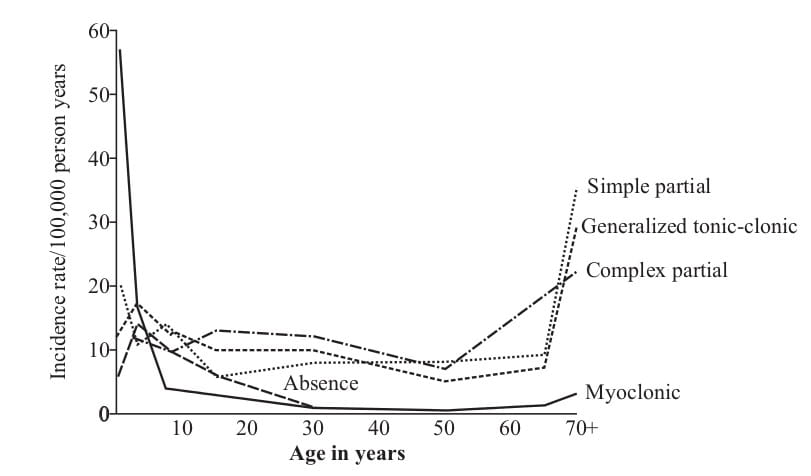
Most adult onset cases of epilepsy are partial seizures. Males and females are equally affected. The age-related incidence of partial seizures follows a U- shaped curve, with a peak in the first year of life and an increase during the sixth and seventh decades.4 (Fig. 1)
In new cases of epilepsy, relative proportions of people having seizures of partial origin and generalized origin is approximately 50% in age < 40. However, after 40 years, proportion of partial epilepsy rises to 75% by the age of 75. In an Indian study reported in 2005, while 42% were seen to have generalized seizures, while 58% of them had partial seizures.1,5
Etiopathology and Clinical Features of Partial Epilepsy
Most partial epilepsies occur due to localized brain abnormality which may or may not be detectable on imaging. Various structural lesions in partial epilepsy include traumatic scars, neoplasms, vascular malformations, strokes, neuronal heterotopias low-grade tumors, hippocampal sclerosis, and subtle cortical dysplasias. However, many adult onset partial epilepsies do not have an identifiable etiology (ie, MRI is most often normal), and are referred to be etiologically idiopathic.6,7
Clinically, patients with focal seizures can have several of the following symptoms, depending on the localization of seizure origin in the brain.
- Abnormal muscle contractions
- Complex, repetitive movements, called automatisms
- Forced turning of eyes
- Abnormal sensations, like numbness, tingling, crawling sensations,etc.
- Other major features include hallucinations, abdominal pain or discomfort, nausea, sweating, flushed face, dilated pupils and rapid pulse.
- Blackout spells, vision changes and changes in mood/emotion are some other clinical features which can be seen.6,7
Partial Seizures: Diagnosis
Diverse range of symptom manifestation partial seizures gives rise to diagnostic challenges. Hence, several diagnostic tests are used to evaluate, identify and localize the origin of the pathology. These diagnostic tests include EEG, inpatient video-EEG monitoring, MRI, Positron Emission Tomography (PET) and neuropsychological testing.
Pharmacological Management of Partial Epilepsy
Medical management is based on tailoring each patient's regimen based on the seizure. Partial epilepsies are generally treated with antiepileptic drugs (AEDs), with nonpharmacologic treatments in certain refractory cases including surgery and dietary modification.7 Conventionally, phenytoin, carbamazepine, valproic acid, primidone, and phenobarbital have been used. Lately, however, drugs which have been approved by USFDA include tigabine, lamotrigine, gabapentin, topiramate, oxcarbazapine, zonisamide, and levetiracetam. Most of these newly available AEDs are USFDA approved drugs for the adjunctive treatment of partial onset epilepsy.7
Levetiracetam (LEV): Optimal Therapy in Partial Seizures
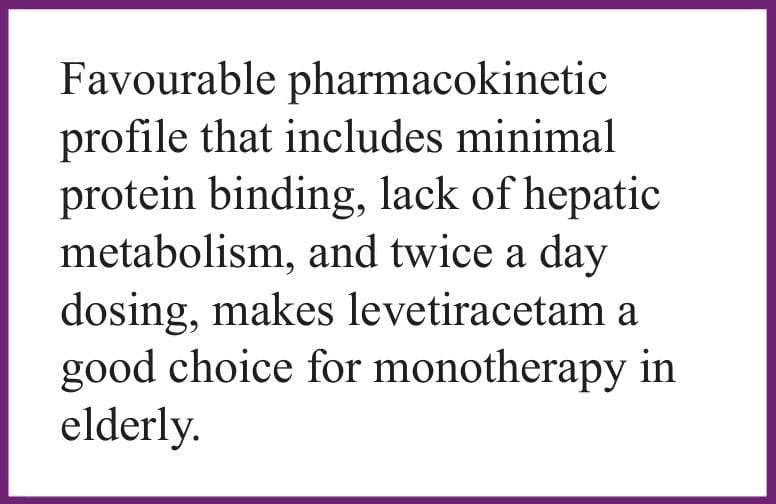
Partial seizures are the most common seizure type, and are more likely to be resistant to therapy, with approximately one-third of patients being refractory. Further, tolerability of some AEDs is also a problem, which fueled a search for new drugs that are better tolerated, have better pharmacokinetics and are more effective than classical AEDs or at least are effective where classical AEDs have failed. Levetiracetam is such a drug having several advantages over conventional AEDs used. It is a novel antiepileptic drug effective in the management of partial seizures. Levetiracetam is an USFDA approved drug for adjunctive treatment in adults with partial onset seizures. Further, levetiracetam is also an approved drug by the European Union for first-line monotherapy in the treatment of partial epilepsy. The favourable pharmacokinetic profile makes it ideal for use as monotherapy in elderly with partial seizures.8,9
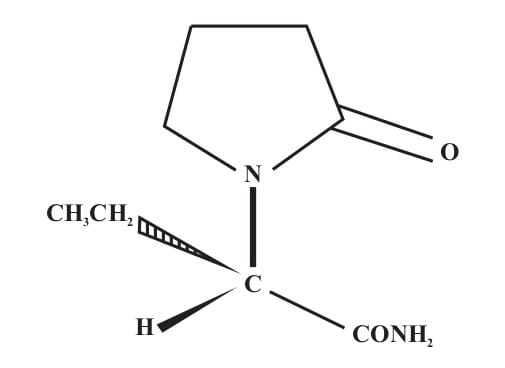
Fig. 2. Structure of Levetiracetam.
Pharmacodynamics
Levetiracetam, a pyrrolidone derivative (Fig. 2), is a novel AED that is chemically unrelated to other currently available AEDs.8,9
Mechanism of Action
Mechanism of action of levetiracetam differs from those of other commonly prescribed AEDs. Its primary mechanism of action involves binding to SV2A. which is considered an important target for AEDs with broad-spectrum efficacy. The mechanism of action of levetiracetam also involves inhibition of the release of calcium from intraneuronal stores, selective inhibition of N-type calcium channels, opposition of allosteric inhibition of GABA- and glycin-gated currents, and inhibition of excessive synchronized activity between neurons. Unlike other AEDs, the mechanism of action of levetiracetam does not involve potentiation of GABA, sodium channel blockade or L-, P- or T-type calcium channel blockade.8,9
Pharmacokinetics of Levetiracetam: Advantageous Features
Levetiracetam has a number of favourable pharmacokinetic properties.
- Absorption of levetiracetam is rapid and complete.
- Coadministration with food does not affect the bioavailability.
- Pharmacokinetics of levetiracetam are linear and metabolism is not dependent on the liver cytochrome P450 enzyme system.
- Levetiracetam and its most important metabolite do not affect hepatic microsomal enzymes and, therefore, are unlikely to interact with other drugs.
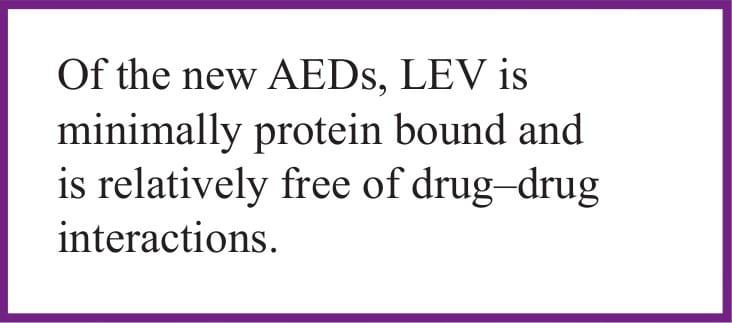
- Absence of protein binding also makes interactions resulting from competition for protein binding unlikely.8,9
Lower Potential for Drug Interactions
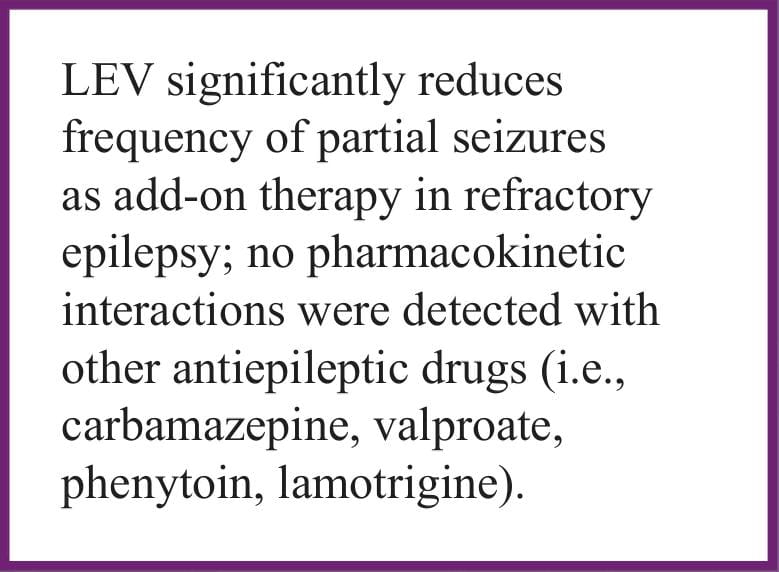
Levetiracetam has a low potential for clinically relevant pharmacokinetic interactions with AEDs or other drugs, in contrast to older AEDs which have a high potential for drug interactions that result from their ability to induce or inhibit specific isoenzymes within the CYP enzyme system. Neither pharmacokinetics of other AEDs nor pharmacokinetics of levetiracetam are affected to a clinically relevant extent when levetiracetam and other AEDs were administered concomitantly. Analysis of adult patients with partial onset seizures receiving adjunctive levetiracetam showed no evidence of pharmacokinetic drug interactions between levetiracetam and concomitant AEDs (including carbamazepine, clobazam, clonazepam, diazepam, gabapentin, lamotrigine, oxcarbazepine, phenobarbital, phenytoin, primidone, topiramate, valproic acid and vigabatrin). In children with partial onset seizures too, levetiracetam did not affect plasma concentrations of carbamazepine, valproic acid, topiramate or lamotrigine. No evidence of interactions between levetiracetam and digoxin, warfarin or low dose oral contraceptives has been seen.8,9
Clinical Efficacy of Levetiracetam in Partial Seizures
Levetiracetam has been seen to be beneficial as adjunctive therapy in refractory partial seizures, and is an USFDA approved drug for adjunctive therapy. Levetiracetam also shows good efficacy as monotherapy in new onset partial epilepsy and is an approved first line drug (by European Union) for monotherapy in partial epilepsy.8,9
- Levetiracetam, was first approved by the U.S. Food and Drug Administration (FDA) in 1999 as adjunctive therapy in the treatment of partial onset seizures in adults with epilepsy.
- In June 2005, Levetiracetam was approved by the FDA as adjunctive therapy in the treatment of partial onset seizures in children 4 years of age and older with epilepsy.
- Further, levetiracetam is also an approved drug for first-line monotherapy in the treatment of partial epilepsy in the European Union.
Effective as Monotherapy in Newly Diagnosed Partial Epilepsy
Several studies provide evidence of efficacy of levetiracetam as monotherapy, especially in new onset partial seizures in adults, children, as well as elderly.
LEV monotherapy compared with controlled-release carbamazepine showed both AEDs to produce equivalent seizure freedom rates in newly diagnosed epilepsy at optimal dosing; importantly, no other newer AED has been shown to be equivalent to an older generation AED.
Efficacy in Adults Favourable Results Demonstrated in Monotherapy
In a retrospective analysis of patients with partial seizures, with and without secondarily generalization, those who received levetiracetam (LEV) as first line of therapy for at least six months, around 55% of them became seizure free and rest had >50% reduction in their seizures.10
Levetiracetam Equivalent to Controlled Release Carbamazepine; with Better Tolerability
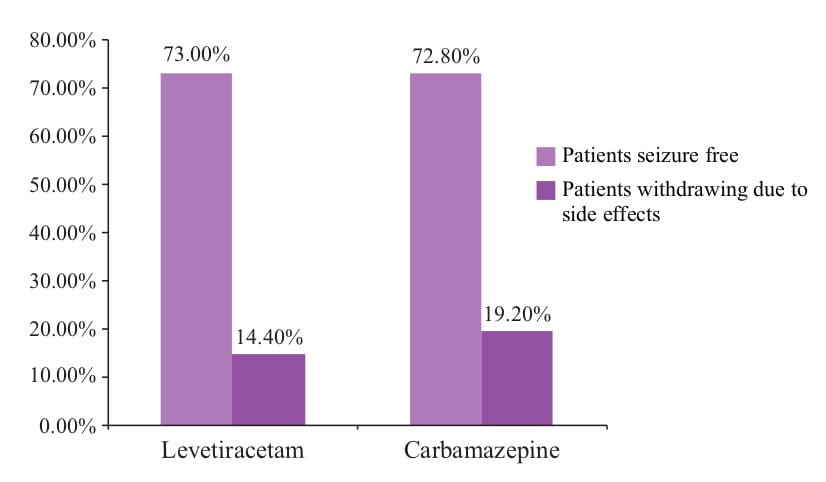
In a multicenter, double-blind prospective study, per-protocol analysis showed that 73.0% of patients on levetiracetam and 72.8% receiving controlled- release carbamazepine were seizure free. Of all patients achieving 6-month (1-year) remission, 80.1% on levetiracetam and 85.4% on carbamazepine did so at the lowest dose level. Withdrawal rates for adverse events were higher for carbamazepine (14.4% with levetiracetam vs 19.2% with carbamazepine) (Fig. 3). Thus, levetiracetam and controlled release carbamazepine produced equivalent seizure freedom rates in newly diagnosed epilepsy at optimal dosing, with levetiracetam showing better tolerability.11
Fig. 3. Levetiracetam vs Carbamazepine in monotherapy in adults
Efficacy in Children: Better Tolerability than Carbamazepine
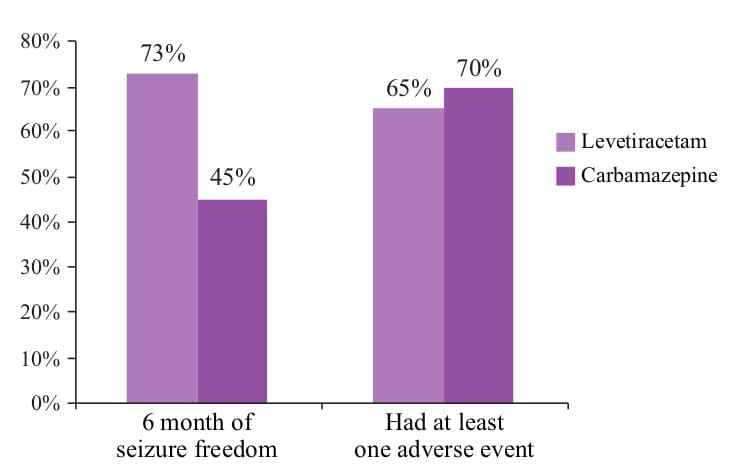
In children (< or = 16 y) with partial epilepsy, 73% on levetiracetam as compared to 65% on carbamazepine achieved 6 months of seizure freedom. A total of 70% patients on carbamazepine and 45% on levetiracetam had at least 1 adverse event while on monotherapy.12 (Fig. 4)
Fig. 4. Better efficacy and adverse effect seen with levetiracetam monotherapy in children
Efficacy in Elderly
LEV monotherapy was seen to be effective and well tolerated in elderly patients. Eighty percent of the patients who began LEV as a first line therapy became seizure free. However, around 45% of patients who converted to LEV after they failed in their previous AEDs became seizure free. Overall, 61.5% became seizure free and 30.7% patients achieved > 50% seizure reduction of seizures. 13
Efficacy of Levetiracetam as Adjunctive Therapy in Partial Seizures
Efficacy in Adults: Effective as Add-on Therapy in Refractory Partial Seizures
A double-blind, randomized, multicenter trial evaluated the efficacy and safety of 500 mg bid and 1500 mg bid levetiracetam as adjunctive therapy for refractory partial seizures. Partial seizure frequency was lower with levetiracetam compared to placebo (p < / = 0.001 for both groups). More patients responded (defined as 50% reduction in seizures) to levetiracetam than placebo; 33.0% of those taking 1000 mg/day dosage and 39.8% of those taking 3000 mg/day dosage responded compared to 10.8% with placebo (p < 0.001).14
Levetiracetam does not Affect Concomitant Drug Concentrations, when used as add-on Therapy
Fig. 5. Percentage of seizure - free patients, patients who experienced a reduction in seizure frequency of 250% from baseline ("responder rate"), and patients experiencing a reduction in seizure frequency of 275%
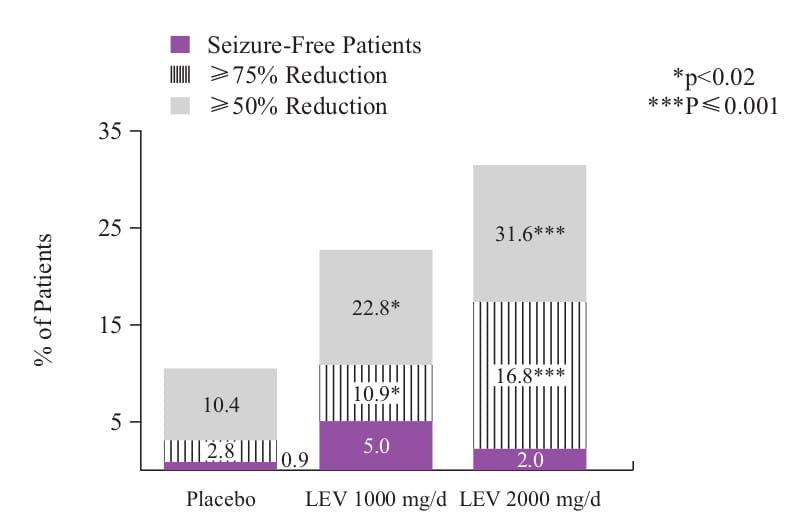
LEV significantly decreased partial seizure frequency compared with placebo as add-on therapy in partial seizures. A reduction in seizure frequency of > or =50% occurred in 22.8% of patients in the 1,000-mg group and 31.6% of patients in the 2,000-mg group, compared with 10.4% of patients in the placebo group (Fig. 5). Administration of LEV did not affect plasma concentrations of concomitant antiepileptic drugs or alter vital signs or laboratory parameters. No significant difference in the incidence of adverse events was observed between LEV and placebo groups.15
Levetiracetam Vs Topiramate: Efficacy and Tolerability in Partial Seizures
Levetiracetam (LEV) and topiramate are considered highly effective AEDs in focal epilepsies. LEV seems to fare better both in terms of efficacy as well as safety/tolerability.
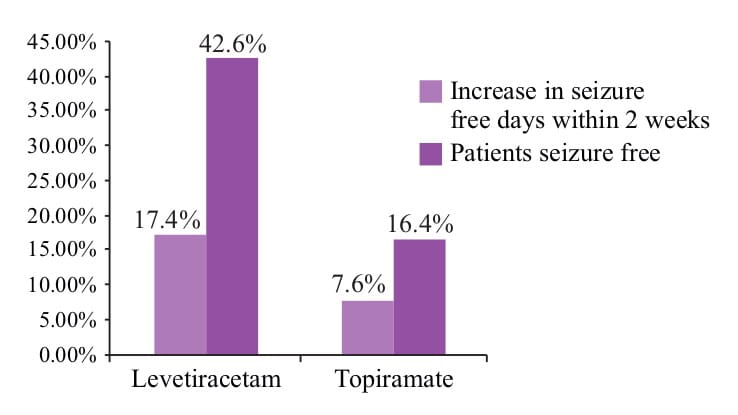
In a comparative study analyzing the rapidity of effect (during the first 15 days of add-on treatment), levetiracetam was shown to produce early efficacy than topiramate. In the 15-day evaluation period, the seizure free days (SFDs) increased by 17.4% with levetiracetam vs 7.6% with topiramate (p < 0.05). Further, 42.6% patients taking levetiracetam were seizure free compared to 16.4% receiving topiramate, confirming the rapid onset of action of levetiracetam.16 (Fig. 6)
Adverse cognitive effects were seen to be worse for topiramate compared with LEV in a study investigating influence on cognitive functions. LEV manifested no change in cognitive performance, but topiramate showed worsening in the cognitive speed and verbal fluency, as well as short-term memory, suggesting topiramate, unlike LEV, may impair frontal lobe functions.17
Fig. 6. Rapid onset of action with Levetiracetam vs Topiramate
Levetiracetam Monotherapy Efficacious in Refractory Partial Seizures, in Patients Responding to Add-on Therapy to Levetiracetam
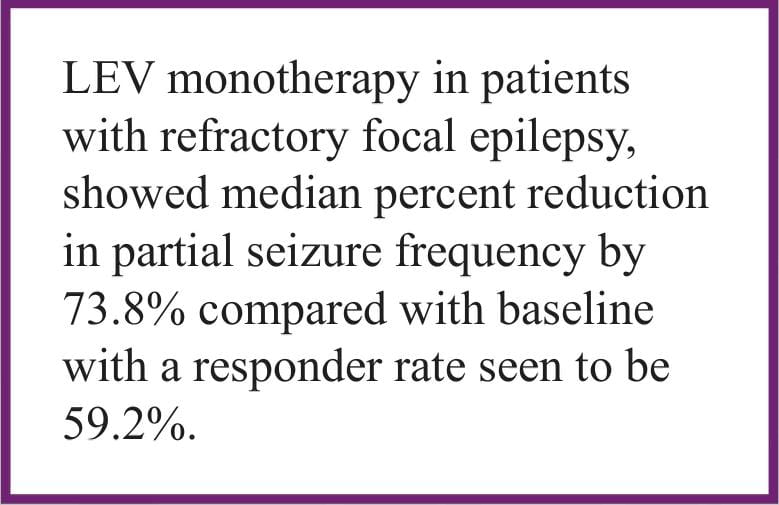
In a responder-selected study, patients randomized to receive oral LEV 1500 mg twice daily or placebo during a 12-week add-on phase, and responders (showing reduction in partial seizure frequency of 50% or more compared with baseline) entered a 12-week monotherapy phase. The responder rate during the add-on phase was significantly higher with LEV compared to placebo (42.1% vs. 16.7%, respectively; p < 0.001). In the LEV monotherapy group, median reduction in partial seizure frequency compared to baseline was 73.8% (p = 0.037), with a responder rate of 59.2%. Around 18% patients were seen to remain seizure-free on LEV monotherapy. Hence, conversion to LEV monotherapy (1500 mg twice daily) was effective in patients with refractory partial seizures who responded to 3000 mg/d LEV as add-on therapy.18
Efficacy in Children as Adjunctive Therapy
In a double-blind, trial of children (4-16y) whose epilepsy was uncontrolled on one or more AEDs, adjunctive treatment with levetiracetam resulted in 26.8% fewer seizures each week over placebo. Further, 45% of those who received levetiracetam had at least a 50% reduction in seizure frequency, compared to 20% with placebo (p=0.0002). About 20% children treated achieved a 75% reduction in seizure frequency, compared with 5% with placebo (p<0.0001), and 7% were completely seizure free during treatment compared to 1% with placebo.19
Efficacy in Elderly: The KEEPER Trial
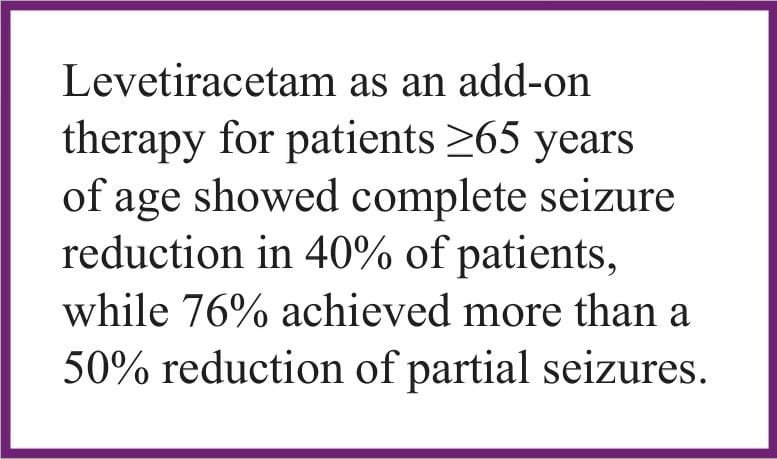
Levetiracetam was efficacious as add-on therapy (evaluation for 12 wks) for treatment of partial onset seizures in patients >/=65 years of age taking concomitant medications (in the KEEPER trial). a evaluation period. An overall median reduction in partial seizures of 80.1% was observed. Overall, 76.9% of patients were >/=50% responders, 56.9% were >/=75% responders, and 40.0% were 100% responders.20
Safety and Tolerability of Levetiracetam
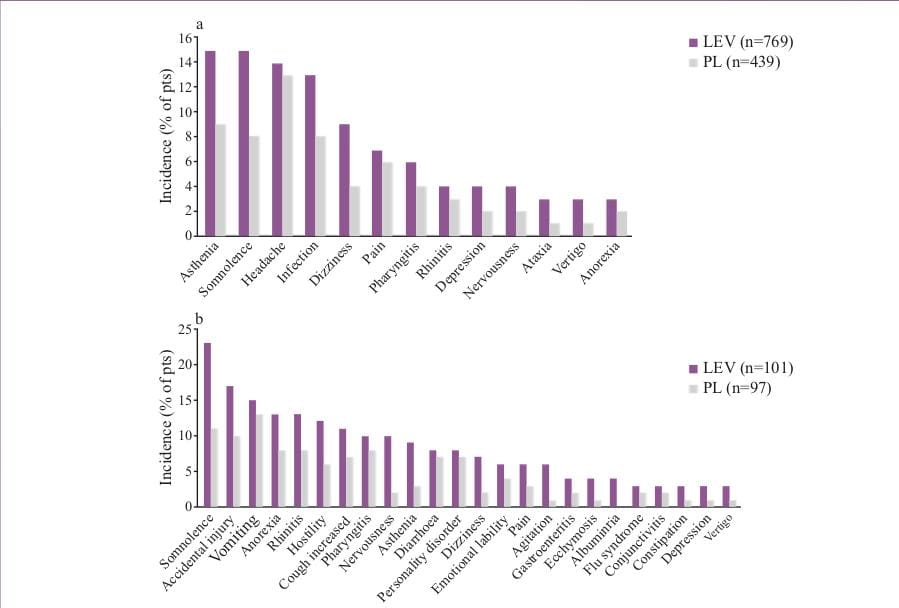
Adverse effects seen with levetiracetam in partial epilepsy were mild to moderate in severity. Overall, proportion of patients receiving levetiracetam who experienced at least one treatment-emergent adverse event was broadly similar to placebo (53-89% vs 53-92% respectively). Incidence of drug-related adverse events was also somewhat similar; 39-55% with levetiracetam and 30-42% with placebo. (Fig. 7 a and b showing adverse effect profile in adults and children).
Better Comparative Tolerability than Other AEDs
Levetiracetam has been associated with few serious drug related adverse effects as compared to potentially serious adverse events seen with other AEDs. Levetiracetam is better tolerated than important AEDs like lamotrigine and gabapentin or topiramate. Severe hypersensitivity reactions, including Stevens- Johnson syndrome, have been associated with several AEDs (carbamazepine, lamotrigine, phenobarbital and phenytoin); open angle glaucoma seen with topiramate; renal calculi and hypohidrosis seen with topiramate and zonisamide; and hepatotoxicity/pancreatitis seen with valproic acid.8,9
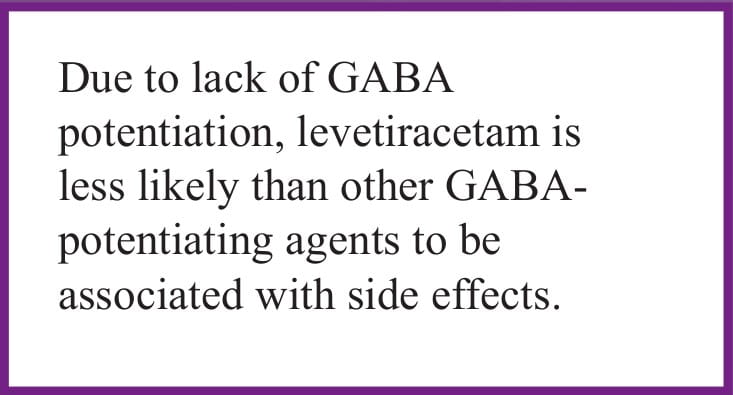
Levetiracetam has not been associated with detrimental effects on cognition. Further, changes in cardiac repolarization and weight gain have also not been associated with levetiracetam. As a result of its lack of GABA potentiation, levetiracetam is less likely than GABA-potentiating AEDs to be associated with side effects. In experimental studies, levetiracetam did not show detrimental effects on cognition, whereas comparable dosages of valproic acid, clonazepam and carbamazepine were associated with cognitive impairment. Levetiracetam was associated with fewer untoward effects on a cognitive test of attention and memory than carbamazepine. As compared to other AEDs known to cause weight gain (including valproic acid, carbamazepine, gabapentin, pregabalin and vigabatrin) levetiracetam is considered to be weight neutral.8,9
Fig. 7. a and b Tolerability of adjunctive oral levetiracetam (LEV) in patients (pts) with refractory partial onset seizures with or without secondary generalization. Overall incidence seen to be slightly higher than placebo in (a) adults (b) children (4-16y)
Place of Levetiracetam Compared to other Antiepileptic Drugs
Levetiracetam offers advantages in terms of improved tolerability, a lower risk of interactions with other medications and simpler titration and administration regimens. The reduced frequency of seizures with levetiracetam was associated with beneficial effects on quality of life.
Rapid absorption, high oral bioavailability, primarily renal elimination, and a lack of CYP enzyme-inducing potential and interactions with other drugs offer pharmacokinetic advantages.
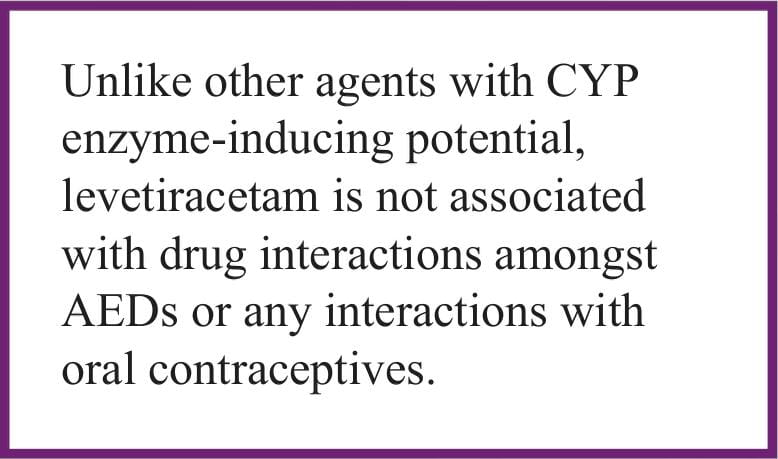
Addition of levetiracetam to existing AED therapy does not require dosage adjustments of other AEDs due to low potential for drug interactions due to inhibition or induction of CYP enzymes.
The onset of antiepileptic activity with levetiracetam is fast, occurring within the first few days after drug initiation. Unlike some AEDs (e.g. carbamazepine, lamotrigine, phenobarbital, topiramate and zonisamide), treatment with levetiracetam does not require slow titration.
Routine therapeutic drug monitoring of levetiracetam levels is not necessary, because of the simple pharmacokinetics, wide therapeutic index and favourable safety profile.8,9
Better Comparative Efficacy than other AEDs: Evidence from Systematic Review/Meta-Analysis
A meta-analysis of comparative efficacy of levetiracetam versus other newer AEDs as adjunctive therapy in refractory partial onset seizures suggested that adjunctive levetiracetam had favourable response rates versus gabapentin and lamotrigine, and similar efficacy and favourable withdrawal rates versus topiramate and oxcarbazepine. Levetiracetam was seen to be more effective than gabapentin, lamotrigine and topiramate as adjunctive treatment in refractory partial epilepsy. 21,22 In another systematic review/meta-analysis, data suggested a useful effect for levetiracetam; with levetiracetam having the more favourable 'responder-withdrawal ratio' than zonisamide and oxcarbazepine.23
Conclusion
Levetiracetam is a novel broad spectrum AED with several unique mechanisms of action. It has established efficacy in controlling seizures as adjunctive therapy in adult and pediatric patients with partial onset seizures with or without secondary generalization and has shown improved quality of life. Levetiracetam also provided seizure control as monotherapy in adult patients with newly diagnosed partial onset seizures. Levetiracetam has a favourable pharmacokinetic profile that includes minimal protein binding, lack of hepatic metabolism, and twice a day dosing. It is not associated with clinically significant interactions with other drugs and does not require therapeutic drug monitoring. The majority of adverse events are mild to moderate in severity, and it is not associated with drug-induced weight gain. LEV is approved as adjunctive treatment for adults and children with partial onset seizures. Good efficacy and tolerability makes it a valuable AED in partial epilepsy in adult, pediatric, and elderly patients.
References
1. R. Sridharan Epidemiology of epilepsy Current Science 2002 ; 82( 6): 664-670
2. Chang B.S. and Lowenstein D.H Mechanisms of Disease Epilepsy NEJM 2003;349(13):1257-1266
3. Mac TL, Tran DS, Quet F, et al.Epidemiology, aetiology, and clinical management of epilepsy in Asia: a systematic review. Lancet Neurol. 2007 Jun;6(6):533-43.
4. Garcia AF (Author); Lutsep HL (Chief editior).Partial Epilepsies Treatment & Management. Available at: http://emedicine.medscape.com/article/1186635-overview
5. Thomas SV, Koshy S, Nair CR, et al. Frequent seizures and polytherapy can impair quality of life in persons with epilepsy. Neurol India 2005; 53: 46-50.
6. Foldvary-Schaefer N, Wyllie E. Epilepsy. In: Goetz CG. Textbook of Clinical Neurology. 3rd ed. Philadelphia, PA: Saunders Elsevier; 2007:chap 52. http://www.umm.edu/ency/ article/000697sym.htm
7. Garcia AF (Auth); Lutsep HL (Chief ed).Partial Epilepsies Treatment & Management. Available at: http://emedicine.medscape.com/article/1186635-overview
8. Abou-Khalil B.Benefit-Risk Assessment of Levetiracetam in the Treatment of Partial Seizures. Drug Safety 2005; 28 (10): 871-890
9. Katherine A. Lyseng-Williamson Levetiracetam A Review of its Use in Epilepsy Drugs 2011; 71 (4): 489-514
10. Alsaadi TM, Thieman C Levetiracetam monotherapy for newly diagnosed epilepsy patients. Seizure. 2003 Apr;12(3):154-6
11. Brodie MJ, Perucca E, Ryvlin P, et al.Comparison of levetiracetam and controlled-release carbamazepine in newly diagnosed epilepsy. Neurology. 2007 Feb 6;68(6):402-8.
12. Perry S, Holt P, Benatar MLevetiracetam versus carbamazepine monotherapy for partial epilepsy in children less than 16 years of age. J Child Neurol. 2008 May;23(5):515-9
13. Alsaadi TM, Koopmans S, Apperson M, et al.Levetiracetam monotherapy for elderly patients with epilepsy. Seizure. 2004 Jan;13(1):58-60.
14. Cereghino JJ, Biton V, Abou-Khalil B Levetiracetam for partial seizures: results of a double-blind, randomized clinical trial. Neurology. 2000 Jul 25;55(2):236-42
15. Shorvon SD, L wenthal A, Janz D et al. Multicenter double-blind, randomized, placebo- controlled trial of levetiracetam as add-on therapy in patients with refractory partial seizures. European Levetiracetam Study Group. Epilepsia. 2000 Sep;41(9):1179-86.
16. Specchio, L.M.; Boero, G.; Specchio, N Evidence for a rapid action of levetiracetam compared to topiramate in refractory partial epilepsy Seizure. 2006; 15(2): 112-116
17. Gomer B, Wagner K, Frings L, et al.The Influence of Antiepileptic Drugs on Cognition: A Comparison of Levetiracetam with Topiramate Epilepsy Behav 2007. 103:486-494
18. Ben-Menachem E, Falter U.Efficacy and tolerability of levetiracetam 3000 mg/d in patients with refractory partial seizures: a multicenter, double-blind, responder-selected study evaluating monotherapy. European Levetiracetam Study Group. Epilepsia. 2000 Oct;41(10):1276-83.
19. Glauser TA, Ayala R, Elterman RD et al. Double-blind placebo-controlled trial of adjunctive levetiracetam in pediatric partial seizures Neurology. 2006 Jun 13;66(11): 1654-60
20. Ferrendelli JA, French J, Leppik I et al.Use of levetiracetam in a population of patients aged 65 years and older: a subset analysis of the KEEPER trial. Epilepsy Behav. 2003 Dec;4(6):702-9.
21. Otoul C, Arrigo C, van Rijckevorsel K, et al. Meta-analysis and indirect comparisons of levetiracetam with other second-generation antiepileptic drugs in partial epilepsy. Clin Neuropharmacol 2005 Mar 30; 28 (2): 72-8
22. Zaccara G, Messori A, Cincotta M, et al. Comparison of the efficacy and tolerability of new antiepileptic drugs: what can we learn from long-term studies? Acta Neurol Scand 2006 Sep; 114 (3): 157-68
23. Marson AG, Hutton JL, Leach JP, et al. Levetiracetam, oxcarbazepine, remacemide and zonisamide for drug resistant localization-related epilepsy: a systematic review. Epilepsy Res. 2001 Sep;46(3):259-70
2. Chang B.S. and Lowenstein D.H Mechanisms of Disease Epilepsy NEJM 2003;349(13):1257-1266
3. Mac TL, Tran DS, Quet F, et al.Epidemiology, aetiology, and clinical management of epilepsy in Asia: a systematic review. Lancet Neurol. 2007 Jun;6(6):533-43.
4. Garcia AF (Author); Lutsep HL (Chief editior).Partial Epilepsies Treatment & Management. Available at: http://emedicine.medscape.com/article/1186635-overview
5. Thomas SV, Koshy S, Nair CR, et al. Frequent seizures and polytherapy can impair quality of life in persons with epilepsy. Neurol India 2005; 53: 46-50.
6. Foldvary-Schaefer N, Wyllie E. Epilepsy. In: Goetz CG. Textbook of Clinical Neurology. 3rd ed. Philadelphia, PA: Saunders Elsevier; 2007:chap 52. http://www.umm.edu/ency/ article/000697sym.htm
7. Garcia AF (Auth); Lutsep HL (Chief ed).Partial Epilepsies Treatment & Management. Available at: http://emedicine.medscape.com/article/1186635-overview
8. Abou-Khalil B.Benefit-Risk Assessment of Levetiracetam in the Treatment of Partial Seizures. Drug Safety 2005; 28 (10): 871-890
9. Katherine A. Lyseng-Williamson Levetiracetam A Review of its Use in Epilepsy Drugs 2011; 71 (4): 489-514
10. Alsaadi TM, Thieman C Levetiracetam monotherapy for newly diagnosed epilepsy patients. Seizure. 2003 Apr;12(3):154-6
11. Brodie MJ, Perucca E, Ryvlin P, et al.Comparison of levetiracetam and controlled-release carbamazepine in newly diagnosed epilepsy. Neurology. 2007 Feb 6;68(6):402-8.
12. Perry S, Holt P, Benatar MLevetiracetam versus carbamazepine monotherapy for partial epilepsy in children less than 16 years of age. J Child Neurol. 2008 May;23(5):515-9
13. Alsaadi TM, Koopmans S, Apperson M, et al.Levetiracetam monotherapy for elderly patients with epilepsy. Seizure. 2004 Jan;13(1):58-60.
14. Cereghino JJ, Biton V, Abou-Khalil B Levetiracetam for partial seizures: results of a double-blind, randomized clinical trial. Neurology. 2000 Jul 25;55(2):236-42
15. Shorvon SD, L wenthal A, Janz D et al. Multicenter double-blind, randomized, placebo- controlled trial of levetiracetam as add-on therapy in patients with refractory partial seizures. European Levetiracetam Study Group. Epilepsia. 2000 Sep;41(9):1179-86.
16. Specchio, L.M.; Boero, G.; Specchio, N Evidence for a rapid action of levetiracetam compared to topiramate in refractory partial epilepsy Seizure. 2006; 15(2): 112-116
17. Gomer B, Wagner K, Frings L, et al.The Influence of Antiepileptic Drugs on Cognition: A Comparison of Levetiracetam with Topiramate Epilepsy Behav 2007. 103:486-494
18. Ben-Menachem E, Falter U.Efficacy and tolerability of levetiracetam 3000 mg/d in patients with refractory partial seizures: a multicenter, double-blind, responder-selected study evaluating monotherapy. European Levetiracetam Study Group. Epilepsia. 2000 Oct;41(10):1276-83.
19. Glauser TA, Ayala R, Elterman RD et al. Double-blind placebo-controlled trial of adjunctive levetiracetam in pediatric partial seizures Neurology. 2006 Jun 13;66(11): 1654-60
20. Ferrendelli JA, French J, Leppik I et al.Use of levetiracetam in a population of patients aged 65 years and older: a subset analysis of the KEEPER trial. Epilepsy Behav. 2003 Dec;4(6):702-9.
21. Otoul C, Arrigo C, van Rijckevorsel K, et al. Meta-analysis and indirect comparisons of levetiracetam with other second-generation antiepileptic drugs in partial epilepsy. Clin Neuropharmacol 2005 Mar 30; 28 (2): 72-8
22. Zaccara G, Messori A, Cincotta M, et al. Comparison of the efficacy and tolerability of new antiepileptic drugs: what can we learn from long-term studies? Acta Neurol Scand 2006 Sep; 114 (3): 157-68
23. Marson AG, Hutton JL, Leach JP, et al. Levetiracetam, oxcarbazepine, remacemide and zonisamide for drug resistant localization-related epilepsy: a systematic review. Epilepsy Res. 2001 Sep;46(3):259-70

More From Area Of Interest
You may also like

13 May, 26

17 Apr, 26
Our Research
23 Feb, 26

23 Feb, 26

11 Feb, 26
11 Feb, 26

11 Feb, 26
Latest Items
Journal Scans
27 Jul, 26
27 Jul, 26
Journal Scans
23 Jul, 26

23 Jul, 26

23 Jul, 26


