Highlights of 20th Conference on Retroviruses and Opportunistic Infections
( CROI 2013 )
Georgia World Congress Centre
March 3-6, 2013
The United Nations estimates that 3,30,000 babies were newly infected in 2011, and that more than 3 million children globally are living with human immunodeficiency virus (HIV). Amongst these impactful figures, a new ray of hope was presented at the CROI 2013, Atlanta, by Dr Deborah Persuad of Johns Hopkins University School of Medicine, Baltimore. She presented a case report of functional HIV cure in a 28-month- old infected child who initiated antiretroviral prophylaxis at 30 hours after birth.
The 28-month old child was born via normal vaginal delivery at 35 weeks gestation and had normal birth weight of 2.5 kg. Maternal infection (plasma HIV RNA, 2,423 copies/ml; CD4, 644 cells/mm3, wild-type subtype B) was confirmed using standard HIV-ELISA (enzyme-linked immunosorbent assay) and Western blot. Infant infection was confirmed by positive HIV DNA and RNA testing on two separate blood samples obtained on the second day of life. Antiretroviral therapy (ART) was not administered to the infected mother during labor.
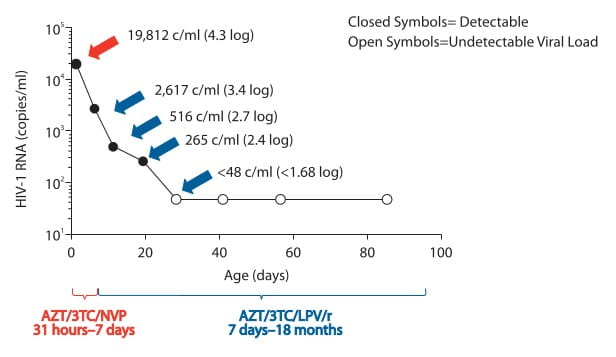
At the time of delivery, the infant was initiated on a regimen of zidovudine/lamivudine/ nevirapine (AZT/3TC/NVP) as prophylaxis against infection and NVP was given at a therapeutic dose level of twice-daily dosing. After confirmation of HIV-infection in the child, the treatment was continued for 18 months and lopinavir/ritonavir (LPV/r) was substituted for NVP at day 7.
Observation showed persistent viraemia for 19 days and biphasic decay in plasma viral load on ART as seen in the graph below.
At 18 months of age, the childメs caregiver withdrew the child from treatment and the child was lost to follow-up for nearly 6 months. Despite this, there was effective control of HIV replication when the child was on ART and even after ART discontinuation (as seen in the graph below).
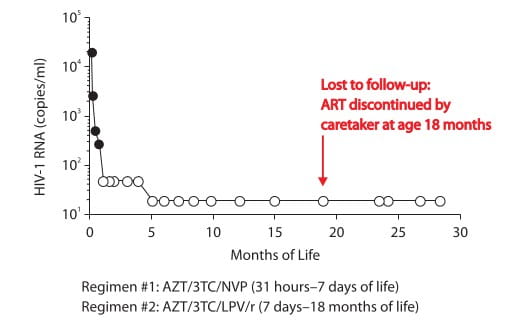
Three additional plasma viral load tests (days of life: 7, 12, and 20) were positive before reaching undetectable levels at the age of 29 days. Plasma HIV RNA remained undetectable (<20 copies/mL) on 16 different measurements obtained between 1 through 26 months of age despite ART discontinuation at the age of 18 months.
Using multiple ultrasensitive techniques, it was found that viral RNA of 1 copy/ml could be detected in tests carried out when the child was 2 years of age and 37 copies HIV DNA/million peripheral blood mononuclear cells (PBMC) enriched for monocytes were detected. Replication-competent virus was not detected following co-culture of 22 million purified resting CD4+ T-cells.
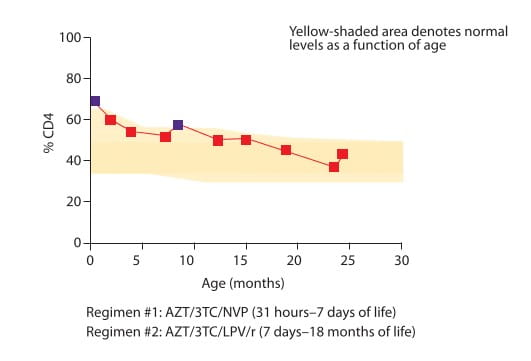
Even immunologic response was good during ART and following the discontinuation of ART as well.
At 26 months of age, HIV DNA was detected at 4 copies/million in the PBMCs but with no 2-LTR circles. Plasma viral load, PBMC DNA, and HIV-specific antibodies remained undetectable with standard clinical assays, confirming a state of functional HIV cure.
This is the first well-documented case of functional cure in an HIV+ child and it highlights the importance of immediately putting infants on ART in the event that they are born HIV+ to prevent establishment of a latent reservoir and achieve cure in children.
Reference: Functional HIV Cure after Very Early ART of an Infected Infant. 20th Conference on Retroviruses and Opportunistic Infections, Atlanta, 3-6 March, 2013; Paper #48LB
Lopinavir/ritonavir (LPV/r) has proven efficacy, high resistance barrier and a good safety profile. LPV/r is recommended as the first-line protease inhibitor (PI) in most settings for both treatment-naïve and treatment-experienced HIV-infected children. Current guidelines recommend that LPV/r be administered twice daily in children.
The US Department of Health and Human Services (DHHS) Guidelines for the Use of Antiretroviral Agents in Pediatric HIV Infection recommend that all infants who are tested positive for HIV should begin ART. The preferred first-line therapy is as follows:
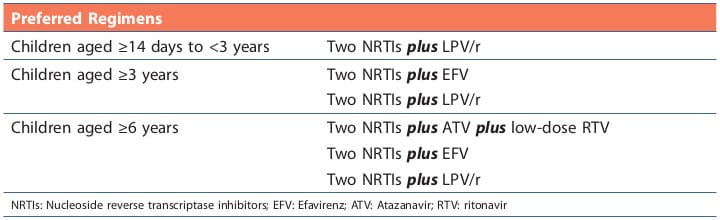
From the above table, it is seen that LPV/r is a key antiretroviral for treating cases of paediatric HIV. Hence, the availability of an appropriate child-friendly formulation of LPV/r is a necessity.
Developing appropriate antiretroviral (ARV) formulations for children represents a significant challenge, particularly for the PIs. The currently available LPV/r oral solution (80/20 mg per mL) has a high alcohol content (42.4% v/v), which may contribute to side effects, especially in young children. It requires refrigeration and has poor palatability. With liquids, dose titration is cumbersome. Liquid formulations are also more expensive to manufacture and transport.
The LPV/r tablets (100/25 mg) cannot be crushed or broken, and can only be given to older children who are able to reliably swallow. The sprinkle formulation developed by Cipla Pharmaceuticals consists of a finite number of mini tablets in a capsule. The capsule is opened and sprinkled over soft food.
Pharmacokinetics results of the LPV/r sprinkle formulation compared to the innovator syrup in HIV-positive (HIV+) Ugandan infants was presented at CROI 2012. In the present study, investigators compared the pharmacokinetics and acceptability of the sprinkle versus the syrup in children aged 1- 4 years.
This was an open cross-over pharmacokinetic trial with intensive 12-hour sampling, followed by observed intake of LPV/r with food, 4 weeks after randomization to sprinkle or syrup, WHO 2010 dosing were followed. The children then switched formulations and the pharmacokinetics was repeated at week 8. LPV/r plasma concentrations were determined using ultra-performance-liquid-chromatography. Geometric means (GM) area-under-the-curve (AUC0-12h), maximum concentration (Cmax) and concentration 12 hours post-dose (C12h ) are presented with within-child GM ratios (GMR). Acceptability data were collected; at week 8, the carers chose which formulation to continue.
This study enrolled 26 children on LPV/r syrup, with a median age of 2.0 years and weight of 10.7 kg; 14 (54%) were boys. Of 44 valuable pharmacokinetic profiles, 40 were within-child sprinkle versus syrup comparisons. GM (95% CI) AUC0-12h was 135.4 (115.5-158.8) h.mg/L for the sprinkle versus 109.6 (93.3-128.6) h.mg/L for the syrup (GMR = 1.24 [90% CI, 1.08-1.42]). GM (95% CI) Cmax was 14.9 (13.1-16.9) mg/L for sprinkle versus 12.6 (11.0-14.4) mg/L for syrup (GMR = 1.18 [90% CI, 1.07-1.31]). GM (95% CI) C12h was 6.22 (4.6-8.4) mg/L for the sprinkle versus 4.42 (3.3-5.9) mg/L for the syrup (GMR = 1.41 [90% CI, 1.07-1.85]).
No sub-therapeutic levels (<1.0 mg/L) were observed with either formulation. Carers mostly gave sprinkle with porridge (58%). Poor taste was the most frequently reported problem (38% sprinkle; 38% syrup), followed by swallowing difficulty (27% sprinkle; 19% syrup).
At entry, 12% carers were expected to prefer the sprinkle versus 67% of syrup at 12 weeks. At week 8, 73% carers chose to continue the sprinkle. Independent scoring of the formulation administration found no significant differences between the formulations. Both formulations were rated as unpleasant by 69% of carers, but they reported that storage/transportation was easier with the sprinkle (0% problems) than the syrup (54%). Child refusal within the last week was reported by 19% with the sprinkle and 12% with the syrup.
LPV/r exposure from the sprinkle was slightly higher than the syrup in children aged 1-4 years; variability was similar, with no sub-therapeutic concentrations. Carers preferred the sprinkle, particularly for storage/transport reasons; child acceptability of both formulations was similar.
Reference: Pharmacokinetics and Acceptability of a New Generic LPV/r Sprinkle Formulation in African, HIV+ Children 1-4 Years: CHAPAS-2. 20th Conference on Retroviruses and Opportunistic Infections, Atlanta, 3-6 March, 2013. Paper#975b
Laboratory monitoring of ART in adults and children generally includes CD4 cell count, viral load, and blood and liver markers such as haemoglobin and liver enzymes, in order to monitor potential side effects and signs of treatment failure, which may be an issue in resource-limited settings where laboratory facilities are not adequate.
To investigate the benefit of laboratory monitoring, the DART study was conducted on HIV-infected adults receiving ART in Sub-Saharan Africa. It was found that participants who received regular CD4 cell monitoring had only slightly better outcomes after 5 years when compared to those who received clinical monitoring alone. There have been no such trials in children.
In the ARROW trial presented recently at CROI 2013, researchers from Uganda and Zimbabwe conducted such a study on 1,206 children ranging in age from 4 months to 17 years with fairly advanced HIV disease. They were randomized into two groups. One group had to undergo laboratory monitoring, which included biochemistry, full blood count and CD4 testing every 12 weeks and the other group had to undergo clinical monitoring every 12 weeks with lab monitoring only if requested by clinicians.
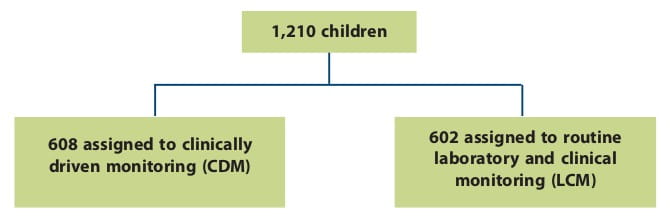
All children started non-nucleoside reverse transcriptase inhibitor (NNRTI)-based ART including abacavir plus lamivudine (ABC+3TC) and were followed up for a median of 4 years. The primary endpoints of the study were new WHO stage 4 events or death (clinical efficacy) and stage 3 or 4 adverse events (safety).
At trial end, 578 (95%) children on CDM versus 565 (94%) on LCM were still on first-line ART. Overall, 28 (5%) children on CDM versus 35 (6%) on LCM switched to second-line treatment. Adherence was similar in both the groups.
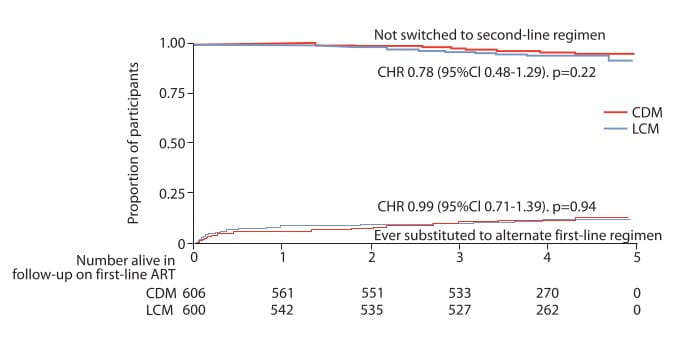
In the CDM group, 25 (4%) children died versus 29 (5%) in the LCM group; therefore, no significant difference in clinical events or deaths was observed. Most deaths were, primarily, HIV-related.
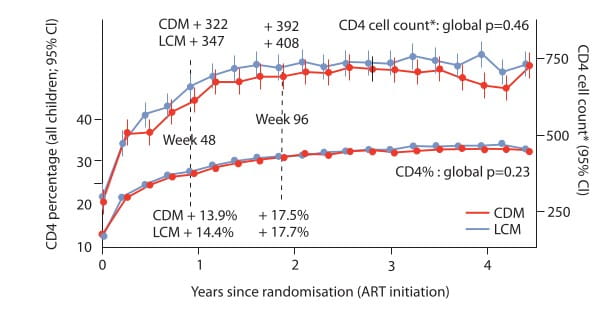
Also, no significant difference was observed in children showing immunologic response or virologic response. Only 11 (2%) children on CDM versus 2 children (<1%) on LCM had CD4 less than 5% at their last visit. Virologic suppression below 400 copies/ml (78 versus 77%) or 80 copies/ml after 4 years on treatment was similar between both the groups (see the graphs below).
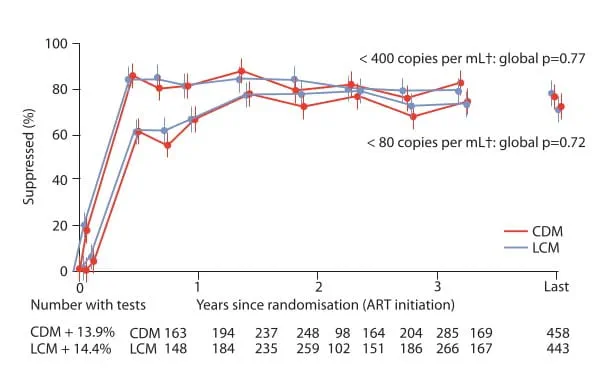
Progression to new WHO stage 3 or 4 events or death gave similar results. Pulmonary TB was the commonest WHO stage 3 event (25 with clinically driven monitoring; 28 with routine laboratory monitoring). There was no significant difference in grade 3 and 4 adverse events.
The study suggested that routine CD4 monitoring provided clinical benefit after the first year on ART at the individual level, but event rates were very low, with small absolute differences between monitoring strategies and no difference in adverse events.
Alongside economic analyses, the study results suggest that, for children, greater population-level impact would be achieved by wider ART rollout than by routine monitoring.
Reference: Impact of Routine Laboratory Monitoring after ART Initiation in 1206 HIV+ African Children: The 5-Year Anti Retroviral Research for Watoto Trial. 20th Conference on Retroviruses and Opportunistic Infections, Atlanta, 3-6 March, 2013; Paper #85
The rate of perinatal transmission has shown a dramatic decline to less than 2% in the United States and Europe because of aggressive measures such as prenatal counselling, antiretroviral prophylaxis, avoidance of breastfeeding and scheduled caesarean delivery. But, still, there are unaddressed issues such as side effects due to ART in pregnancy and birth defects.
The WHO 2010 guidelines state there is conflicting evidence of very low quality on the risks of efavirenz (EFV) causing neural tube defects. Prospective data are currently insufficient to provide an assessment of neural tube defect risk with first-trimester exposure.
The US DHHS July 31, 2012 Perinatal Antiretroviral Therapy Guidelines states the following: モBecause the risk of neural tube defects is restricted to the first 5-6 weeks of pregnancy and pregnancy is rarely recognized before 4-6 weeks, EFV can be continued in pregnant women receiving an EFV-based regimen who present for antenatal care in the first trimester, provided the regimen produces virologic suppression".
EFV has been associated with neural tube defects in animal studies and, hence, was contraindicated for this reason until 2010 during the first trimester of pregnancy. A meta-analysis (Safety of efavirenz in first-trimester of pregnancy: A systematic review and meta-analysis of outcomes from observational studies, AIDS 2010) found no excess risk of neural tube defects compared to the general population.
There was still no clear evidence between ART and birth defects. Also, changes in the recommendation with respect to EFV use in pregnancy are still controversial.
A study presented at the CROI 2013 by Jeanne Sibiude showed the association of birth defects and ART in the ANRS-EPF French perinatal cohort among 13,214 live births, between 1994 and 2010. This was the largest prospective study of birth defects in antiretroviral-exposed infants.
Birth defects were studied using both the EUROCAT and the MACDP classifications, and associations with antiretroviral were evaluated.
A significant association was found between exposure to EFV in the first trimester and neurological defects. There was a three times increased risk of neurological defects in those given EFV than for EFV-unexposed infants.
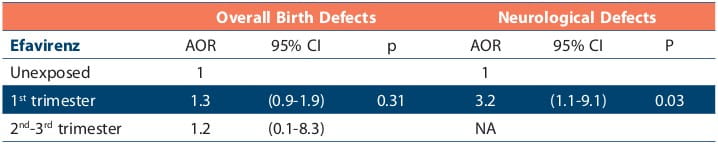
The risk of heart defect was approximately doubled in infants exposed to zidovudine (AZT) during the first trimester when compared to unexposed infants. Most of these cases were ventricular septal defects (holes in the heart).
Other defects were seen in association with exposure to the following drugs:
- Didanosine (ddI): head and neck defects (p<0.05)
- Lamivudine (3TC): musculoskeletal defects (p=0.04) and head and neck defects (p=0.03)
- Indinavir (IDV): overall birth defects (p=0.04)
The study concludes that recommendations to avoid EFV during the first trimester should be maintained in countries where other drug options exist, but other experts at the meeting emphasized that the risks needed to be compared against the benefits to child and mother receiving ART that contains EFV.
However, the author concluded by saying that モthe potential risk of birth defects have to be balanced with the major success of current PMTCT (prevention of mother-to-child transmission) strategies.
Reference: Birth Defects and ART in the French Perinatal Cohort, a Prospective Exhaustive Study among 13,124 Live Births from 1994 to 2010. 20th Conference on Retroviruses and Opportunistic Infections, Atlanta, 3-6 March, 2013; Paper #81
ART has played an important role in achieving the goal of viral suppression among HIV-infected individuals. Yet, the major obstacle in clearing the virus from infected individuals is the latently infected viral reservoirs, which are, generally, the resting CD4 memory T-cells. Latent HIV-1 can lead to a viral rebound, causing a productive infection later in disease progression and could provide a source for the emergence of resistant HIV-1.
TM, i.e. memory T-cells (T TM) can be further divided into the central memory T-cells (TCM) and effector memory T-cells (TEM). Investigators from Bangkok, Thailand, evaluated the effect of early ART initiation on HIV reservoir seeding in the long-lived TCM cells in patients with acute HIV infection. People who presented to the Thai Red Cross HIV testing center in Bangkok were tested for HIV RNA, p24 antigen and HIV antibodies, using a third-generation, enzyme-linked immunosorbent assay (EIA).
They enrolled 75 subjects with Fiebig stage IヨIII (refer to diagram below) of acute HIV infection. Data were presented on 68 subjects for whom quantification of HIV DNA had taken place. Total and integrated HIV DNA was measured in PBMC (n = 47) and sigmoid colon (n = 21) by real-time PCR (detection limit, 3 copies/106 cells).
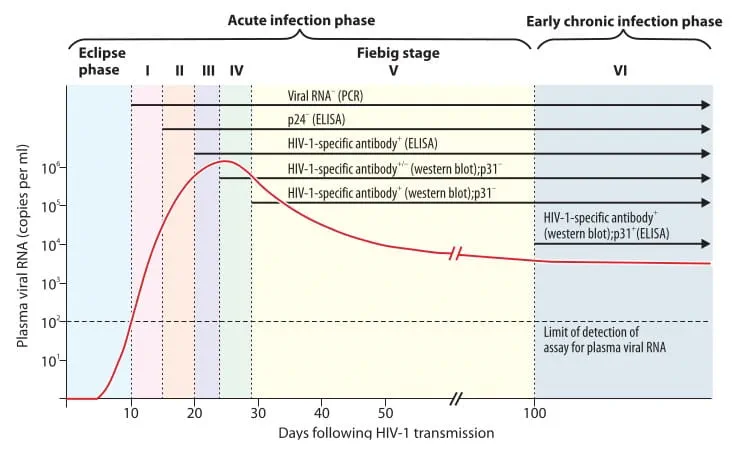
Patients were classified into different groups, based on the different diagnosis results:
- Fiebig stage I: HIV RNA+, p24+, third-generation EIA-
- Fiebig stage II: p24+, third-generation EIA-
- Fiebig stage III: Third-generation EIA+
The results observed were as follows
- All Fiebig I subjects had undetectable integrated DNA compared with 33% and 52% of Fiebig II and III subjects, respectively. Most integrated HIV DNA was seeded in CD4 T-cells, and not monocytes, B or CD8 T-cells.
- In 3 Fiebig I subjects, there was no detectable integrated DNA in TCM, T TM, and TEM.
- In 4 Fiebig II-III subjects, low infection was seen in TCM, with median integrated DNA copies/106 cells of 446 (342-774) for TCM, 2830 (987-6,485) for T TM, and 1898 (780-3,461) for TEM.
- HIV-integrated DNA was dramatically reduced after 24 weeks of ART in all three groups:
- 100% Fiebig I (n = 11)
- 67% Fiebig II (n = 3)
- 72% Fiebig III (n = 18)
- The localization of the reservoir at week 0 predicts the localization after treatment (p-value <0.0001).
- Median HIV-integrated DNA copies/106 cells in the three groups were as below:
- Fiebig I ラ 0
- Fiebig II ラ 9,263
- Fiebig III ラ 149
After 24 weeks of ART, 100% Fiebig I (n = 4) and 67% Fiebig II-III (n = 9) had undetectable HIV-integrated DNA.
Patients in Feibig II-III stages of acute infection showed substantial reductions in HIV DNA within 12 weeks of starting antiretroviral treatment, and reached undetectable levels of integrated HIV DNA in the PBMCs by week 24.
Out of 10 patients, 7 patients (3 in Feibig I and 4 in Feibig II-III stages) who underwent sigmoid biopsy, and who had detectable integrated HIV DNA at baseline, had undetectable HIV DNA by week 24 of treatment.
Therefore, Fiebig I subjects exhibited extremely low reservoir size with no detected HIV-integrated DNA in the PBMCs and memory CD4 T-cell subsets before and after ART. Early ART intervention restricted the seeding of the HIV reservoir in long-lived TCM
Reference: Early ART Intervention Restricts the Seeding of the HIV Reservoir in Long-lived Central Memory CD4 T Cells. 20th Conference on Retroviruses and Opportunistic Infections, Atlanta, 3-6 March, 2013; Paper#47
Pre-exposure prophylaxis, or PrEP, is a strategy that involves use of antiretroviral medications to reduce the risk of HIV infection via sexual exposure. All of the current effectiveness and follow-on trials are testing TFV (tenofovir) and TDF (tenofovir disoproxil fumarate)-based regimens ラ using either TDF/emtricitabine (FTC) or TDF alone. Based on the data that have been collected to date the US Food and Drug Administration (FDA) approved the use of daily oral TDF/FTC for PrEP. This is the first antiretroviral combination to be approved for HIV prevention in HIV-negative adults.
To date, the following trials have found evidence of HIV prevention benefit using TFV- and TDF-based PrEP:
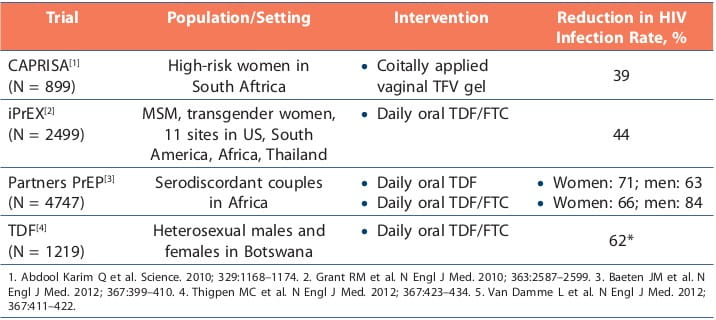
However, two trials have found no evidence of any benefit using TFV- and TDF-based PrEP.
FEM-PrEP, which evaluated once-daily oral TDF/FTC in women in eastern and southern Africa found that while the product was safe, there was no evidence of benefit and halted it early, based on a recommendation from the trialメs independent Data and Safety Monitoring Board (DSMB). In early 2012, the FEM-PrEP trial team presented an analysis suggesting that, in FEM-PrEP, low levels of adherence could explain the trial outcome.
The VOICE trial randomized 5,029 women from three sites in South Africa, Zimbabwe and Uganda to use one of three prevention methods or two placebos as follows:
- Daily TDF plus FTC as PrEP
- Daily TDF as PrEP
- A daily placebo
- A TFV-containing gel, similar to that used in the CAPRISA 004 study, to be used as a vaginal microbicide
- An inert gel as a placebo microbicide
The TDF oral PrEP arm, and the TFV vaginal gel and placebo arms of the trial were stopped due to futility in September and November 2011, respectively. The TDF/FTC PrEP and placebo pill arms, however, were continued. Results of the TDF/FTC were presented at CROI 2013 and revealed that the TDF/FTC arm was also not proven effective in preventing HIV and that, therefore, all three methods had proved no better than placebo.
The VOICE trial enrolled women in a 5-arm, randomized, double-blind, placebo-controlled trial assessing safety and efficacy of daily use of oral TDF, oral TDF/FTC, and 1% vaginal TFV gel. At 15 sites in South Africa, Uganda (Kampala), and Zimbabwe, 12,379 women were screened. The eligibility criteria included normal renal, haematologic and hepatic function, report of vaginal intercourse in prior 3 months, negative pregnancy test, and willingness to use effective contraception throughout the study.
Over follow-up of 5,511 person-years, end-of-study retention was 91%. HIV incidence was 5.7 per 100 person-years, and ranged from 0.8 to 9.9 per 100 person-years by site. Effectiveness was-48.8% for TDF,-4.2% for TDF/FTC, and 14.7% for TFV gel. In a case- cohort subset, TFV was detected on average in 28% of available quarterly plasma samples among participants randomized to TDF, 29% to TDF/FTC, and 22% to TFV gel. Predictors of plasma TFV detection in the case cohort group were as follows: being married, age >25 years, and reporting a primary male partner >28 years. No safety concerns were identified.
It was concluded that in this population of predominately young, unmarried women with high HIV incidence, adherence to study drugs was low, and no study drug significantly reduced the risk of HIV acquisition.
The VOICE results are consistent with FEM-PrEP and suggest that products that are long-acting and require minimal daily adherence may be more suitable for this population. Understanding of HIV risk perception and biomedical, social and cultural determinants of adherence in this high-risk population is urgently needed.
Reference: Pre-exposure prophylaxis for HIV in women: Daily oral tenofovir, oral tenofovir/emtricitabine or vaginal tenofovir gel in the VOICE study (MTN 003). 20th Conference on Retroviruses and Opportunistic Infections, Atlanta, 3-6 March 2013; Paper#26LB
The Pre-exposure Prophylaxis Initiative (iPrEx) study was a placebo-controlled, double- blind, randomized trial involving 2,499 subjects in the Americas, South Africa, and Thailand. Of the 100 incident infections, 64 occurred in the placebo group and 36 in the TDF/FTC group, for an estimated efficacy of 44% with a 95% CI of 15-63. In the TDF/FTC group, the study drug was pharmacologically detected in 51% of subjects who remained free of HIV infection but in only 9% of those who became infected. Thus, exposure to TDF/FTC was associated with a reduction in HIV acquisition, which supports the biologic plausibility of the primary result.1
iPrEx OLE (Open-Label Extension) is a continuation of the iPrEx study designed to provide additional information about the safety of PrEP and the behaviour of people taking PrEP over a longer term. All participants previously enrolled in iPrEx were eligible to enroll in the iPrEx OLE. Visits in the blinded, randomized phase of iPrEx occurred through November 2010, except sub study visits that are not considered here. iPrEx OLE started as soon as all the applicable authorities approved the modified protocol. iPrEx OLE enrolled from June 2011 to June 2012.
The 7- to 19-month gap between the randomized and OLE phases of iPrEx provides information about how gaps in the PrEP access affect anti-HIV seroconversion.
To see if HIV incidence changed after the randomized phase of iPrEx stopped, re- searchers monitored 1,529 HIV participants for 7-19 months, before they started the iPrEx OLE study During that time, participants had access to services at study sites, but got no TDF/FTC for PrEP. Taking active drug during iPrEx did not affect willingness to enrol in iPrEx OLE. Total observation was for 2,091 person-years. Participants had access to services at the study sites, except PREP, but there was no data collection and no required visits during the gap.
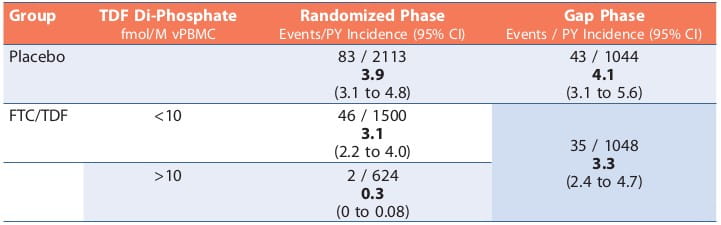
During the 2,091 person-years of follow-up in the no-PrEP gap between iPrEx and iPrEx OLE, there were 78 new HIV infections ラ 43 in the placebo group and 35 in the TDF/FTC group. Those numbers translated into incidence rates of 4.1 per 100 person- years (95% CI, 3.1-5.6) in the placebo group and 3.3 (95% CI. 2.4-4.7) in the TDF/FTC group, and that difference did not approach statistical significance (p=0.43).
HIV incidence in both groups did not differ markedly from incidence in the placebo group during the randomized phase (3.9 per 100 person-years). Incidence among the TDF/FTC-receiving group during the trial stood at 3.1 per 100 person-years in those with a tenofovir diphosphate (TDF-DP) level below 10 fmol/M blood cells and at 0.3 per 100 person-years in those with a TDF-DP level about that mark.
Each year of age lowered the risk of HIV infection by 7% (hazard ratio [HR] 0.93, p=0.02). Receptive anal intercourse without a condom doubled the risk (HR 2.1, p=0.002), and HSV infection nearly tripled the risk (HR 2.7, p<0.001).

The iPrEx investigators concluded that there is no evidence of prevention futility during PrEP use among men and transgendered women (MSMTG). There was no excess incidence of HIV infections after participants stopped using oral TDF/FTC PrEP. Despite high HIV incidence overall, participants moved in and out of ムseasons of risk. Overall incidence continued to be high in the iPrEx cohort, and comparable to the placebo arm during the randomized phase.
The effectiveness of oral TDF/FTC PREP in MSMTG will be assessed in iPrEx OLE by comparing HIV incidence in open-label PREP users with incidence observed in the placebo and gap phases of the study.
References:
- N Eng J Med 2010; 363:2587-2599
- No excess in HIV incidence after stopping oral emtricitabine/tenofovir pre-exposure prophylaxis: The iPrEx trial. 20th Conference on Retroviruses and Opportunistic Infections, Atlanta, 3-6 March, 2013. Paper#27
The Veterans Aging Cohort (VAC) Study was a prospective, observational cohort study of HIV+ and an age-/race-/site-matched control group of HIV-negative (HIV-) veterans in care in the United States. The studyメs aim was to understand the role of comorbid medical and psychiatric disease in determining clinical outcomes in HIV infection.
A sub-analysis from the VAC Study evaluated myocardial infarction (MI) or heart attacks, end-stage renal disease (ESRD), and cancers among HIV+ and HIV- individuals of similar or older age.
Findings from this sub-analysis covering the period October 2003 through September 2008 and including over 1,00,012 participants were presented at CROI 2013.
The main finding from this sub-analysis was that there were higher risks for the three co-morbid conditions, depending on the type of statistical methods employed, but that there were no significant age differences in when they occurred.
MI: Of the 84,444 veterans without a history of coronary heart disease, mean age at MI was 55.3 years in both HIV+ and HIV-veterans (p=0.99). Adjusted mean age at MI was not statistically significantly different in HIV+ compared with HIV- veterans. There was an 81% increase in the risk of MI by HIV status after adjustment.
Cancer: Mean age at cancer diagnosis was 55.7 and 58.5 years among HIV+ and HIV- veterans (N = 97, 134; p<0.001), respectively. Adjusted mean age at cancer diagnosis was slightly younger in HIV+ compared with HIV- veterans. There was a 37% increase in the risk of cancer by HIV status after adjustment.
ESRD: Mean age at diagnosis was 55.0 years in HIV+ and 58.3 years in HIV- (N = 99, 433; p<0.001), respectively. Adjusted mean age at ESRD was not statistically significantly different in HIV+ compared with HIV veterans. There was 55% increase in the risk of ESRD by HIV status after adjustment. Traditional risk factors were statistically significantly associated with incident events for these age-related comorbidities.
The authors concluded that although HIV+ adults are at a substantially greater risk of MI, cancer and ESRD than HIVヨ adults in care, these age-related co-morbidities occur at similar ages after accounting for traditional risk factors.
Reference: HIV+ Adults Are at Greater Risk for Myocardial Infarction, Non-AIDS Cancer, and End-stage Renal Disease, but Events Occur at Similar Ages Compared to HIVヨ Adults. 20th Conference on Retroviruses and Opportunistic Infections, Atlanta, March 3-6, 2013. Paper#59.
The approach to the treatment of tuberculosis (TB) in the HIV-infected patient is complex and must address the patientメs requirement for ART potential drug reactions, and complications related to the immune reconstitution inflammatory syndrome (IRIS).
The current treatment of TB involves taking drugs daily for 6 or 8 months. Although the drugs are free to patients in low-income countries, this still involves a substantial cost, in terms of time and administration, to both the patient and the treatment services. If the length of treatment could be shortened to 4 months, or treatment administration simplified by, for example, being given once- or twice-weekly rather than daily, this would be of great benefit to the patients and the treatment services.
Shortening or simplifying treatment may improve overall patient adherence to treatment and, therefore, the outcome. A number of studies seeking to determine whether the standard TB treatment regimen can be shortened are underway. The RIFAQUIN trial is the first of these studies to report results. It assessed whether ifapentine (a rifamycin) and moxifloxacin (a quinolone), given together, can achieve these objectives.
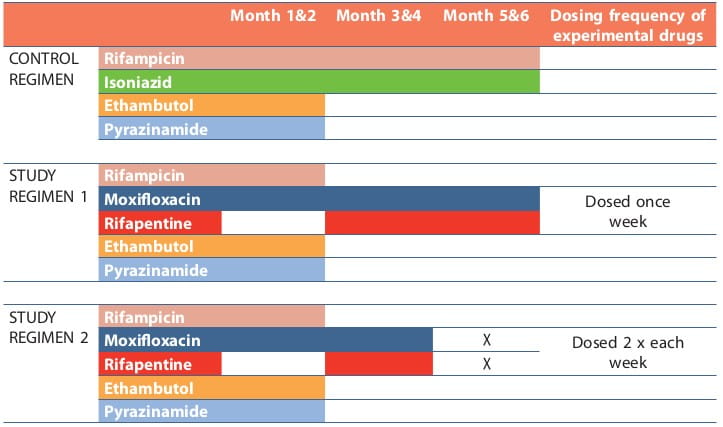
The RIFAQUIN study used a complex trial design aimed to answer two questions:
- Is it possible to shorten the duration of TB treatment from 6 months to 4 months by giving high-dose rifapentine in a 2-month continuation phase of treatment, and moxifloxacin in place of isoniazid throughout the treatment course (both drugs dosed twice-weekly)?
- Is it possible to reduce the frequency of dosing during a 4-month continuation phase by giving high-dose rifapentine and moxifloxacin in place of rifampicin and isoniazid, dosed once-weekly?
From August 2008 to August 2011, 827 patients were enrolled in South Africa (464), Zimbabwe (292), Botswana (56), and Zambia (15). Of these, 233 (28%) were HIV+ with a median CD4 count of 312cells/mm3, 509 (62%) were male, and the median weight was 53 kg. Also, 39 (5%) patients with initial drug resistance were excluded from both efficacy analyses. The difference in proportion unfavourable between the 4-month regimen and the control was 11.9% in the Intent to treat (ITT) and 13.2% in the PP analysis. The difference between the 6-month regimen and the control was -2.0% (95%CI, -8.9%, 4.9%) in the ITT and -1.5% (2.8%) in the Per-protocol (PP) analysis.
Altogether, 46 grade 3 or 4 adverse events were reported in 39 patients (13 on control, 11 and 15 on the study regimens); 6 events were hepatic. A nested study of population pharmacokinetics demonstrated that, although rifapentine increased the clearance of moxifloxacin by 8% during treatment, there was no significant change in moxifloxacin exposure.
The 6-month regimen with once-weekly 1,200 mg rifapentine and moxifloxacin in the continuation phase was non-inferior to control, even at the 95% level, safe and well tolerated. The 4-month regimen was inferior to control.
According to the investigators, the continuation regimen of 16 weekly doses would make it much easier for treatment preprograms and community healthcare workers to monitor adherence and ensure that patients are not lost to follow-up.
Despite the promising results, TB treatment preprograms will not be switching immediately to once-weekly treatment during the continuation phase.
Although there were no differences in outcomes between HIV- and HIV+ patients in the study, none were taking ART due to a drug interaction between rifapentine and antiretroviral drugs in the NNRTI and PI classes, which may reduce levels of the antiretrovirals. Several pharmacokinetic studies are planned to look at the impact of high-dose rifapentine on efavirenz (EFV), tenofovir (TDF) and emtricitabine (FTC) drug levels
Reference: A Multicenter Randomized Clinical Trial to Evaluate High-dose Rifapentine with a Quinolone for Treatment of Pulmonary TB: The RIFAQUIN Trial. 20th Conference on Retroviruses and Opportunistic Infections, Atlanta, 3-6 March, 2013. Paper#147LB.
Crytococcosis or cryptococcal meningitis (CM) a fungal infection caused by Cryptococcus neoformans is a serious opportunistic infection (OI) among people with advanced HIV/AIDS. Statistics by Centre for Disease control (CDC) show that C. neoformans infections cause an estimated 1 million cases of cryptococcal meningitis per year among people with HIV/AIDS, resulting in nearly 625,000 deaths worldwide. The greatest burden of disease occurs in Sub-Saharan Africa, where mortality is estimated to be 50% to 70%.
Guidelines recommend early initiation of ART for all HIV-infected patients, to slow down the disease progression, lower the incidence of co-morbidities, opportunistic infections and reduce mortality rate. The optimal time to initiate ART among HIV-infected individuals having CM is not known and very conflicting outcomes have been determined from earlier small studies.
Scriven and his colleagues conducted the COAT (Cryptococcal Optimal ART Timing) trial to evaluate whether early ART initiation improves 26-week survival in treatment-naive patients with first episode of CM as compared with deferred ART initiation. Patients were enrolled from Uganda and South Africa from November 2010 - April 2012 and were included if confirmed to have first episode of CM by CSF culture or cryptococcal antigen.
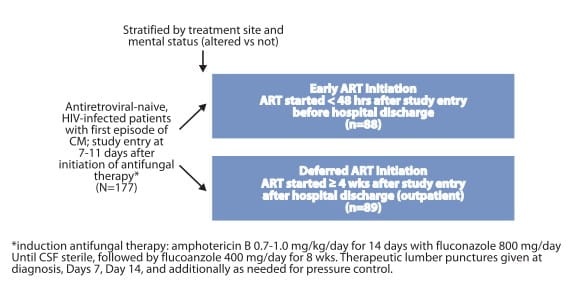
At the end of 6 months, overall survival was observed to be significantly lower in the early arm vs deferred arm (55% vs 70%). Most deaths in early ART arm (21/75) compared to deferred ART arm (8/80) occurred within 7-30 days from randomization (p = 0.007). The trial was halted early by the Data and Safety Monitoring Board (DSMB) for substantial excess 6-month mortality with early ART (40/88) compared to deferred ART (27/89).
There were two patient subgroups who were at risk for early mortality in early ART arm i.e.
- Patients with altered mental status (Glasgow Coma Scale score < 15; P = .05)
- Patients with CSF white blood cell counts < 5 cells/mm3 at randomization (HR: 3.3; P = .01)
The incidence of CM-related IRIS was slightly higher in the early arm but the difference between both the groups was not statistically significant.
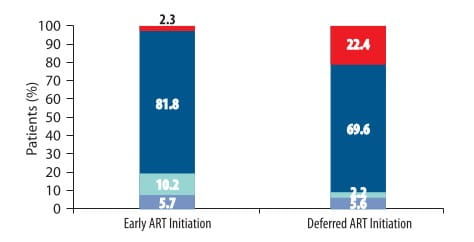
Increased mortality among the early-ART group was due to cryptococcal infection (i.e. CM) compared to deferred ART-group (21 vs 10 deaths). Grade 4/5 adverse events (grade 5 unrelated to CM), microbiologic outcomes, and virologic suppression similar between arms.
Therefore increased incidence of early deaths was observed among HIV-infected patients initiating early first-line ART (early-ART group) and during the antifungal induction therapy for CM. Deferred ART initiation 5 weeks after cryptococcosis had improved 26-week survival compared to inpatient initiation of ART 1 week after CM diagnosis, especially in those with altered mental status or a paucity of CSF inflammation.
The investigators recommend treating CM first and verifying sterile CSF culture before initiating ART or decreasing fluconazole dose to 400 mg, with ART initiation planned for approximately 4 weeks after CM diagnosis (or ~ 5-6 weeks for patients at greatest risk for early mortality).
Reference: ART Initiation within the First 2 Weeks of Cryptococcal Meningitis Is Associated with Higher Mortality: A Multisite Randomized Trial. 20th Conference on Retroviruses and Opportunistic Infections, Atlanta, 3-6 March, 2013. Paper#144.
Use of statins for control of elevated cholesterol, and ultimately of cardiovascular disease, in HIV negative people is well documented. Some studies has seen a slight increase in the risk of type 2 diabetes among statin-users in the general population, but the association is controversial
Metabolic abnormalities such as dyslipidemia among (HIV)-infected patients result in significant morbidity, including increased cardiovascular disease risk. Guidelines for managing dyslipidemia among HIV-infected individuals recommend statins to treat elevated low density lipoprotein cholesterol and non-high density lipoprotein cholesterol levels above the thresholds set by the National Cholesterol Education Program (NCEP) Adult Treatment Panel III (ATP III).
However, how and when HIV may have an impact on statin use and optimal use of statins in HIV positive people is unclear. While statins are widely recommended for lipid-lowering in HIV management, data in HIV positive people, especially long term safety data, is limited. According to a study presented and discussed at CROI 2013, statins use may increase the risk for diabetes mellitus in HIV-positive patients.
This study examined the association of statin use with incident diabetes mellitus (DM) in a prospective cohort of adult US HIV-1+ patients. It enrolled 4847 patients in the HIV Outpatient Program (HOPS) who met the inclusion criteria, 396 (8.2%) patients were prescribed statins during follow-up for a mean duration of 49.4 months (inter quartile range 21.7-78.1). New DM was diagnosed in 398 patients (crude incidence of 3.06 per 100 person-year while prescribed statins vs. 1.16 otherwise). In the primary analyses, factors associated with incident DM included years of statin use (HR 1.1 per year); increasing age (HR 1.6 per 10 years); female vs. male sex (HR 1.4), non-Hispanic black (NHB) vs. non-Hispanic white (NHW) race (HR 1.8); Hispanic vs. NHW race/ethnicity (HR 2.3), and PI use (HR 1.3). In analyses that included a propensity score for statin use, the association between statin use and incident DM was similar (HR 1.1); other factors remained significant.
The investigators concluded that exposure to statin therapy increased the risk of DM in HIV+ patients gradually with additional months of exposure. Patients prescribed statins should be monitored for glucose intolerance and offered early intervention to avert DM. Many questions like" Is there a group of individuals at risk for development of diabetes who take statins, and are there HIV-specific features that increase this risk?" The mechanism underlying the development of diabetes with statins is also unclear.
Reference: Statin Use Is Associated with Incident Diabetes Mellitus among Patients in the HIV Outpatient Study. 20th Conference on Retroviruses and Opportunistic Infections. Atlanta, March 3-6, 2013. Paper#767.
ART has undergone a gradual transition from complex to more simplified regimens. From early 2000, ART has seen a vast improvement and drugs available today are simpler, less toxic and more tolerable. Recently, new molecules are being developed to meet the growing need of more potent regimens.
A new class of antiretrovirals, known as integrase inhibitors (INIs) has come into prominence. These drugs inhibit the viral integrase enzyme that has a vital role in the viral replication cycle. Raltegravir (RAL), elvitegravir (EVG) and dolutegravir (DTG) are the commonly known INIs. RAL received FDA approval in 2007 and EVG, as a part of a 4-in-1 pill received approval in 2012, while DTG is still under investigation.
DTG is taken once daily, does not requiring pharmacokinetic boosting and has showed a favorable outcome in the long-term VIKING trials of treatment-experienced patients, and the SPRING and SINGLE studies in ART-na ve individuals.
At the CROI 2013, Anton Pozniak and his colleagues from Chelsea and Westminster Hospital, London, presented the 24-week interim results of the SAILING study. This study was conducted with an aim to evaluate DTG versus RAL in treatment- experienced, INI-naïve, HIV-infected adults.
The study design was as follows:
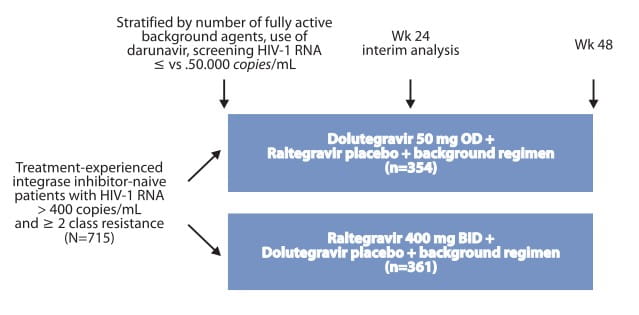
HIV-infected individuals (N = 715) were randomized in the ratio of 1:1 to receive either DTG 50 mg once daily or RAL 400 mg twice daily plus an investigator-selected background regimen of no more than two agents, one of which was fully active. The median HIV-1 RNA and CD4+ cell count was 4.18 log10 copies/mL and 200 cells/mm3, respectively, at baseline. The primary endpoint was the proportion of subjects in the modified ITT (mITT) population achieving HIV-1 RNA <50 copies/mL at week 48 (FDA- defined Snapshot algorithm).
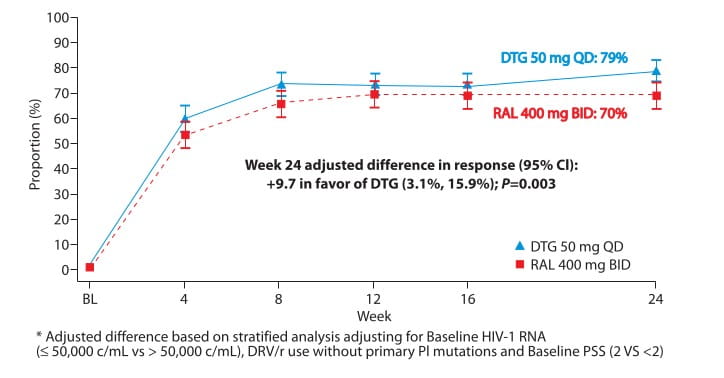
At week 24, the proportion of patients with HIV-1 RNA <50 copies/mL in the DTG group (79%) was statistically superior to the RAL group (70%) [p=0.003] as seen in the graph below.
Immunologic response, i.e. the median change from baseline of CD4 counts was similar between both the arms. Some other observations are shown in the following table.
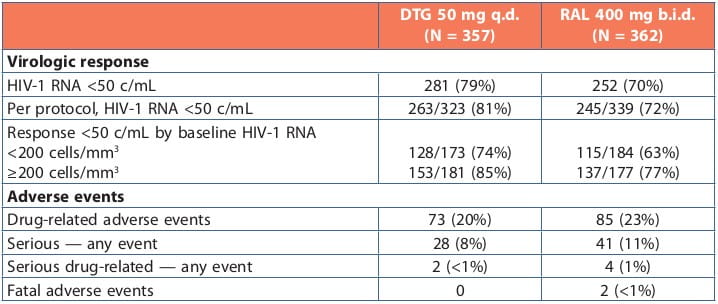
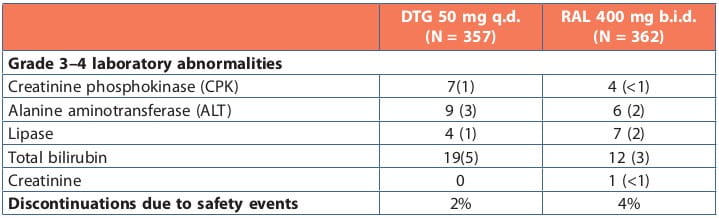
Both DTG and RAL were well-tolerated, with a similar incidence of most common adverse events. Certain drug-related adverse events observed were as follows:
- Drug-related serious adverse events associated with DTG included hepatotoxicity (n = 1) and myositis and acute renal failure (n = 1).
- Drug-related serious adverse events associated with raltegravir included oral mucosal blistering and pruritic rash (n = 1), pancreatitis (n = 1), hepatitis (n = 1), and suicidal ideation (n =1).
- In the raltegravir arm, 2 patients died-1 due to adenocarcinoma and 1 due to acute hepatic and renal failure
Hepatitis B/C (HBV/HCV) co-infected subjects were more likely to experience IRIS or hepatic flares on DTG in conjunction with improved virologic and immunologic responses, particularly when HBV therapy was not co-administered.
Therefore, the outcome of the study suggested that DTG is more efficacious as compared to RAL in INI-na ve, treatment-experienced subjects through 24 weeks, with similar safety and tolerability.
Reference: Dolutegravir vs Raltegravir in ART-experienced, Integrase-na ve Subjects: 24-Week Interim Results from SAILING (ING111762). 20th Conference on Retroviruses and Opportunistic Infections, Atlanta, 3-6 March, 2013; Paper #179LB