




Randomized clinical trials conducted in multinational settings with racially, ethnically and gender diverse participants are needed to compare the efficacy and safety of anti retroviral (ARV) combinations recommended in the current guidelines.
Highlights of the 18th Conference on Retroviruses and Opportunistic Infections


Highlights of 18th Conference On Retroviruses And Opportunistic Infections
( CROI 2011 )
Boston
February 27 - March 2, 2011
ACTG PEARLS Study: Better Safety Profile of TDF/FTC Compared to AZT/3TC in Diverse Multinational Settings
Study Design
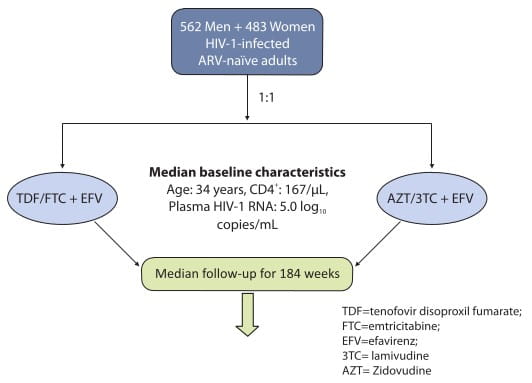
- If virologic failure was confirmed, participants were offered second-line ARV therapy and continued follow-up.
- Primary efficacy endpoint was time from randomization to regimen failure (intent-to-treat):
- Confirmed plasma HIV-1 RNA ≥1,000 copies/mL at ≥16 weeks;
- HIV-1 disease progression at ≥12 weeks; or
- Death.
- Safety endpoint was time to first dose modification or grade 3 or 4 event.
- Secondary endpoints included time to discontinuation of initial ARV therapy (some in-class substitution allowed), <100 CD4+/μL at ≥48 weeks (immunologic failure), and second ARV regimen failure.
- Other pre-specified secondary endpoints were plasma HIV-1 RNA <400 copies/mL at 24 and 48 weeks, time to loss of virologic response (TLOVR), and CD4 + change from screening.
Results
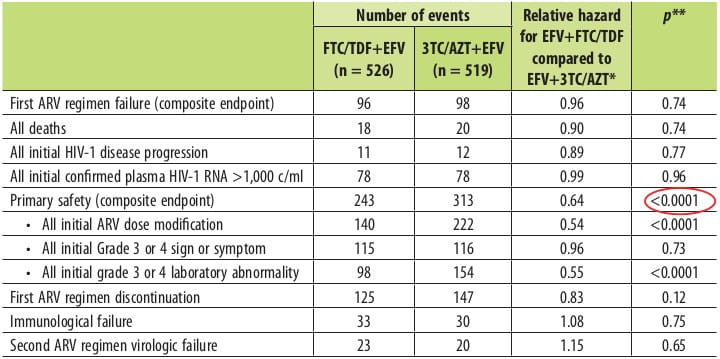
The effect of treatment on the first ARV regimen failure did not differ by gender, race/ ethnicity, country, or viral load strata (p >0.18).
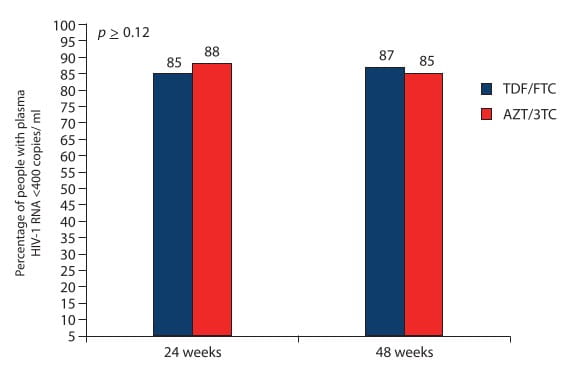
Median CD4 + change at 96 weeks was +226 vs. 221/μL (p = 0.4).
TLOVR (no drug substitution allowed) was met by 29% vs. 19% at 48 weeks and 36% vs. 24% at 96 weeks (p <0.001).
First ARV modifications in the AZT/3TC arm for 59 of 222 were due to neutropenia or anaemia vs. 0 of 140 in the FTC/TDF arm.
Serious non-AIDS diagnoses did not differ between the arms except for excess serious metabolic diagnoses (i.e. lipodystrophy, pancreatitis, lactic acidosis) in the 3TC/AZT arm (4% vs. 1%; p <0.001).
Conclusion
EFV + either AZT/3TC or TDF/FTC provided similar high efficacy for initial treatment of HIV-1 in diverse multinational settings. TDF/FTC + EFV was a safer ARV regimen in these settings.
Ref: Efficacy and Safety of EFV with Either Co-formulated 3TC/ZDV or FTC/TDF for Initial Treatment of HIV-1-Infected Men and Women in Diverse Multinational Settings: ACTG PEARLS Study. Programme and Abstracts of the 18 th Conference on Retroviruses and Opportunistic Infections; February 27-March 2, 2011, Boston, Massachusetts. Paper # 149LB
FRAM Study: Lower Muscle Mass and Central Adiposity Appear to be Important Risk Factors for Mortality in HIV Infected Individuals
Weight loss and/or wasting are among the most frequently occurring AIDS-defining conditions in the era before the use of highly active anti retroviral therapy (HAART). Unintentional loss of weight and muscle due to aging and disease has been associated with increased mortality.
The objective of this study was to determine whether muscle loss, subcutaneous lipoatrophy and central lipohypertrophy would predict death in HIV-infected individuals, independently of demographic and cardiovascular disease (CVD) risk factors, inflammation and renal disease.
The association of magnetic resonance imaging (MRI) to measured regional and regional and total skeletal muscle and adipose tissue with 5-year, all-cause mortality in 922 HIV-infected persons was determined.
Results
- After 5 years of follow-up, HIV-infected participants with arm skeletal muscle in the lowest tertile had a mortality rate of 23%, compared with 11% and 8% of those in the middle and highest tertiles.
- After multivariable adjustment for demographics, cardiovascular risk factors, HIV-related factors, inflammatory markers and renal disease, it was found that lower arm skeletal muscle, lower leg skeletal muscle and higher visceral were each independently associated with increased mortality.
- Those in the lowest tertile of arm or leg skeletal muscle had higher odds of death than those in the highest respective tertiles.
- Those in the highest tertile of higher visceral had 2.1 to fold higher odds of death than those in the lowest tertile.
Multivariable adjusted associations of MRI to measured skeletal muscle and adiposity with 5-year mortality
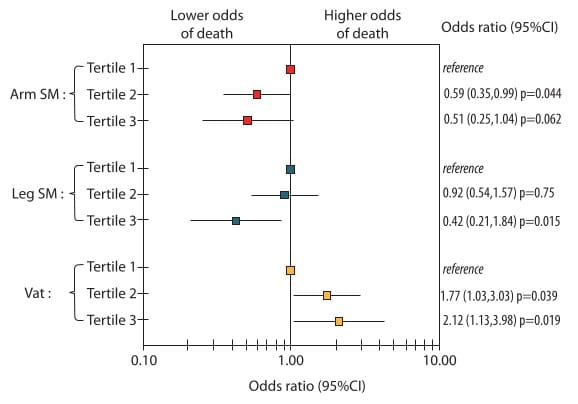
Estimates from multivariable adjusted models controlling for age, sex, race, traditional CVD risk factors, HIV-related factors, CRP, fibrinogen, eGFRcys, albuminuria, arm and leg skeletal muscle and visceral adiposity.
Conclusion
- Lower muscle mass and central adiposity appear to be important risk factors for mortality in HIV-infected individuals.
- A substantial proportion of this risk may be unrecognized because of the current reliance on body mass index in clinical practice.
Ref: Decreased Limb Muscle and Increased Central Adiposity are Associated with 5-Year All-Cause Mortality in HIV Infection. Programme and Abstracts of the 18 th Conference on Retroviruses and Opportunistic Infections; February 27-March 2, 2011, Boston, Massachusetts. Abstract 76
HPTN 046 Study: Extending Daily Infant NVP to 6 Months Lowered Risk of Breastfeeding MTCT of HIV
Daily infant nevirapine (extended NVP) given for 6 or 14 weeks or 6 months to breastfeeding HIV-exposed infants reduces mother-to-child transmission (MTCT) compared to single-dose NVP; however, the incremental benefit of extending prophylaxis to 6 months has not been evaluated.
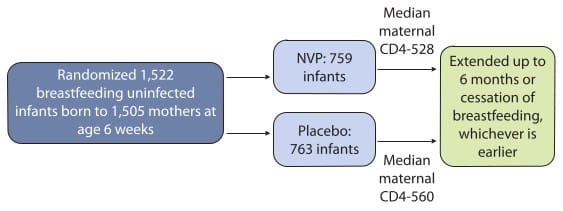
In HPTN 046, all breastfeeding HIV-exposed infants received daily NVP from birth to age 6 weeks, at which point, those who were determined to be HIV-uninfected and otherwise eligible (n=1,522) were randomized to receive either daily extended NVP (n=759) or placebo (n=763) through age 6 months or through cessation of breastfeeding, whichever was earliest.
At the time of randomization, 29% of mothers were receiving ARV drugs for their own health. At 6 months, 31% of mothers in the extended NVP arm and 32% in the placebo arm were on HAART.
At 3 months, 95% of infants in each arm were reported to be exclusively breastfed; >90% of infants stopped breastfeeding between 6 and 9 months, with no difference between the arms.
Adherence to the study drug was 88 to 96% through 6 months and balanced between the arms.
Follow-up is ongoing and is expected to be completed in July 2011, when the last randomized infant reaches 18 months of age.
Results
6 weeks vs 6 months NVP
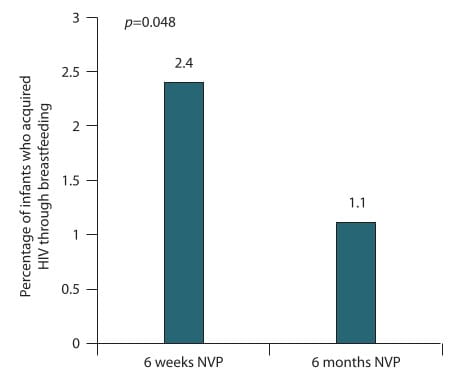
There was a 54% difference in HIV acquisition between infants who required 6 weeks v/s 6 months of nevirapine.
Overall 6-month infection
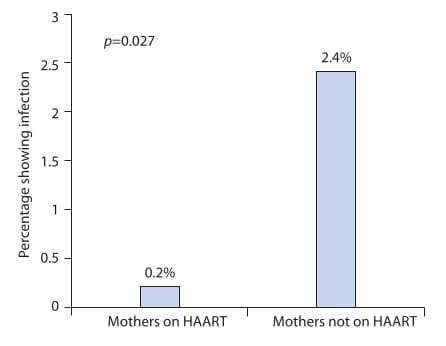
The longer nevirapine regimen achieved a 75 percent reduction in HIV transmission risk through breast milk for the infants of HIV-infected mothers with higher T-cell counts who had not yet begun treatment for HIV.
Adverse events were seen in 83% in both arms and serious adverse events in 19% of the extended NVP and 17% of placebo arms.
Mortality risk was similar between the study arms, but ∼2/3 of deaths occurred after 6 months (after most infants stopped breastfeeding).
Conclusion
Extending daily infant NVP from 6 weeks to 6 months lowered the risk of MTCT of HIV through breastfeeding at 6 months of age, most significantly in mothers with CD4 ≥350 and not on HAART.
There was no significant difference in adverse events or serious adverse events between both the arm.
Therefore, the study determines that there are benefits of extending infant NVP to prevent breast milk-associated HIV transmission overall, particularly in those mothers who do not require HAART for their own health.
Ref: HPTN 046: Efficacy of Extended Daily Infant NVP Through Age 6 Months Compared to 6 Weeks for Postnatal PMTCT of HIV through Breastfeeding. Programme and Abstracts of the 18 th Conference on Retroviruses and Opportunistic Infections; February 27-March 2, 2011, Boston, Massachusetts. Paper # 123LB
IMPAACT P1060 Study: Initiating HAART in Infants
NVP is commonly used for first-line HIV ART in infants due to availability and low cost in resource-limited countries. Although lopinavir/ritonavir (LPV/r) was shown to be superior to NVP in sd-NVP exposed infants in the IMPAACT P1060 cohort 1 study, a direct comparison study in sd-NVP-unexposed infants was unavailable.
IMPAACT P1060 cohort 2 was a multi-site, randomized comparison study conducted in infants unexposed to sd-NVP in sub-Saharan Africa and India, which was begun in March 2010 and considered ways of treating children who did become infected with HIV. Altogether, 288 infants were enrolled by March 2010 with a 48-week follow-up planned through March 2011.

The composite primary endpoint of treatment failure comprised viral failure (<1 log 10 decline from baseline to ≥12 to 24 weeks or > 400 copies/mL at week 24), or permanent discontinuation of NVP or LPV/r, including death by 24 weeks.
In October 2010, the Data Safety Monitoring Board recommended unblinding the study results.
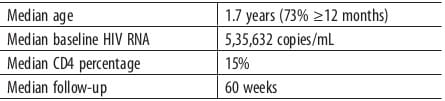
Median Characteristics
Results

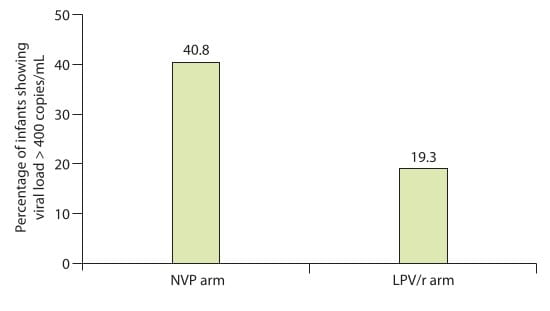
By 24 weeks, 5 in the NVP arm had died vs. 1 in the LPV/r arm and 10 vs. 3 during the entire follow-up period (none judged were related to the study drugs).
Time to virologic failure/off study drug differences persisted throughout follow-up (p <0.001).
Significant differences in favour of LPV/r were also seen for virologic failure/death at week 24 (p = 0.001) and throughout follow-up (p <0.001).
Conclusion
LPV/r-based therapy demonstrated superior performance over NVP regarding viral failure and drug discontinuation at 24 weeks and beyond. This has major implications for therapeutic guidelines in resource-limited settings and associated fiscal and access challenges. CD4/growth outcomes for NVP vs. LPV/r require further investigation.
The study underlines the limited treatment options available for treatment of HIV-infected infants in resource-limited settings and gives an impetus for including LPV/r into the first-line regimen.
Ref: NVP vs. LPV/r-based ART among HIV + Infants in Resource-limited Settings: The IMPAACT P1060 Trial. Programme and Abstracts of the 18 th Conference on Retroviruses and Opportunistic Infections; February 27-March 2, 2011, Boston, Massachusetts. Paper # 129LB
iPrEX Study: Small but Significant Decrease in Bone Mineral Density with TDF/FTC
Initiation of TDF has been associated with decreases in bone mineral density in HIV + people. HIV infection itself, the host response to HIV and other ARV drugs may also contribute to bone loss in HIV+ populations.
iPrEX is an international, randomized, double-blind, placebo-controlled study of FTC/ TDF pre-exposure prophylaxis in men who have sex with men (MSM).
In this sub-study of the Global iPrEX Trial, the researchers investigated the effect of the combination TDF/FTC regimen on bone mineral density in the absence of HIV infection.
DEXA scans of the hip and spine of 503 participants from the Global iPrEX Trial were performed at baseline and 24-week intervals.
At baseline, 36% had low bone mineral density (Z-score: <-1) in the spine and 18% in the hip.
There were no differences between randomization groups in baseline bone mineral density or percentage with low bone mineral density.
Results
- Percentage changes in bone mineral density at weeks 24 (n = 418), 48 (n = 268), and 72 (n = 126) are shown below
Mean percent change in bone mineral density from enrolment
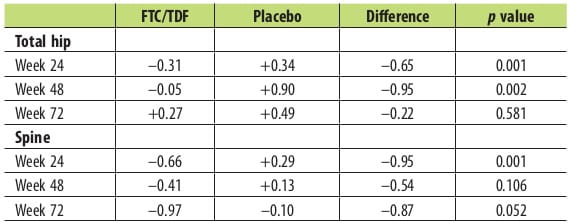
- Bone mineral density tended to increase in the placebo arm and decrease in the FTC/TDF arm, resulting in modest (-0.7 to -1.0%) but statistically significant differences between the groups by week 24.
- There were no differences between the groups in bone fractures (p = 0.56) or the incidence of low bone mineral density using the WHO or International Society for Clinical Densitometry criteria.
Conclusion
There were small but significant decreases in bone mineral density in those randomized to FTC/TDF relative to placebo, suggesting an effect of FTC/TDF on bone mass in the absence of HIV infection.
Ref: Effects of FTC/TDF on Bone Mineral Density in Seronegative Men from 4 Continents: DEXA Results of the Global iPrEX. Programme and Abstracts of the 18 th Conference on Retroviruses and Opportunistic Infections; February 27-March 2, 2011, Boston, Massachusetts. Abstract 92
SAPIT Trial: Early ART Initiation Within 4 Weeks of TB Treatment Initiation in HIV/TB Co Infected Patients with CD4<50 Cells/mm 3 Results in Better AIDS Free Survival
SAPIT (Starting Antiretroviral therapy at three Points In Tuberculosis therapy) is an open-label, randomized, controlled trial.
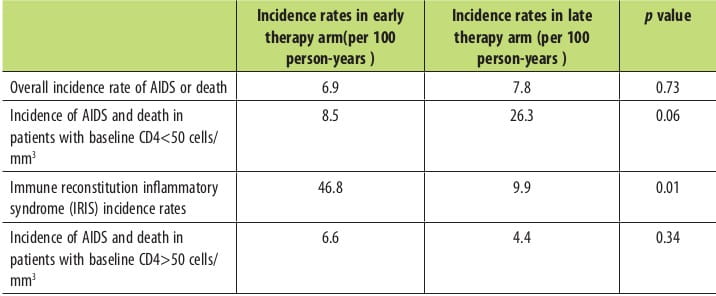
The objective of the trial was to compare the outcomes of early therapy (ART initiated within 4 weeks of TB treatment initiation, n=214) and late therapy (ART initiated within the first 4 weeks of the continuation phase of TB treatment, n=215) in 642 sputum acid-fast bacilli smear-positive patients with HIV and CD4 + counts <500 cells/mm3. Median CD4 + count and viral load at baseline in both groups was 150 cells/mm 3 and 1,61,000 copies/mL.
Results
Incidence rates in early and late therapy arm
Conclusion
STRIDE Study: Lower Rates of AIDS and Death with Immediate vs. Early ART in HIV/TB Patients
The STRIDE Study is a randomized, strategy study comparing immediate ART (2 weeks after TB treatment start) to early ART (8-12 weeks) among HIV + subjects with CD4 + cells <250/mm 3 treated for confirmed or suspected TB.
The study recruited 806 patients from 26 sites on four continents.
TB diagnosis was confirmed or suspected in 46% and 54% of cases.
Median ART start times were 10 days and 10 weeks from start of TB treatment for immediate ART and early ART arms.
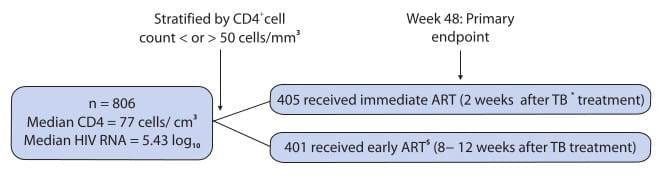
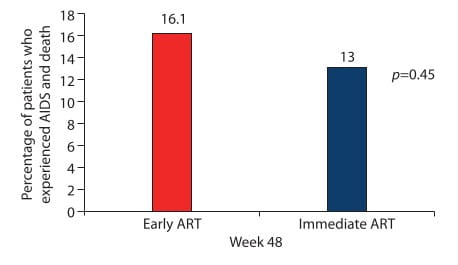
The primary endpoint was that immediate ART would reduce AIDS and death compared to early ART by 48 weeks.
Results
- More patients in early ART arm experienced AIDS or death at 48 weeks.
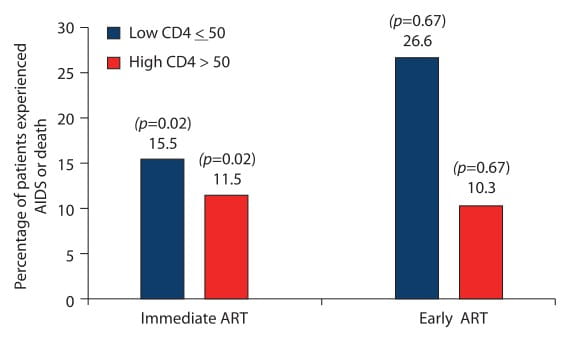
Immediate v/s early ART stratified by CD4 count
- TB IRIS was significantly higher with immediate ART than early ART (43 [11%] vs. 19 [5%], p = 0.009); but no deaths were attributed to TB IRIS.
- Overall, grade 3 or 4 toxicities did not differ between the arms (p = 0.29).
- Viral suppression (<400 copies/mL) at 48 weeks was 74% and did not differ between the arms; and 60% in each arm achieved CD4 cell rise ≥100 cells/mm 3 at 48 weeks.
Conclusion
Overall, immediate ART did not reduce AIDS and death compared to early ART. For persons with CD4 ≤50 cells/mm3, immediate ART resulted in lower rates of AIDS and death compared to early ART.
Ref: International Randomized Trial of Immediate vs. Early ART in HIV Patients Treated for TB: ACTG 5221 STRIDE Study. Programme and Abstracts of the 18 th Conference on Retroviruses and Opportunistic Infections; February 27-March 2, 2011,Boston, Massachusetts. Abstract 39LB
No Increased Risk of MI with Abacavir FDA Meta Analysis of 26 Trials
The U.S. Food and Drug Administration (FDA) reported that it has found no evidence of an association between abacavir (ABC) treatment and an increased risk of myocardial infarction (MI [heart attack]) in a meta-analysis of 26 randomized trials of the drug.
Several prior studies have found a link between ABC and increased cardiovascular risk. The D:A:D study reported an increased risk of MI-associated with current or recent ABC (relative risk [RR] 1.9, 95% confidence interval [CI]: 1.47 to 2.45, p = 0.0001). In another example, the Strategies for Management of AntiRetroviral Therapy (SMART) study found an association between ABC and the increased risk of CVD.
The trial by the FDA represents the largest meta-analysis to date of clinical trials in which ABC use was randomized. All studies were conducted between 1996 and 2010 and involved 16 pharmaceutical company clinical trials, five AIDS Clinical Trials Group studies and five studies conducted at academic centers.
In the analysis, 9,832 patients were includedラ 5,028 received ABC and 4,804 receivedn a competing agent, with a mean follow-up of 1.62 person-years.
Results
Trial Level Analysis
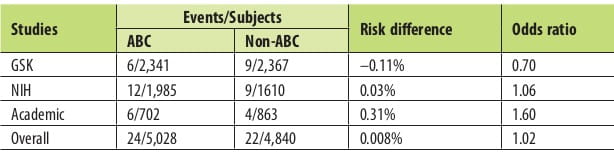
The following figure depicts a forest plot of the 26 trials sorted by average duration of follow-up per subject (shortest duration at the bottom to longest duration at the top).
Forest plot of meta-analysis results: Trials sorted based on duration of person-years of follow-up (shortest on bottom to longest on top
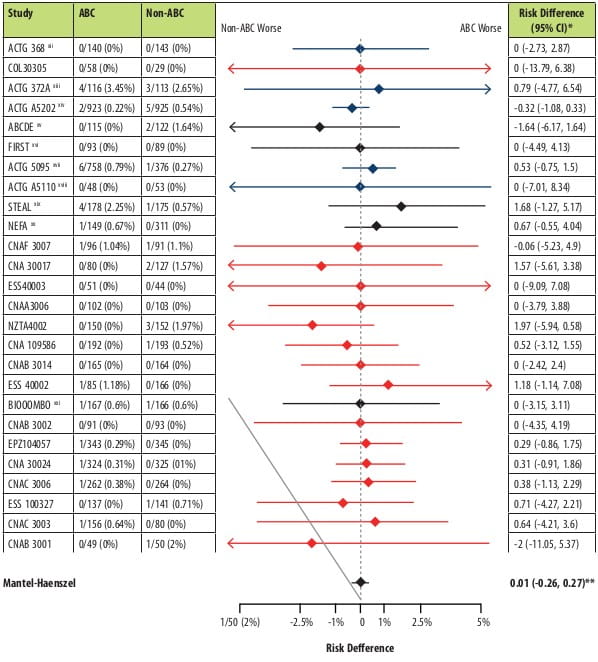
No trends regarding the total amount of person-years of follow-up were seen in the meta-analysis.
No single trial showed a statistically significant increased risk of developing MI between subjects treated with ABC and subjects treated with non-ABC regimens.
A total of 25 heart attacks were documented among those taking ABC, compared with 22 of those not taking ABC. According to statistical analyses conducted by the FDA, the difference in heart attack risk was negligible and not statistically significant.
Even when the agency excluded 18 clinical trials in which no heart attacks were reported, there was no statistically significant difference between those taking ABC and those not using the drug.
Conclusion
This meta-analysis conducted by the FDA did not show an association between increased risk of heart attacks and the use of ABC. There was no statistically significant difference between those taking ABC and those not taking ABC.
Ref: No Association of Myocardial Infarction with ABC Use: An FDA Meta-Analysis. Programme and Abstracts of the 18 th Conference on Retroviruses and Opportunistic Infections; February 27-March 2, 2011, Boston, Massachusetts. Paper 808
Is HIV Infection an Independent Risk Factor for Acute MI (AMI)?
The aim of the study was to determine whether HIV infection was an independent risk factor for AMI.
The Virtual Cohort (VC) is a cohort of HIV-infected and age, gender, race/ethnicity and clinical site-matched HIV-uninfected participants who were identified from the United States Department of Veterans Affairs (VA) administrative data during 1998-2003.
As part of this initiative, all participants of The Ischemic Heart Disease Quality Enhancement Research Initiative (IHD-QUERI), were reviewed in order to assess the system-wide variations in acute coronary syndromes within the entire VA health care system, from 2003 through 2008.
From the VC, 55,144 HIV-negative and 27,379 HIV-positive individuals who were free of baseline CVD in October 2003 participated in the study. AMI was determined by IHD-QUERI.
Results
During a median 4.6 years, there were 497 MI events (44% HIV+).
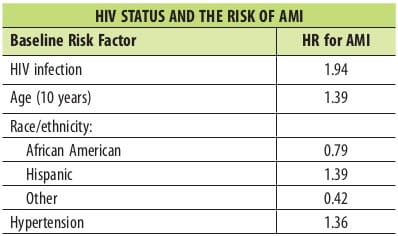
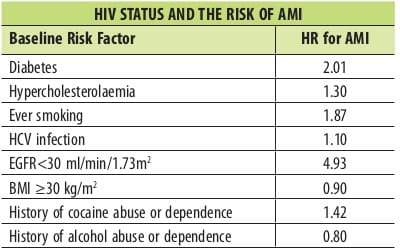
Rates of MI were higher for HIV+ (21.7) than uninfected veterans (13.1), resulting in an increased relative risk of MI (HR: 1.86) after adjusting for established risk factors, including age, Hispanic ethnicity, hypertension, hyperlipidaemia, diabetes and smoking. Among HIV-infected participants, baseline CD4 counts, HIV-1 RNA levels and the class of ART were not associated with MI after adjustment for established risk factors (p >0.2).
Limitations
The results may not be generally applicable to women.
The present study does not include the cumulative exposure of ARV classes and does not include time-updated HIV-1 RNA and CD4 count levels.
Conclusion
HIV-infected participants had an increased risk of AMI as compared to demographically and behaviorally similar HIV-uninfected participants after adjusting for important confounders. HIV infection was associated with the same risk of AMI as diabetes and ever smoking. This association persisted when the sample was restricted to never smokers. The age at and time to an AMI event was the same for HIV-infected and uninfected participants. Further studies assessing the risk factors among HIV-infected people will need to incorporate time-updated CD4 counts, HIV-1 RNA levels and duration of ART.
Ref: HIV is Associated with Clinically Confirmed Myocardial Infarction After Adjustment for Smoking and Other Risk Factors. Programme and Abstracts of the 18 th Conference on Retroviruses and Opportunistic Infections; February 27-March 2, 2011, Boston, Massachusetts. Paper # 809
Risk of Cancer in the HAART Era
The incidence of certain non-AIDS-defining cancers (NADC) in HIV patients, including anal cancer and Hodgkin's lymphoma, has reportedly increased in the HAART era.
Experimental data on human cancer cells have supported a protective effect of protease inhibitors (PI), although this has not been confirmed in epidemiologic studies.
HIV + Kaiser Permanent members with a complete history of combination ART (n = 12,872) were followed for incident cancers from 1996 to 2008 (mean follow-up: 4.5 years), as below:
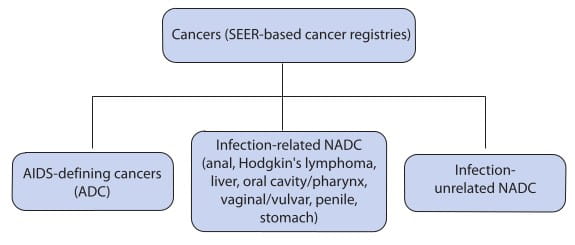
Rate ratios (RR) for the cumulative duration of any ART, PI therapy and non-nucleoside reverse transcriptase inhibitor (NNRTI) therapy (no therapy use as reference) were obtained from Poisson models adjusting for age, sex, race, HIV risk, tobacco use, alcohol or drug abuse, hepatitis B or C, and calendar year.
Results
The cohort experienced
- 32,480 person-years' ART;
- 21,338 person-years' PI therapy; and
- 15,677 person-years' NNRTI therapy.
RR for AIDS-defining cancer indicated that rates were lower with longer duration of ART compared with no ART, and the effect was similar by ART class (see the table).
Declines in Kaposiメs sarcoma were less prominent during the first 2 years of therapy and for NHL, declines were observed only after 2 years.
For anal cancer and Hodgkin lymphoma, there was evidence of higher rates during the first 2 years of ART compared with no therapy, possibly reflecting prevalent cancers diagnosed soon after initiation of care.
A higher risk of anal cancer was also observed for ≥5 years of PI therapy, consistent with calendar trends reported by others.
Therapy duration did not appear to affect infection-unrelated NADC rates, with the exception of a significantly lower prostate cancer rate for ≥5 years PI therapy compared with no therapy.
Rate ratios for cancers by any ART, PI and NNRTI duration (ref group = no therapy)
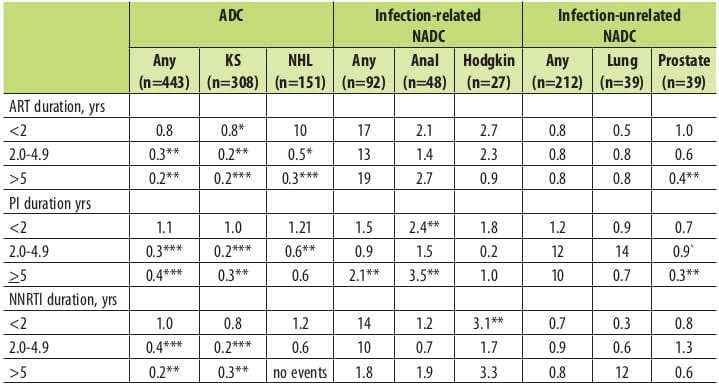
**P=0.001 compared with reference group of no therapy
Conclusion
The benefit of ART on AIDS-defining cancer rates was more prominent after 2 years of therapy. This benefit does not differ by ART class. For NADC, no consistent pattern with therapy duration was observed. Vigilance for cancers is needed throughout ART treatment, including soon after initiation. Larger studies are needed to confirm results.
Ref: ART Use and Risk of Cancer in HIV Patients. Programme and Abstracts of the 18 th Conference on Retroviruses and Opportunistic Infections; February 27-March 2, 2011, Boston, Massachusetts. Paper # 81
Toxicogenomics of NVP Associated Cutaneous and Hepatic Adverse Events Among Populations of African, Asian, and European Descent
NVP is a NNRTI widely used in combination with other ARV agents for the treatment of human immunodeficiency virus disease. Rash and NVP-related hepatitis has been documented as one of the most frequently reported adverse events with NVP treatment.
In this analysis, investigators characterized the relationships between NVP-associated cutaneous and hepatic adverse events and human genetic variants among HIV-infected adults of African, Asian, and European descent.
The investigators retrospectively identified cases and controls and prospectively collected DNA.
Cases had experienced symptomatic NVP-associated severe (grade 3/4) cutaneous and/or hepatic adverse events within 8 weeks of initiating NVP. Controls had not experienced such events during at least 18 weeks of NVP therapy. Cases and controls were matched 1:2 on baseline CD4 T-cell count, sex and race. Individuals with ≤150 CD4 T-cells/mm 3 at baseline were excluded. A total of 123 HLA alleles and 2744 single nucleotide polymorphisms (SNP) in a major histocompatibility complex (MHC), and drug metabolism and transport genes were characterized.
Results
- 276 evaluable cases (175 cutaneous adverse events, 101 hepatic adverse events) and 587 controls.
- Cutaneous adverse events were associated with
- CYP2B6 516G→T (OR = 1.66 in all participants);
- HLA-Cw*04 (OR = 2.51 in all participants); and
- HLA-B*35 (OR = 3.47 in Asians, OR = 5.65 in Thais).
- Risk for cutaneous adverse events was particularly high among Blacks with concomitant CYP2B6 516TT and HLA-Cw*04 (OR = 18.90), and among Asians with HLA-B*35 and HLA-Cw*04 (OR = 18.34).
- Hepatic adverse events were associated with HLA-DRB*01 (OR = 3.02 in Whites), but not with CYP2B6 genotypes.
- Associations differed by geographic region of ancestry, thereby at least, in part, reflecting allele frequencies.
Conclusion
Among patients with ≥150 CD4 T-cells/mm 3 who initiated NVP, polymorphisms in drug metabolism and immune response pathways modulated risk for serious adverse events.
These results suggest fundamentally different mechanisms of cutaneous adverse events, most likely MHC class I-mediated and influenced by NVP CYP2B6 metabolism, and hepatic most likely being MHC class II-mediated and unaffected by such metabolism.
These risk variants are insensitive for routine clinical screening.
Ref: Toxicogenomics of NVP-associated cutaneous and hepatic adverse events among populations of African, Asian, and European descent. Programme and Abstracts of the 18 th Conference on Retroviruses and Opportunistic Infections; February 27-March 2, 2011, Boston, Massachusetts. Abstract 476
Other Conference Highlights
5 Jul - 8 Jul, 26

ESHRE 2026
London, UK
5 Jul - 8 Jul, 26
ESHRE 2026
London, UK
5 Jul - 8 Jul, 26
ESHRE 2026
London, UK
5 Jul - 8 Jul, 26
ESHRE 2026
London, UK
Related Content
18 Jul, 16

15 Jul, 16

14 Jul, 16


