

ESCRS 2024: Effect of Plasma Punctal Occlusion on Dry Eye Management: A 6-month Follow-up Clinical Trial


Speaker: Farhad Nejat
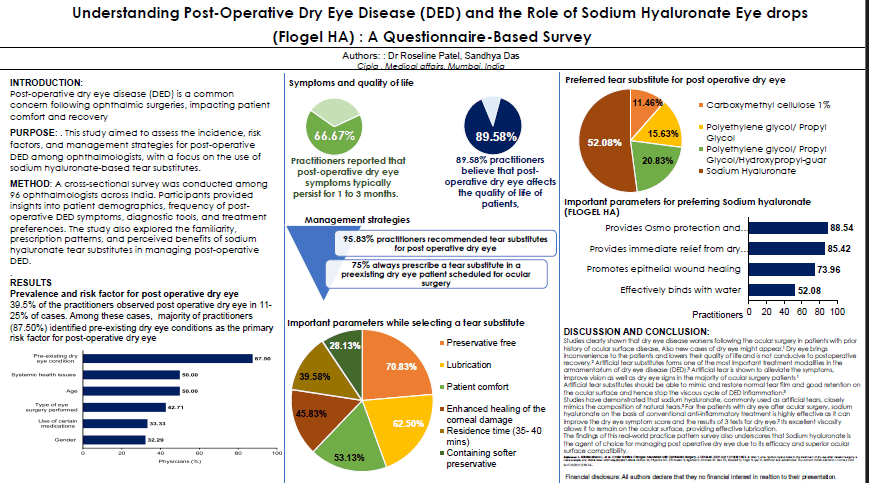
Dry eye disease (DED) is a prevalent and multifactorial condition in ophthalmology, with reported prevalence rates ranging from 5% to 50%, and up to 75% in certain populations. It occurs when the tear film evaporates excessively or when lacrimal gland activity is insufficient, leading to an inadequate tear supply. DED is associated with a range of symptoms, including eye discomfort, itching, redness, foreign body sensation, pain, and light sensitivity. In severe cases, it can result in corneal damage and significantly diminish an individual's quality of life. Triggers for the condition include aging, refractive surgery, medications, and autoimmune diseases such as rheumatoid arthritis, lupus, and Sjögren's syndrome. Additionally, the post-COVID era has seen an increase in screen time among both children and adults, further exacerbating the condition.
A clinical trial was conducted to investigate the effect of plasma spots for temporary punctal closure in the treatment of dry eye. Sixty patients with rheumatologic diseases were included, all referred from rheumatology clinics. Patients were divided into test and control groups. The plasma spot procedure involved applying one or two plasma spots behind the slit lamp after administering local anesthetic drops, with the treatment repeated three times.
The findings demonstrate that uncorrected visual acuity (UCVA), best-corrected visual acuity (BCVA), and intraocular pressure (IOP) remained stable in both study groups, while significant improvements were observed in tear production and ocular surface metrics, such as tear meniscus height, tear breakup time (TBUT), and Ocular Surface Disease Index (OSDI) scores. Six-month follow-up using optical coherence tomography (OCT) imaging showed a reduction in punctum volume and dimensions, which correlated with clinical improvements. In contrast to complete punctal occlusion methods, which often cause tearing during remission, this technique preserved punctal function without excessive tearing. Plasma spots offer a straightforward, office-based treatment that provides sustained benefits over six months. The plasma-occlusion punctum (POP) method, specifically, is a safe, effective, and cost-efficient alternative for punctal modification in DED, particularly by enhancing tear retention. It is especially advantageous for rheumatologic patients with impaired lacrimal gland function, providing a non-invasive, office-based solution for moderate to severe DED without the need for permanent, irreversible interventions.
42nd Congress of the European Society of Cataract and Refractive Surgeons, 6 – 10 September 2024, Fira de Barcelona, Spain.