




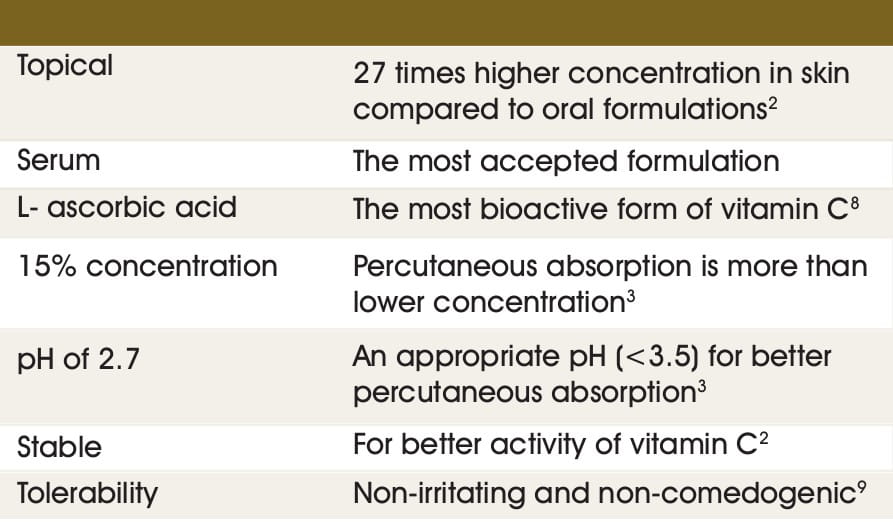
VC15 is the first vitamin C serum available in India. It contains L-ascorbic acid at a concentration of 15%. It is a stable formulation with a pH of 2.7. VC15 is non-irritating and non- comedogenic. It is available in a bottle of 15 ml, along with a dropper.
Vitamin C Serum (VC 15): FAQs

4 Feb, 12
Vitamin C Serum (VC 15): FAQs
What is VC15?
What is the Science Supporting Topical VC15?
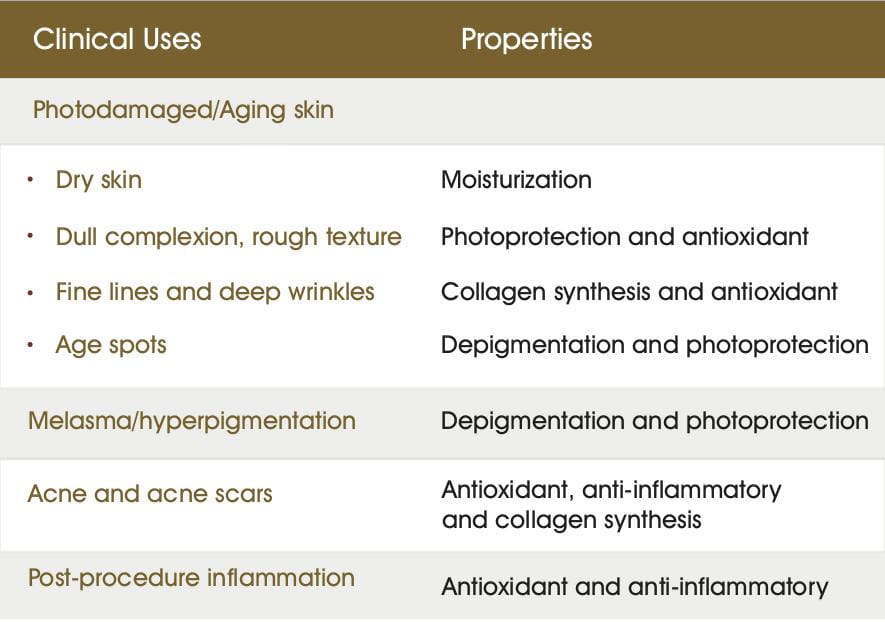
Every day, the skin is exposed to external factors like sunlight, smoke and air pollution, all of which lead to the formation of reactive oxygen species in the skin. These reactive oxygen species can damage various cellular structures such as DNA, proteins, cellular membranes and lead to signs of aging. VC15, being an antioxidant and having anti-inflammatory and depigmentation properties, helps in the treatment and prevention of photodamaged/aging skin.
How does VC15 Help the Skin?
The following properties of topical vitamin C support its different clinical uses:
Why Should One use Topical VC15 Rather than taking Vitamin C Tablets?
Oral vitamin C is prescribed for various skin ailments. Since the absorption of vitamin C from the intestine is limited, oral supplementation with vitamin C does little to increase its concentration in the skin. Therefore, topical application of vitamin C is the preferred method to increase its presence in the skin.1 The level of vitamin C in the skin after topical application of 15% serum is 27 times more than the level that could be attained with oral vitamin C.2
Why is VC15 Available as a Serum Formulation?
Serums tend to be thick liquids and are usually clear. Also, they are mostly water-based. Because serum is water-based, most skin types can use them. A serum is able to penetrate into the deeper layers of the skin. So, to achieve the maximum benefits, VC15 is available as a serum formulation.
What is the Advantage of using VC15 Containing L-Ascorbic Acid Over other Vitamin C Derivatives?
As L-ascorbic acid is an unstable molecule, it is difficult to formulate a stable topical formulation. So, stable derivatives of vitamin C are used in topical formulation. But to be effective, these vitamin C derivatives must first get into the skin and then must be chemically converted by the skin's cells into L-ascorbic acid. Because the skin is difficult to penetrate and the enzymes necessary to convert these derivatives into L-ascorbic acid are not always available, these derivatives are not very effective in delivering vitamin C into the skin.
VC15 contains stable L-ascorbic acid at a low pH, which allows vitamin C to be absorbed by the skin.
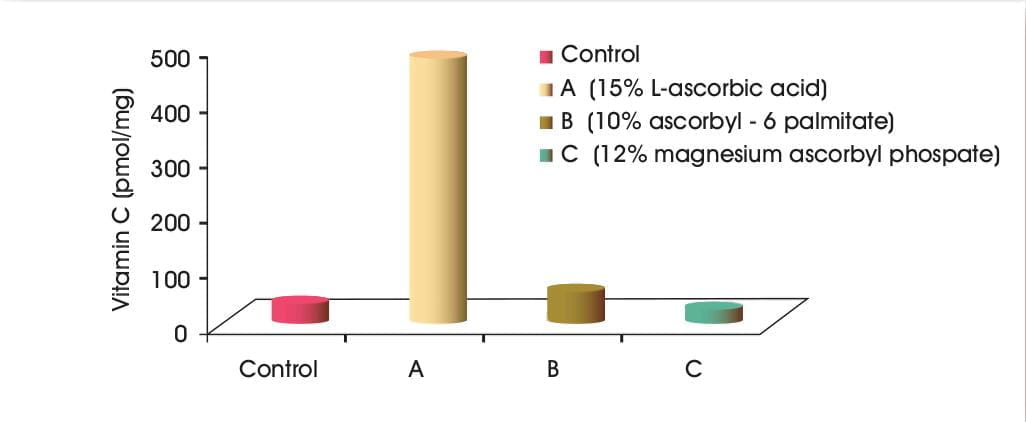
In a study, 15% L-ascorbic acid, 10% ascorbyl-6-palmitate and 12% magnesium ascorbyl phosphate were applied to pig skin for 24 hours and the concentrations in the skin were measured. Neither of the esters increased L-ascorbic acid levels in the skin significantly (Fig. 1).3
Figure. 1: Percutaneous absorption of ascorbic acid derivatives
Does the Concentration of Vitamin C in VC15 Modify the Percutaneous Absorption?
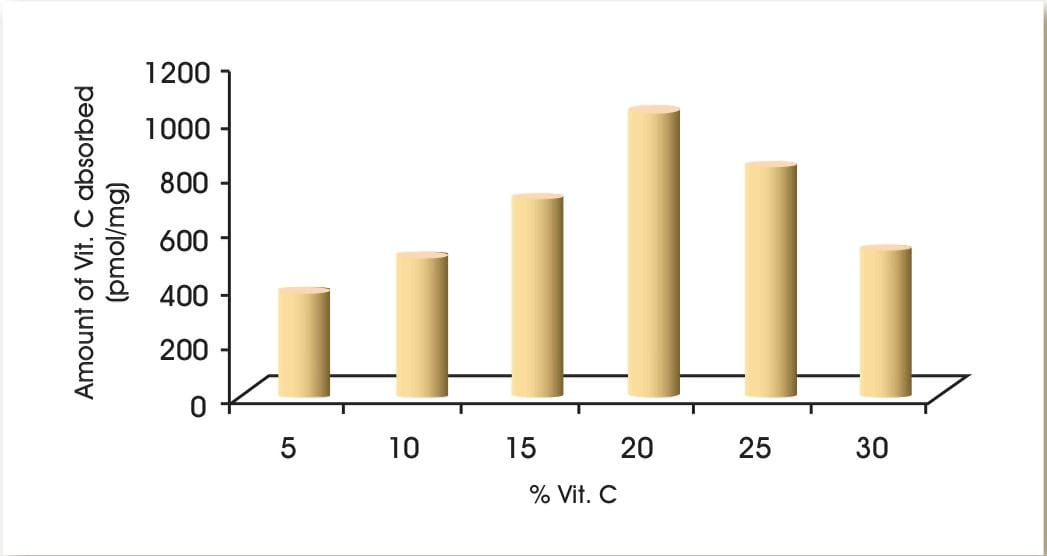
Formulations containing 5%, 10%, 15%, 20% or 25% of L-ascorbic acid were applied to skin of Yorkshire pigs and the percutaneous absorption was determined. Percutaneous absorption gradually increases as the concentration of L-ascorbic acid in the formulation increases. The 20% formulation resulted in the highest concentration levels, with maximized concentration in the skin even after 3 days of once-daily application(Fig. 2). For unknown reasons, concentration levels higher than 20% resulted in decreased tissue levels.3
Figure. 2: Effect of concentration on percutaneous absorption
Why does VC15 have a pH of <3.5?
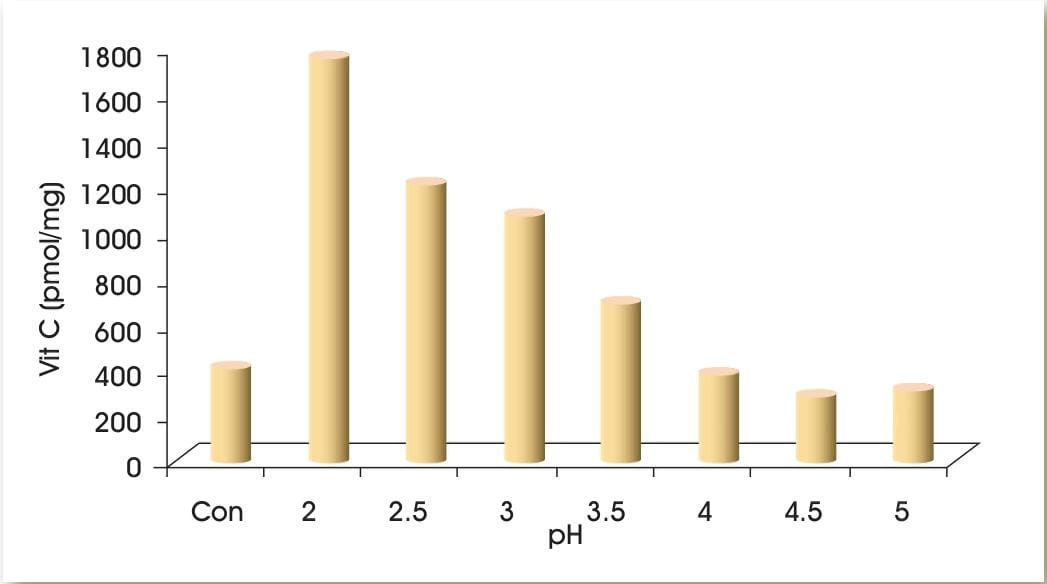
The pH of the topical vitamin C formulation is important to actually achieve the skin benefits of topical vitamin C. The 15% formulations of L-ascorbic acid were tested at pH levels between 2 and 5. Tissue levels of L-ascorbic acid were enhanced only at a formulation with pH levels <3.5. Thus, L-ascorbic acid must be formulated at pH levels <3.5 for proper percutaneous absorption.3
Figure. 3: Effect of pH on percutaneous absorption
Is VC15 a Stable Product?
Yes, once the bottle is opened, VC15 is stable for a month when stored between 15-30°C.
What is the Efficacy of Topical Vitamin C in Different Skin Conditions?
- A 3-month daily regimen of topical vitamin C provided significant objective and subjective improvement in photodamaged facial skin.4
- Topical vitamin C has a beneficial effect on melasma, with minimum adverse effects.5
- Topical vitamin C can be used for a longer period of time as part of the initial hyperpigmentation treatment and as maintenance therapy.5
- Topical vitamin C is efficacious as monotherapy for the treatment of acne.6
- Topical vitamin C may offer an ideal adjunct therapy to common acne regimens.6
- Topical vitamin C, when used in an appropriate vehicle and when initiated at an appropriate post-operative period, may decrease the degree and duration of erythema after cutaneous CO2 laser resurfacing.7
How Soon does a user see Results with Topical Vitamin C?
In a study, the mean time for first clinical improvement was about 20 days. The improvement during this period was in tactile roughness and/or texture and skin hydration changes.4 The appearance of fine lines and wrinkles become less noticeable within 3 to 8 months. The results may vary for individuals, depending upon the condition of the skin at the initiation of treatment.
According to a trial conducted with VC15, improvement was evident in skin hydration, texture and pigmentation by 2-3 weeks of therapy.
Why Should VC15 be Applied in the Morning?
Research has shown that topical vitamin C has photoprotective properties.3 So VC15 should be applied in the morning. However, it is important to note that topical vitamin C by itself is not a sunscreen because it does not absorb light in the UV spectrum.3 Hence an additional sunscreen is necessary.
What are the Side Effects Associated with Topical Vitamin C?
The adverse effects reported with the use of topical vitamin C are mild and typically resolve in the first 2 months of therapy. These minor adverse effects included stinging (55%), erythema (24%) and dry skin (<1 %).4
Is VC15 Comedogenic or Irritating in Nature?
According to a trial, VC15 was proved to be non-comedogenic and non-irritating in nature.9
What is the Dosage and Administration of VC15?
VC15 is to be applied once daily in the morning. 7-10 drops of VC15 are to be taken on the fingertips, dabbed on the face and gently massaged until it is completely absorbed. Before application, it is to be ensured that the skin area to be treated and hands are thoroughly clean. Serum should be applied before using any sunscreen and/or make-up.
Why Should VC15 be Considered as an Ideal Topical Vitamin C Formulation?
References
1. Farris PK. Topical vitamin C: A Useful Agent for Treating Photoaging and Other Dermatologic Conditions. Dermatol Surg 2005; 31:814-18.
2. Burke KE. Interaction of vitamins C and E as better cosmeceuticals. Dermatologic Therapy 2007; 20:314-21.
3. Pinnell SR et al. Topical L-ascorbic acid: percutaneous absorption studies. Dermatol Surg 2001 Feb;27(2):137-42.
4. Traikovich SS. Use of topical ascorbic acid and its effects on photodamaged skin topography. Arch Otolaryngol Head Neck Surg 1999;125:1091-8.
5. Espinal-Perez L, Moncada B, Castanedo-Cazares P A double-blind randomized trial of 5% ascorbic acid vs 4% hydroquinone in melasma. Int J Dermatol 2004; 43:604-7.
6. Woolery-Lloyd H, Baumann L, Ikeno H. Sodium L-ascorbyl-2-phosphate 5% lotion for the treatment of acne vulgaris: a randomized, double-blind, controlled trial. J Cosmet Dermatol. 2010 Mar;9(1):22-7.
7. Alster T, West TB. Effect of vitamin C on postoperative CO2 laser resurfacing erythema. Dermatol Surg 1998; 24:331-34.
8. Lupo MP Antioxidants and vitamins in cosmetics. Clinics in Dermatology 2001; 19:467-473.
9. Data on file, Cipla Ltd.
Related Topics
More From Area Of Interest
You may also like

12 Oct, 26
21 Sep, 26
21 Sep, 26
21 Sep, 26

13 May, 26

17 Apr, 26
Latest Items
12 Oct, 26

12 Oct, 26
Journal Scans
8 Oct, 26

8 Oct, 26


