




A multicenter, randomized, double-blind, vehicle-controlled study was carried out to demonstrate the efficacy, safety, and tolerance of ciclopirox shampoo for treatment and prophylaxis of seborrheic dermatitis of the scalp. After treatment with ciclopirox shampoo once or twice weekly or vehicle for 4 weeks, responders were randomized to a 12-week prophylactic study arm. The study was conducted at forty-five medical centers in Germany, France, the United Kingdom, and Austria.
Treatment and Prophylaxis of Seborrhoeic Dermatitis of the Scalp with Antipityrosporal 1% Ciclopirox Shampoo

31 Oct, 10


Treatment and prophylaxis of seborrheic dermatitis of the scalp with antipityrosporal 1% ciclopirox shampoo.
Objective
Method
A total of 1000 patients with stable or exacerbating seborrheic dermatitis of the scalp were enrolled in the study and a total of 949 patients were randomized to receive ciclopirox treatment once or twice weekly or vehicle for 4 weeks. Thereafter, 428 responders received either ciclopirox prophylaxis once weekly or every 2 weeks or vehicle for 3 months. The efficacy of ciclopirox treatment was assessed by comparing the responder rates of active treatment groups with vehicle. In addition to that relapse rate and tolerability were also assessed.
Results
- Relapses occurred in 14.7% of patients using prophylactic ciclopirox once weekly, 22.1% of those in the prophylactic group shampooing once every 2 weeks, and 35.5% in the vehicle group (fig 2).
Fig 1 Response rate with 1% ciclopirox and vehicle
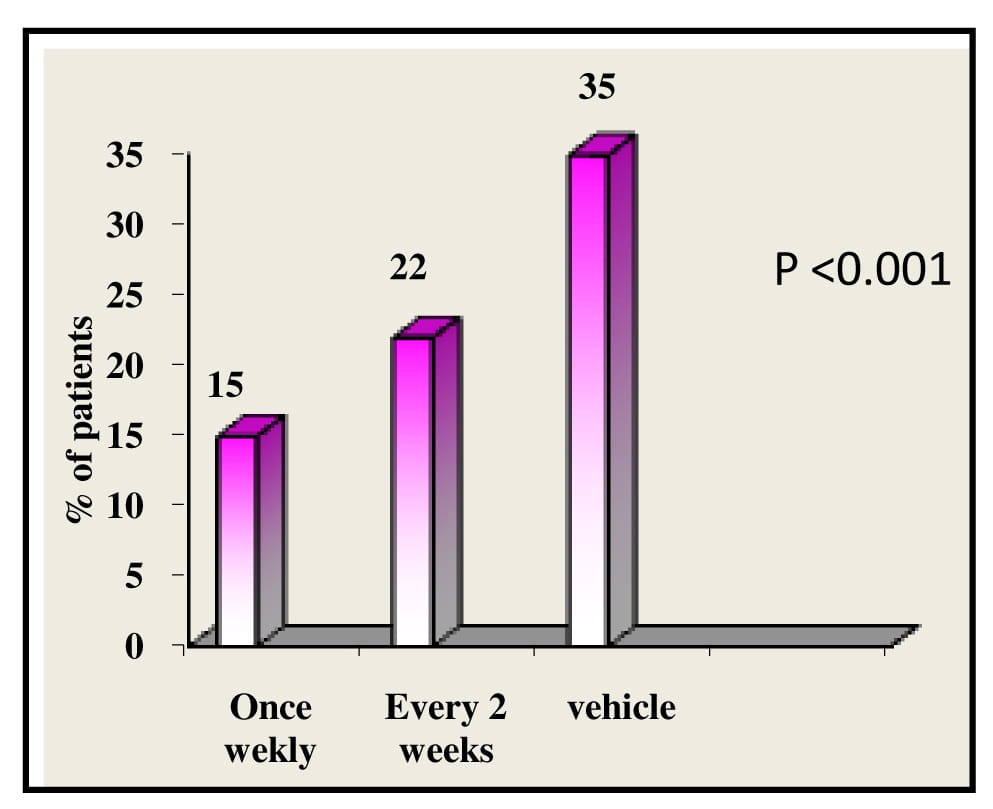
Fig 2 Relapse rate with 1% ciclopirox and vehicle
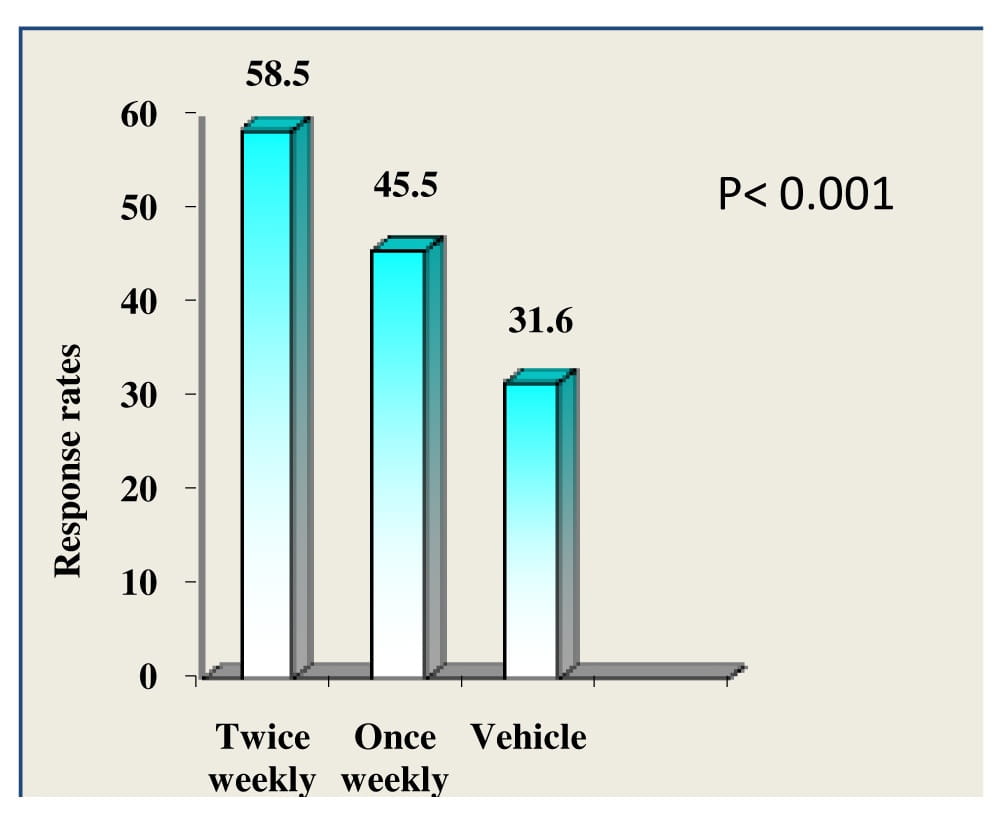
- Ciclopirox twice and once weekly produced response rates of 57.9% and 45.4%, respectively, compared with 31.6% for vehicle (fig 1).
Conclusions
Seborrheic dermatitis of the scalp responds well to 1% ciclopirox shampoo once or twice weekly for 4 weeks. A low relapse rate is maintained by once weekly shampooing or shampooing once every 2 weeks. These treatments are safe and well-tolerated.
The few adverse events were evenly distributed among groups. Local tolerance and cosmetic acceptability were "good" in more than 85% of subjects.
Reference
Adapted from Arch Dermatol. 2005; 141: 47-52.
Related Topics
More From Area Of Interest
You may also like

13 May, 26

17 Apr, 26
Our Research
23 Feb, 26

23 Feb, 26

11 Feb, 26
11 Feb, 26
11 Feb, 26
Latest Items
Journal Scans
24 Aug, 26

24 Aug, 26

21 Aug, 26
Journal Scans
18 Aug, 26

18 Aug, 26


