The 5th Vital Sign
There has been tremendous pressure to improve the recognition and treatment of pain for hospitalized patients. These initiatives build on the appeal established by the American Pain Society for making pain the 5th vital sign as a strategy to increase pain assessment and treatment.
The concept purports that to treat pain, clinicians first need to systematically and repeatedly evaluate the presence and characteristics of pain.

There should be an attempt made to understand the cause and prior responses to attempted therapy.
In the ICU, the dominant focus on support of vital organ function leads to the aggressive use of interventions. There is a powerful human tendency to act to save endangered life - the "rule of rescue".
The intensive care unit [ICU] is a unique care setting where critically ill patients receive state-of-the-art interventions that are aggressive and fast paced.
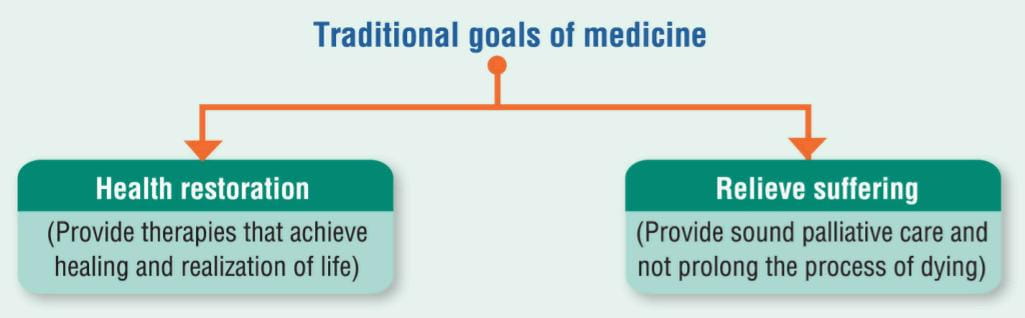
Although the importance of quality pain management in the ICU is inherently compelling, such management can also be challenging.
Pain has been defined as an unpleasant sensory and emotional experience associated with actual or potential tissue damage, or described in terms of such damage. The underlying physiology is nociception, the generation of neural afferent signals from tissue damage.
Pain experienced in the ICU includes both repeated episodes of acute or short-duration pain and varying degrees of chronic pain or sustained pain.
Acute or short-duration pain is primarily an episodic and immediate experience of localized tissue damage. In the ICU, acute pain may occur as a manifestation of a patient's underlying disease or as a result of therapeutic endeavors. A diverse array of noxious stimuli affects the critically ill patient.
Some common procedures like surgery, monitoring devices such as catheters or electrophysiologic apparatus, tissue inflammation, and immobility. Particularly common and painful procedures include endotracheal intubation, phlebotomy, nasogastric or orogastric tubes, vascular access devices, suctioning, and chest tubes.
Turning has been identified as one of the most painful and distressing procedures endured in routine ICU care.
Chronic pain develops from longstanding processes of tissue injury or sustained pain that result in a vicious cycle of tissue change and heightened subjective sensitivity. Chronic pain is pervasive in the ICU due to both the diseases and conditions preceding ICU admission and to acquired symptoms that result from prolonged and repeated painful states during the ICU stay.
Different types of pain are important to understand, not only for their diagnostic ability to determine the root cause of pain, but because different therapeutic approaches are indicated based on the syndrome of pain present.
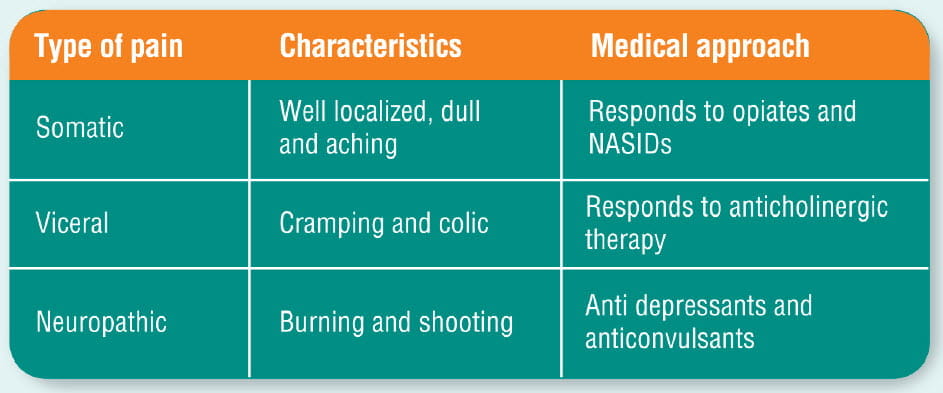
Pain should be anticipated as a ubiquitous experience for ICU patients. Evaluation starts with the recognition and expectation that most ICU patients will require therapeutic measures directed at the alleviation of pain.
Pain produces systemic effects that are recognizable, potentially detrimental to the ICU patient, and may be relieved through optimal pain management.
The experience of pain affects all systems of the body through neurohormonal mechanisms. In general stress response, catecholamine release, and sympathetic outpouring, pain results in:
- Mydriasis
- Anxiety
- Diaphoresis
- Catabolism
- Tachycardia
- Resultant increased myocardial oxygen demand
- Increased bowel motility
- Tachypnea
- Altered pulmonary mechanisms
- Water retention as a result of activation of the renin-angiotension-aldosterone axis cytokine elaboration.
Unabated pain may result in:
- Immune system dysfunction
- Altered glucose control
- Myocardial ischemia
- Ventilator dyssynchrony
- Acute restrictive respiratory physiology, and
- Disrupted sleep quality
Tissue damage and inflammation itself, results of multiple cytokines, such as tumor necrosis factor, interleukin-1, and interleukin-6, that may contribute to hemodynamic instability for ICU patients.
Pain has synergistic effects on anxiety, depression and sleep disturbances. Each of these overlapping conditions has been further demonstrated to interact with painful states and to heighten the pain experience.
In the ICU, the differentiation of pain types is sometimes limited by the ability of many patients to express symptoms.
However, for the communicative patient or those with high probability of multiple syndromes of pain, such as the patient with metastatic cancer, the assessment should attempt to ascertain defining syndromes.
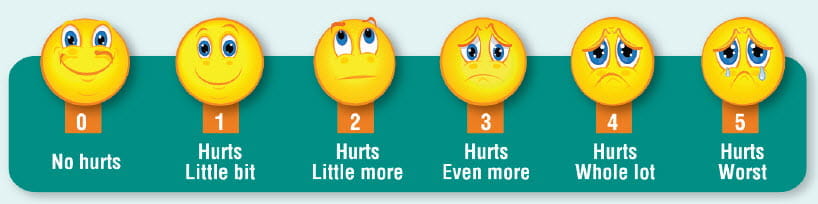
Although the intensity of pain is entirely subjective, it may be quantified by having the patient assign a numeric value aided by a variety of rating scales. The intent of asking a patient to rate his or her pain on a valid and reliable scale is to aid therapeutic efforts to relieve the pain.
Numeric rating scale, which is usually employed with a visual aid to assist a patient in grading their pain along a scale, such as from 0 = no pain to 10 = the worst pain they have ever experienced. The numeric scales have the least variance and may be the preferred tool overall.

A pictorial scale that represents, primarily a graphical means of ascribing numbers to a patient's perception.
BPS score ranges from 3 (no pain) to 12 (maximum pain)
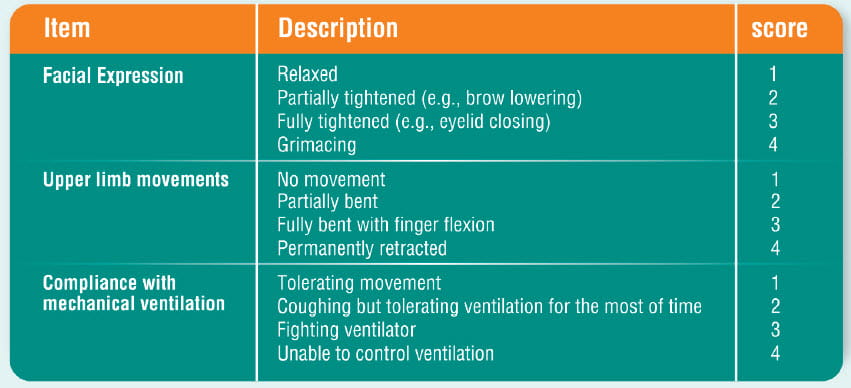
The subjective determination of pain is problematic in the ICU where the majority of patients experience cognitive impairment. For patients able to respond but not able to quantify pain with a scale, assessment requires both the use of physiologic markers and creative interrogation, such as teaching patients to signal with hand movements or blinking in code when they feel pain is inadequately treated.
To be effective, the strategy must be tailored to the capability of a particular patient and be ardently, frequently, and regularly implemented as well as appropriately reviewed in the clinical titration of analgesia.
Pain manifests various physiologic and behavioral markers that can be used as surrogates for the patient unable to express the experience of pain.
Clinicians should be attentive to patient movement, facial expression, and posturing, as well as physiologic indicators-such as increased heart rate, inposturing, increased blood pressure, increased respiratory rate, diaphoresis, and mydriasis.
The change in these parameters following analgesic therapy is further evidence for the prior presence of pain and can aid in continued monitoring and titration of analgesics. Family reports may also be solicited and used within the spectrum of data to guide appropriate pain management. There is evidence that surrogates may lack reliability, and thus may not be depended on solely for monitoring. Agitation must always prompt a search for pain and, for most ICU patients, warrants a therapeutic trial of analgesia before sedation.
- Crit Care Clin 2004; 20: 381-401.
- Anesth Analg 2005; 101:1470-6
- Acute Pain Management: Operative or Medical Prodecures And Trauma, Clinical Practise Guideline No.1. AHCPR Publication No. 92-0032; February 1992.