Tackle Crisis...with a Pinch of Zinc.
Diarrhea remains a leading cause of morbidity and mortality especially in children in developing countries throughout the world, with approximately 1.5 billion episodes per year.*
It is estimated that diarrheal diseases cause 1.5-2.5 million deaths eaeh year among children younger than age 5 and contributes substantially to malnutrition in surviving children.*
India loses about 6 lakh children under the age of five, every year. Statistics claim that 2.2 million children will die from diarrhea and related diseases this year.
80% of them in the first two years of their life;
42,000 a week.
6,000 a day,
Four every minute,
One every fourteen seconds
* Gastroenterology 2006; 130: 2201-2205
Zinc deficiency is highly prevalent in children in developing countries like India. It is one of the major risk factors for poor child health accounting for over 8 lakh child deaths per year, including 10% of all diarrhea deaths. 1 However, Zinc supplements in young children, reduces child deaths globally by 63%.2
1. Indian J Pediatr 2006; 73: 493-497
2. BJU 2005; 330: 347-349
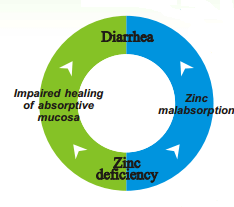
It appears that a vicious cycle operates between diarrhea and zinc deficiency. Diarrhea generally causes poor absorption of nutrients, including zinc, due to rapid transit in the gut. Diarrhea may produce a secretory state in the small intestine, preventing or reducing net absorption, including zinc malabsorption. In addition to the pathophysiologic conditions, nutrient wastage is produced during diarrheal disease of bacterial origin because cellular debris, intestinal flora proliferation and undigested solids may adsorb minerals, including zinc, and reduce their bioavailability. All this aggregates to zinc deficiency. Zinc is crucial in regeneration of absorptive mucosa (brush border). As a result, zinc deficiency leads to impaired absorption perpetuating the pathology.
J Nutr. 2000; 130: 1388-1392
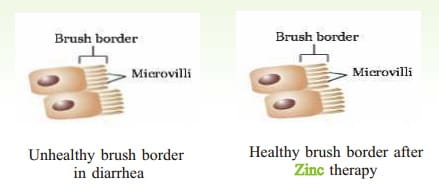
Zinc maintains the integrity of gut mucosa i.e. the impaired intestinal brush border is repaired. Zinc improves the transportation of water & electrolytes across intestinal mucosa. Thus, there is a reduction or rather prevention of fluid loss.
Indian J Pediatr 2006; 73(6): 493-497
80 male malnourished children between 3 and 24 months of age were enrolled in the study at Dr. B.C. Roy Memorial hospital for children in Calcutta.
44 children received zinc sulphate syrup (elemental zinc 40mg) while 36 children received placebo.
J Tro Ped 2000; 46: 259-263
Zinc deficiency is highly prevalent in children in developing countries like India. It is one of the major risk factors for poor child health accounting for over 8 lakh child deaths per year, including 10% of all diarrhea deaths.1 However, Zinc supplements in young children, reduces child deaths globally by 63%.2
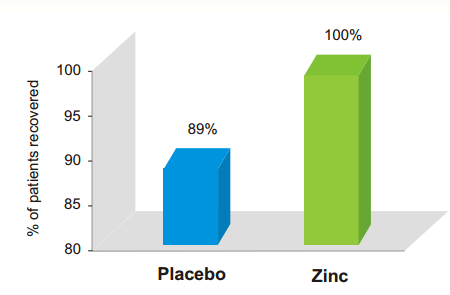
P= 0.04
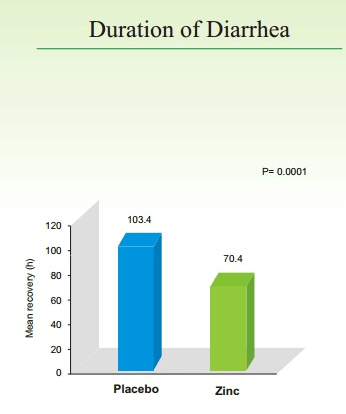
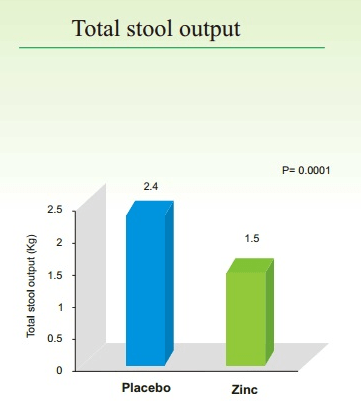
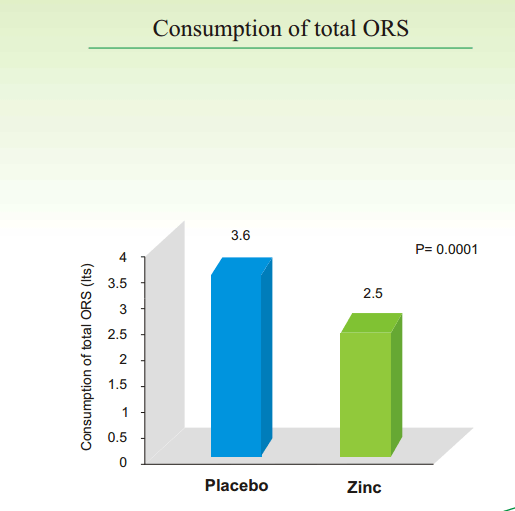
The trial shows significant reduction in the duration of diarrhea, stool volume, reduction in consumption of total ORS and other fluids among the zinc supplemented malnourished children suffering from acute dehydrating diarrhea.
100% patient recovery was observed within 5 days in the zinc supplemented malnourished children suffering from acute dehydrating diarrhea.
J Tro Ped 2000; 46: 259-263
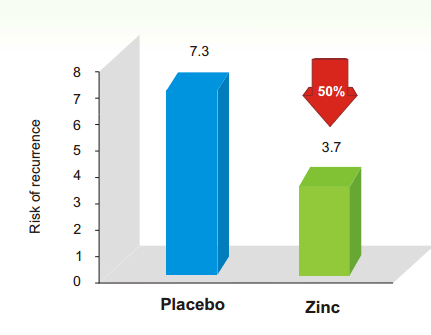
2226 children between the ages of 6 to 30 months were enrolled in a study at urban slum of Dakshinpuri in New Delhi.
1093 children received zinc gluconate (elemental zinc 10 mg to infants and 20 mg to older children) while 1133 children received placebo. The syrup was given daily for 4 months.
Recurrent diarrhea was defined as >6 diarrheal episodes during the 4-month period.
Ped 2002; 109: 89-92
Zinc supplementation substantially reduced the recurrence of diarrhea by 50%. Zinc consistently reduced episodes, duration and severity of recurrent diarrhea.
1. Indian J Pediatr 2006; 73: 493-497
2. BJU 2005; 330: 347-349
10 mg per day of elemental zinc for a total period of 14 days
20 mg of elemental zinc should be started as soon as diarrhea starts and continued for a total period of 10 to 14 days.
Indian Pediatrics 2007; 44: 380-389
There are substantial evidences that zinc supplementation is beneficial for the prevention and treatment of acute an persistent diarrhea. Moreover, possible public health interventions have to be considered in the context of their relative benefit, cost and feasibility.
Zinc, thus seems to be a simple yet powerful option to tackle the clinical as well as economical situation.
1. Indian J Pediatr 2006; 73: 493-497
2. BJU 2005; 330: 347-349