Management of Nonvariceal Upper Gastrointestinal Bleeding
Non-variceal upper gastrointestinal bleeding (UGIB) remains a common and challenging emergency for
gastroenterologists and general physicians1. Although evidence suggests a decline in the incidence of
UGBI2, the annual incidence is 50 to 150 per 100,000 of the population1, representing a
significant clinical and economical burden. Encouragingly advancements in recent years have brought significant
improvements in endoscopic and supportive therapies, the overall mortality remains at 10%, reaching 35% in
hospitalized patients with serious co-morbidity. Nearly 25% of all UGBI cases occur in patients over the age of
80 and may perhaps be the reason for much of the poor outcome of this condition1.
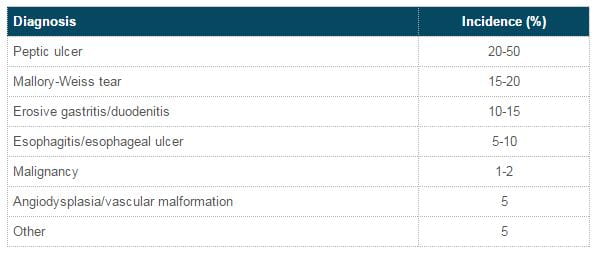
The causes of UGBI are listed along with the incidence below;
Table 1: Causes of Non Variceal UGBI
These guidelines were developed to update the 2003 consensus recommendations for the management of patients with
UGBI.
An international, multidisciplinary group of 34 voting participants from 15 countries was selected for developing
these guidelines. This group included community-based and academic family physicians, emergency department
physicians, intensive care physicians, pharmacologists, hospital pharmacists, gastroenterologists, surgeons,
radiologists, epidemiologists, and ethicists.
- Immediately evaluate and initiate appropriate resuscitation.
- Prognostic scales are recommended for early stratification of patients into low- and high-risk categories
for rebleeding and mortality.
- Consider placement of a nasogastric tube in selected patients because the findings may have prognostic
value.
- Blood transfusions should be administered to a patient with a hemoglobin level ≤-70 g/L.
- In patients receiving anticoagulants, correction of coagulopathy is recommended but should not delay
endoscopy.
- Promotility agents should not be used routinely before endoscopy to increase the diagnostic yield.
- Selected patients with acute ulcer bleeding who are at low risk for rebleeding on the basis of clinical and
endoscopic criteria may be discharged promptly after endoscopy.
- Preendoscopic PPI therapy may be considered to downstage the endoscopic lesion and decrease the need for
endoscopic intervention but should not delay endoscopy.
- Develop institution-specific protocols for multidisciplinary management. Include access to an endoscopist
trained in endoscopic homeostasis.
- Have available on an urgent basis support staff trained to assist in endoscopy.
- Early endoscopy (within 24 hours of presentation) is recommended for most patients with acute upper
gastrointestinal bleeding.
- Endoscopic haemostatic therapy is not indicated for patients with low-risk stigmata (a clean-based ulcer or
a nonprotuberant pigmented dot in an ulcer bed).
- A finding of a clot in an ulcer bed warrants targeted irrigation in an attempt at dislodgement, with
appropriate treatment of the underlying lesion.
- The role of endoscopic therapy for ulcers with adherent clots is controversial. Endoscopic therapy may be
considered, although intensive PPI therapy alone may be sufficient.
- Endoscopic haemostatic therapy is indicated for patients with high-risk stigmata (active bleeding or a
visible vessel in an ulcer bed).
- Epinephrine injection alone provides suboptimal efficacy and should be used in combination with another
method.
- No single method of endoscopic thermal coaptive therapy is superior to another.
- Clips, thermocoagulation, or sclerosant injection should be used in patients with high-risk lesions, alone
or in combination with epinephrine injection.
- Routine second-look endoscopy is not recommended.
- A second attempt at endoscopic therapy is generally recommended in cases of rebleeding.
- Histamine-2 receptor antagonists are not recommended for patients with acute ulcer bleeding.
- Somatostatin and octreotide are not routinely recommended for patients with acute ulcer bleeding.
- An intravenous bolus followed by continuous-infusion PPI therapy should be used to decrease rebleeding and
mortality in patients with high-risk stigmata who have undergone successful endoscopic therapy.
- Patients should be discharged with a prescription for a single daily-dose oral PPI for a duration as
dictated by the underlying etiology.
- Patients at low risk after endoscopy can be fed within 24 hours.
- Most patients who have undergone endoscopic homeostasis for high-risk stigmata should be hospitalized for at
least 72 hours thereafter.
- Seek surgical consultation for patients for whom endoscopic therapy has failed.
- Where available, percutaneous embolization can be considered as an alternative to surgery for patients for
whom endoscopic therapy has failed.
- Patients with bleeding peptic ulcers should be tested for H. pylori and receive eradication therapy if it is
present, with confirmation of eradication.
- Negative H. pylori diagnostic tests obtained in the acute setting should be repeated.
- In patients with previous ulcer bleeding who require an NSAID, it should be recognized that treatment with a
traditional NSAID plus PPI or a COX-2 inhibitor alone is still associated with a clinically important risk
for recurrent ulcer bleeding.
- In patients with previous ulcer bleeding who require an NSAID, the combination of a PPI and a COX-2
inhibitor is recommended to reduce the risk for recurrent bleeding from that of COX-2 inhibitors alone.
- In patients who receive low-dose ASA and develop acute ulcer bleeding, ASA therapy should be restarted as
soon as the risk for cardiovascular complication is thought to outweigh the risk for bleeding.
- In patients with previous ulcer bleeding who require cardiovascular prophylaxis, it should be recognized
that clopidogrel alone has a higher risk for rebleeding than ASA combined with a PPI.
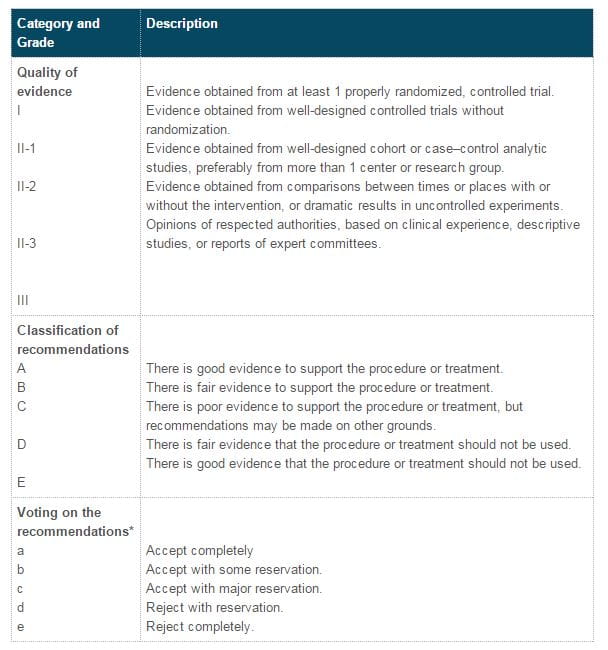
1. Immediate evaluation and appropriate resuscitation are critical to proper management. Recommendation: C
(vote: a, 96%; b, 4%); Evidence: III*
- If patients present with acute bleeding they should be immediately evaluated and resuscitation,
stabilization of blood pressure and restoration of intravascular volume should precede further
investigations and treatment.
2. Prognostic scales are recommended for early stratification of patients into low- and high-risk categories
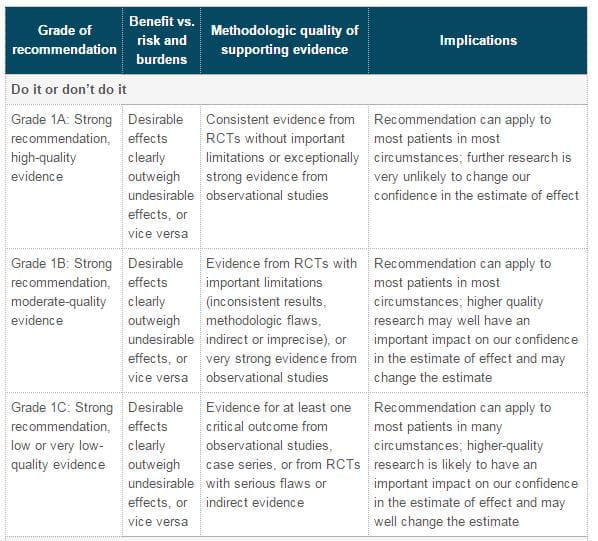
for rebleeding and mortality. (Agree, 97% [Vote: a, 56%; b, 35%; c, 6%; d, 3%]. Grade: Low, 1c, do it )
- Identifying high risk patients early helps reduce morbidity and mortality, which results from early
initiation of appropriate therapy. Patients are categorized into high or low risk on the basis of clinical,
laboratory, and endoscopic criteria.
- Predictors of increased risk of rebleeding or mortality
- Age >65
- Shock
- Poor health status
- Comorbid conditions
- Low initial hemoglobin levels
- Melena
- Transfusion requirement
- Fresh red blood on rectal examination, in emesis or in nasogastric aspiration
- Sepsis
- Elevated urea
- Creatinine
- Serum aminotransferase levels
- Other factors influencing outcomes
- Chronic alcoholism
- Active cancer
- Unsuitable sociofamily conditions
- Acute physiology and chronic health evaluation (APACHE) II score 11 or greater
3. In selected patients, the placement of a nasogastric tube can be considered because the findings may have
prognostic value. Recommendation: B (vote: a, 40%; b, 36%; c, 24%); Evidence: II-3
- Blood in a nasogastric aspirate confirms an upper GI source. Although it is felt that diagnostic nasogastric
aspiration is redundant, there may be some utility if orgogastric or nasogastric lavage is to be performed
for very early endoscopy.
4. Blood transfusions should be administered to a patient with a hemoglobin level of 70 g/L or less.
(Agree, 100% [Vote: a, 59%; b, 35%; c, 6%]. Grade: Low, 1c, do it )
- Red blood cell transfusion is rarely indicated when hemoglobin level is greater than 100 g/L and is almost
always indicated when the level is less than 60 g/L. A patient's hemodynamic status, markers of tissue
hypoxia in acute situations and his underlying conditions mark the threshold for transfusion.
- International guidelines recommend initiating red blood cell transfusions for most critically ill patients
when hemoglobin levels decrease to less than 70 g/L, with a target level of 70 to 90 g/L, in the absence of
tissue hypoperfusion, coronary artery disease, or acute hemorrhage.
- Transfusion is associated with a higher risk of death, nosocomial infection, multiorgan dysfunction, and
acute respiratory distress syndromes and these adverse effects must be weighed against risk associated with
anemia.
- Because patients with UGIB are often elderly or have comorbid cardiovascular conditions, they may have poor
tolerance for anemia. Threshold hemoglobin levels of 60 to 100 g/L may warrant transfusion in patients with
underlying cardiac disease (ischemic heart disease, peripheral vascular surgery, or heart failure).
5. In patients receiving anticoagulants, correction of coagulopathy is recommended but should not delay
endoscopy. (Agree, 97% [Vote: a, 38%; b, 44%; c, 15%; d, 3%]. Grade: Low, 2c, probably do it )
- Evidence suggests that delaying endoscopic therapy in patients with mild to moderate coagulation defects may
not be necessary.
- In patients with an INR less than 2.5 endoscopic treatments with injection or heater probe may be safely
performed.
- Treating coagulopathy is necessary in patients receiving anticoagulants but without delaying endoscopy
unless the INR (or prothrombin time where INR is unavailable) is supratherapeutic, because correction in
these patients may facilitate endoscopic treatment.
- This approach should not be generalized to patients with cirrhosis because the prothrombin time does not
seem to predict bleeding risk in this setting. Correction of coagulopathy from other causes may be necessary
on a case-by-case basis.
- A retrospective cohort study showed that patients with nonvariceal UGIB who received anticoagulants had an
international normalized ratio (INR) between 1.3 and 2.7. Baseline INR less than 1.3 versus 1.3 or greater
did not predict rebleeding, transfusion requirement, surgery, length of stay, or mortality. Thus suggesting
that it may not be necessary to delay endoscopic therapy in patients with mild of moderate coagulation
defects.
6. Promotility agents should not be used routinely before endoscopy to increase the diagnostic yield.
(Agree, 82% [Vote: a, 35%; b, 35%; c, 12%; d, 6%; e, 3%; f, 9%]. Grade: Moderate, 2b, probably don t do it )
- Promotility agents may improve diagnostic yield in selected patients, but it is not warranted for routine
use in all patients.
- May be useful in patients who are suspected to have substantial amounts of blood or clot in their upper
gastrointestinal tract or those who have recently eaten.
7. Selected patients with acute ulcer bleeding who are at low risk for rebleeding on the basis of clinical and
endoscopic criteria may be discharged promptly after endoscopy. (Agree, 97% [Vote: a, 53%; b, 35%; c,
9%; d, 3%]. Grade: High, 1a, do it )
- Patients with a clean ulcer base or flat pigmented spot, hemodynamic stability, no serious concurrent
medical illness, easy accessibility to hospital, and adequate sociofamily support at home can be considered
for early discharge.
- Early discharge may not be suitable for patients with serious comorbid conditions like heart failure, recent
cardiovascular or cerebrovascular event, chronic alcoholism, or active cancer. Or even if patients are
hemodynamically unstable, has an endoscopic finding or high-risk stigmata or have unsuitable sociofamily
conditions.
- Other factors to be considered are distance to the nearest hospital and social support.
8. Preendoscopic PPI therapy may be considered to downstage the endoscopic lesion and decrease the need for
endoscopic intervention but should not delay endoscopy. (Agree, 94% [Vote: a, 32%; b, 38%; c, 24%; d,
3%; e, 3%]. Grade: Moderate, 1b, do it )
- Supportive cost effectiveness analyses and excellent safety profile suggest that PPIs may be useful,
particularly in those suspected of having high-risk stigmata Data has shown that preendoscopic PPI treatment
reduces the proportion of patients with high-risk stigmata and the need for endoscopic therapy The
beneficial effects attributable to PPI therapy before endoscopy may be even more useful in situations in
which early endoscopy may be delayed or when available endoscopic expertise may be suboptimal
9. Develop institution-specific protocols for multidisciplinary management.* Include access to an endoscopist
trained in endoscopic homeostasis. *Recommendation: C (vote: a, 100%); Evidence: III
- A multidisciplinary team should be in place in a hospital with endoscopy services and a prespecified chain
of notification should be established
- As all institutions would not have immediate access to these specialists and not all patients would require
urgent endoscopy, institution specific protocols should be developed and updated
- Only properly trained and accredited practitioners should have endoscopy privileges
10. Have available on an urgent basis support staff trained to assist in endoscopy.*Recommendation: C
(vote: a, 92%; b, 8%); Evidence: III
- Support staff, including appropriately trained endoscopy assistants, should be available to assist with
urgent endoscopies
- Patients identified as high risk for rebleeding ideally should be admitted to a monitored setting for at
least the first 24 hours
- Wards with more intensive monitoring than standard units are preferred if intensive care beds are
unavailable.
11. Early endoscopy (within 24 hours of presentation) is recommended for most patients with acute upper
gastrointestinal bleeding (Agree, 100% [Vote: a, 85%; b, 12%; c, 3%]. Grade: Moderate, 1b, do it )
- The recommended target time to endoscopy is within 24 hours of presentation
- Early endoscopy (within the first 24 hours), reduces the use of resources for patients classified as either
low or high risk, helps discharge patients classified as low risk safely and promptly, and improves outcomes
for patients classified as high risk.
- Endoscopy may need to be delayed or deferred in selected high-risk patients, such as those with active acute
coronary syndrome or suspected perforation.
12. Endoscopic haemostatic therapy is not indicated for patients with low-risk stigmata (a clean-based ulcer
or a non protuberant pigmented dot in an ulcer bed (Recommendation: A [vote: a, 100%]; Evidence: I)
- Data shows that endoscopic therapy for adherent clots significantly reduces the rate of rebleeding compared
with medical therapy alone
13. A finding of a clot in an ulcer bed warrants targeted irrigation in an attempt at dislodgement, with
appropriate treatment of the underlying lesion. (Agree, 97% [Vote: a, 59%; b, 29%; c, 9%; d, 0%; f, 3%].
Grade: Moderate, 2b, probably do it )
14. The role of endoscopic therapy for ulcers with adherent clots is controversial. Endoscopic therapy may be
considered, although intensive PPI therapy alone may be sufficient. (Agree, 86% [Vote: a, 24%; b, 50%;
c, 12%; d, 9%; e, 3%; f, 3%]. Grade: Moderate, 2b, probably do it )
- Among patients with adherent clots resistant to vigorous irrigation, endoscopic therapy may be beneficial in
patients at high risk for rebleeding (such as those with serious concurrent illness), whereas in patients
with low risk (particularly those who are Asian or Helicobacter pylori positive) intensive PPI therapy
without endoscopic treatment may be sufficient
15. Endoscopic haemostatic therapy is indicated for patients with high-risk stigmata (active bleeding or a
visible vessel in an ulcer bed). (Recommendation: A [vote: a, 100%]; Evidence: I).*
16. Epinephrine injection alone provides suboptimal efficacy and should be used in combination with another
method. (Agree, 100% [Vote: a, 71%; b, 24%; c, 6%]. Grade: Moderate, 1b, don t do it )
17. No single method of endoscopic thermal coaptive therapy is superior to another Recommendation: A
(vote: a, 100%); Evidence: I*
- Most individual randomized studies have shown no differences in rates of rebleeding, surgery, and mortality
among coaptive therapy with heater probe thermocoagulation, multipolar electrocoagulation, or neodymium
yttrium aluminum garnet laser when compared with injection therapy, although some studies have shown
differences in rates of homeostasis
- Laser therapy is no longer commonly used for acute management of high-risk patients because of high costs
and poor portability of the equipment
18. Clips, thermocoagulation, or sclerosant injection should be used in patients with high-risk lesions, alone
or in combination with epinephrine injection. (Agree, 97% [Vote: a, 0%; b, 35%; c, 12%; d, 3%]. Grade:
High, 1a, do it )
- Meta-analysis indicate that adding a second procedure, such as a second injectate (for example, alcohol,
thrombin, or fibrin glue), thermal contact, or clips, is superior to epinephrine injection alone
- Epinephrine plus a second method for treating high-risk stigmata significantly reduced rebleeding, surgery,
and mortality compared with epinephrine monotherapy
- Monotherapy with thermal devices, sclerosants, clips, thrombin, or fibrin glue provides more effective
endoscopic homeostasis than epinephrine alone or pharmacotherapy alone
19. Routine second-look endoscopy is not recommended. (Agree, 91% [Vote: a, 50%; b, 21%; c, 21%; d, 3%; e,
3%; f, 3%]. Grade: Moderate, 2b, probably don t do it )
- Much of the support for a second-look approach came from older data, however these trials did not use
contemporary management strategies associated with decreased rebleeding, such as initial endoscopic
homeostasis with hemoclips or combination therapy, or post-endoscopic homeostasis high-dose PPI therapy
- Cost effectiveness data does not seem to support the routine use of second-look endoscopy
20. A second attempt at endoscopic therapy is generally recommended in cases of rebleeding Recommendation:
A (vote: a, 100%); Evidence: I*
- Tailor the endoscopic therapy according to available expertise
21. Histamine-2 receptor antagonists are not recommended for patients with acute ulcer bleeding.
Recommendation: D (vote: a, 92%; b, 8%); Evidence: I*
- Meta-analyses have found proton-pump inhibitors to be more effective than H2-receptor antagonists and
placebo in preventing persistent or recurrent bleeding and surgery in selected patients
- H2-receptor antagonists are not recommended for the management of acute upper GI bleeding, given the prove
benefit of proton-pump inhibitors and the inconsistent at best the marginal benefits of the former.
22. Somatostatin and octreotide are not routinely recommended for patients with acute ulcer bleeding.
Recommendation: C (vote: a, 96%; b, 4%); Evidence: I*
- There is little evidence to support the use of somatostatin or octreotide in the routine management of acute
upper GI bleeding
- In patients who are bleeding uncontrollably while awaiting endoscopy or for patients with nonvariceal
bleeding who are awaiting surgery or for whom surgery is contraindicated these agents may be useful
23. An intravenous bolus followed by continuous-infusion PPI therapy should be used to decrease rebleeding and
mortality in patients with high-risk stigmata who have undergone sucessful endoscopic therapy. (Agree,
94% [Vote: a, 65%; b, 24%; c, 6%; d, 3%; e, 0%; f, 3%]. Grade: High, 1a, do it )
- Proton-pump inhibitor therapy reduced mortality among patients with active bleeding or NBVV and in trials
conducted in Asia.
- In patients with active bleeding or nonbleeding visible vessel (NBVV) who received endoscopic haemostatic
therapy, high-dose intravenous PPI therapy (80 mg bolus plus 8 mg/h continuous infusion) reduced rebleeding,
surgery, and mortality.
- Higher intravenous PPI doses after endoscopic therapy are associated with better outcomes in rebleeding,
surgery and mortality whereas lower doses are associated with favorable outcomes only in rebleeding.
- Based on available evidence it is not possible to make conclusions regarding the efficacy of either lower
intravenous doses or high-dose oral therapy.
- Administering high-dose intravenous PPI therapy for 3 days to patients with UGIB who have undergone
successful endoscopic homeostasis is more effective and less costly than not doing so
- Recent reports have linked PPI use to inhospital Clostridium difficle infections, but participants felt that
the benefits outweighed the risks in patients who have acute UGIB requiring PPI therapy.
24. Patients should be discharged with a prescription for a single daily-dose oral PPI for a duration as
dictated by the underlying etiology. (Agree, 94% [Vote: a, 56%; b, 32%; c, 6%; d, 3%; e, 3%]. Grade:
Low, 1c, do it )
- This recommendation is supported by observational studies that used a standard once-daily dosage
- The duration and dose of the PPI will be determined by the underlying etiology
- Twice daily dosing may be required for UGIB
- Patients who requiring ASA or NSAID therapy may need long-term secondary prophylaxis
25. Patients at low risk after endoscopy can be fed within 24 hours. Recommendation: A (vote: a, 88%; b,
12%); Evidence: I*
- Evidence shows that the time of refeeding does not influence the hospital course of patients at low risk.
- Patients with major hemorrhage and endoscopic findings of a Mallory-Weiss tear or an ulcer with a clean
base, flat spot, or clot may be fed and discharged home immediately after stabilization.
- The decision is otherwise made on a case-by-case basis depending on the patient's clinical status and
the likelihood of repeated endoscopy or surgery.
26. Most patients who have undergone endoscopic homeostasis for high-risk stigmata should be hospitalized for
at least 72 hours thereafter. (Agree, 100% [Vote: a, 68%; b, 24%; c, 9%]. Grade: Low, 1c, do it )
- It takes 72 hours, according to the natural history of ulcer lesions, for most high-risk lesions to become
low-risk lesions after endoscopic therapy.
- Hence patients that are identified as high risk for rebleeding, for e.g. those with high-risk endoscopic
stigmata, should be admitted to a hospital for at least 72 hours.On the basis of risk (hemodynamic
instability, increasing age, severe comorbidity, active bleeding at endoscopy, or large ulcer size [for
example, >2 cm]) or clinical condition, patients should be admitted to a monitored setting for at least
the first 24 hours
27. Seek surgical consultation for patients for whom endoscopic therapy has failed.*Recommendation: B
(vote: a, 100%); Evidence: II-2
- Early surgical consultation may be particularly beneficial in patients at high risk for failed endoscopic
retreatment.
28. Where available, percutaneous embolization can be considered as an alternative to surgery for patients for
whom endoscopic therapy has failed. (Agree, 100% [Vote: a, 62%; b, 32%; c, 6%]. Grade: Low, 2c, probably
do it )
- Different options like gelatin sponges, polyvinyl alcohol, cyanoacrylic glues, and coils are in use to
embolize the vessels feeding bleeding lesions.
- Primary rates of technical success in uncontrolled trials range from 52% to 98% with recurrent bleeding
occurring in 10-20% or patients.
- Endoscopic therapy remains the preferred strategy in patients who rebleed after initial successful,
endoscopic homeostasis.
- If expertise is available then persistent or recurrent bleeding not controlled by endoscopic therapy can be
tackled by percutaneous embolization, instead of surgery.
29. Patients with bleeding peptic ulcers should be tested for H. pylori and receive eradication therapy if it
is present, with confirmation of eradication. (Agree, 94% [Vote: a, 82%; b, 12%; c, 0%; d, 3%; e, 3%].
Grade: High, 1a, do it )
- Tests for H. pylori may show increased false-negative rates in the setting of acute bleeding
- Mechanism involved are poorly understood and could depend on the test or the pH buffering effect of the
blood as alkaline settings are associated with more false-negative results.
30. Negative H. pylori diagnostic tests obtained in the acute setting should be repeated. (Agree, 94%
[Vote: a, 68%; b, 21%; c, 6%; d, 3%; e, 3%]. Grade: Moderate, 1b, do it )
31. In patients with previous ulcer bleeding who require an NSAID, it should be recognized that treatment with
a traditional NSAID plus PPI or a cyclooxygenase-2 (COX-2) inhibitor alone is still associated with a
clinically important risk for recurrent ulcer bleeding. (Agree, 97% [Vote: a, 73%; b, 21%; c, 3%; d,
3%]. Grade: Moderate, 1b)
32. In patients with previous ulcer bleeding who require an NSAID, the combination of a PPI and a COX-2
inhibitor is recommended to reduce the risk for recurrent bleeding from that of COX-2 inhibitors alone.
(Agree, 94% [Vote: a, 52%; b, 33%; c, 9%; d, 0%; e, 6%]. Grade: Moderate, 1b, do it )
- Several studies have also shown lower risks for endoscopic ulcers in patients who receive a COX-2 inhibitor
plus a PPI compared with those who receive a COX-2 inhibitor alone.
- Patients with previous ulcer bleeding require more careful follow-up and alternative strategies, including
discontinuation of NSAID therapy when possible or therapy with a COX-2 inhibitor plus PPI
33. In patients who receive low-dose ASA and develop acute ulcer bleeding, ASA therapy should be restarted as
soon as the risk for cardiovascular complication is thought to outweigh the risk for bleeding.(Agree,
100% [Vote: a, 70%; b, 30%]. Grade: Moderate, 1b, do it )
- Quite often it is advised to discontinue ASA therapy in patients who develop UGIB while on low-dose ASA, but
prolonged discontinuation often increases thrombotic risk in patients requiring cardioprotective ASA
therapy.
- It has been reported that there is a 3-fold increased risk for major adverse cardiac events with ASA
nonadherence or withdrawal.
- The discontinuation of ASA therapy in patients with acute ulcer bleeding, should be made on an individual
basis, factoring cardiac and gastrointestinal risks as recommended by the American Heart Association.
- ASA therapy should be restarted as soon as the risks for cardiovascular complication are thought to outweigh
the risks for bleeding.
34. In patients with previous ulcer bleeding who require cardiovascular prophylaxis, it should be recognized
that clopidogrel alone has a higher risk for rebleeding than ASA combined with a PPI.(Agree, 100% [Vote:
a, 70%; b, 24%; c, 6%]. Grade: Moderate, 1b, do it [adding PPI to ASA])
- Clopidogrel is often perceived as relatively safe in terms of gastrointestinal adverse events, but data show
that even as monotherapy, clopidogrel is associated with a high risk for rebleeding (9% to 14%)
- Physicians should be aware that PPIs may decrease the platelet inhibitory effect of clopidogrel
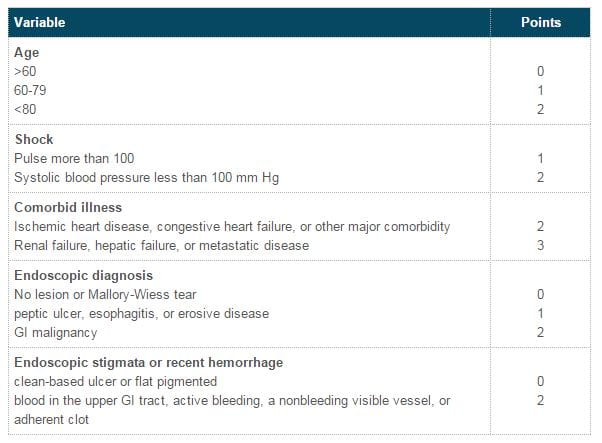
For cases scoring 0, 1, or 2 rebleeding occurs in less than 5% of patients and mortality is virtually zero
whether rebleeding occurs or not. The scoring system is useful in identifying one quarter of patients that are
at negligible risk of dying but this can only be done once a diagnosis and an assessment of stigmata of recent
hemorrhage have been made. Rebleeding has its most profound influence on mortality in the middle risk groups
that score 3 or 4, when it is associated with an approximately fivefold increase in mortality. In risk groups 5
to 7 rebleeding is associated with an approximately threefold increase in mortality and for risk group 8, a
twofold increase. The impact of rebleeding on outcome should not be judged independently of other risk factors.
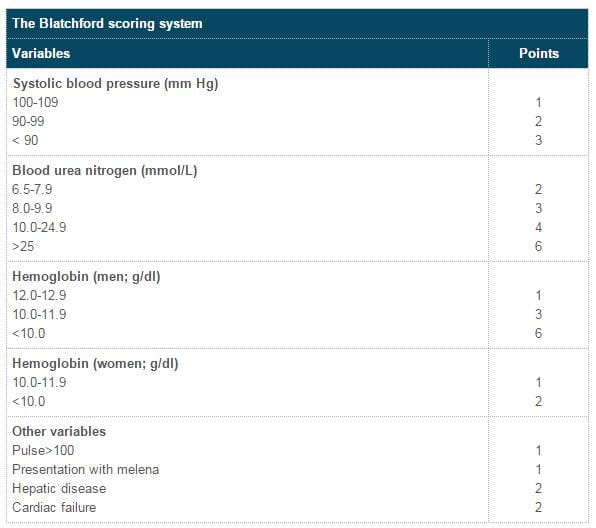
Most patients need intervention if their score is 6 or higher. Conversely, few patients need intervention if
their systolic blood pressure is 110 mm Hg or less, their blood urea nitrogen is less than 6.5 mmol/L, their
hemoglobin level is 13 g/dL or higher (in men) or 12 g/dL or higher (in women), and their pulse is less than
100.
1. Ulster Med J 2006; 75 (1) 32-39
2. Ann Intern Med. 2010;152:101-113
3. Eur J Gastroenterol Hepatol. 2007;19:543-7
4. Ann Intern Med. 2003;139:843-857
5. Cleve Clin J Med. 2010 Feb;77(2):131-42