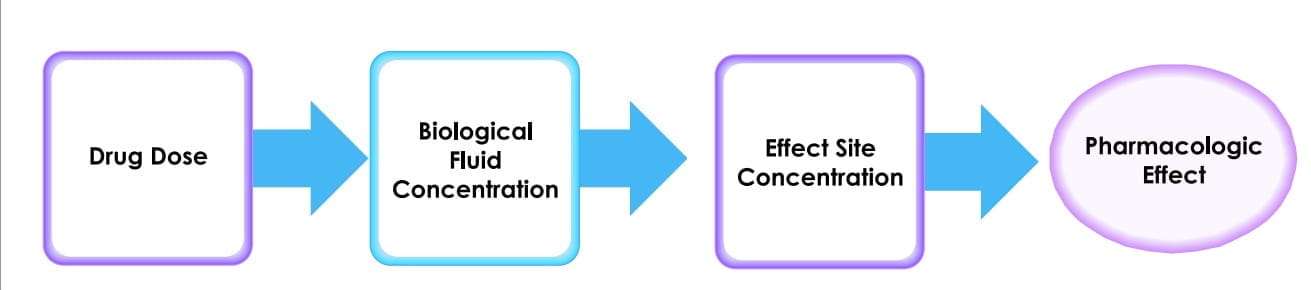
Interrelationship Between Dose, Pharmacokinetics (Concentration), Pharmacodynamics and Clinical Effects

PF/PD, the 3D Rationale (Drug, Dose and Duration)
Causes of Antibiotic Failure
False Failures
- Erroneous diagnosis
Patient - Related
- Compliance
- Immunocompromised host
Micro-Organism - Related
- Wrong pathogen
- Resistant pathogen (during treatment)
- Inadequate bactericidal effect
- Inoculum effect
Pharmacology - Related
- Insufficient amount or inappropriately administered No attention to PD
Challenges in Antibiotic Therapy
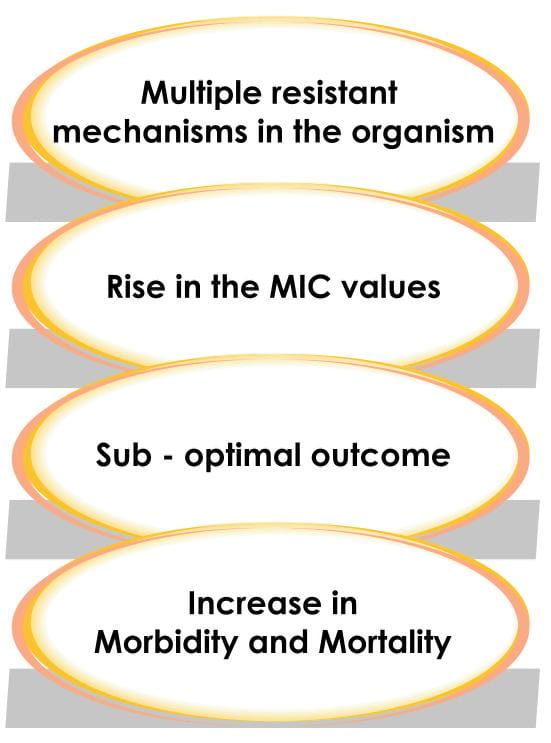
Interrelationship Between Dose, Pharmacokinetics (Concentration), Pharmacodynamics and Clinical Effects
Pharmacodynamic Indices that Describe Antibacterial Killing
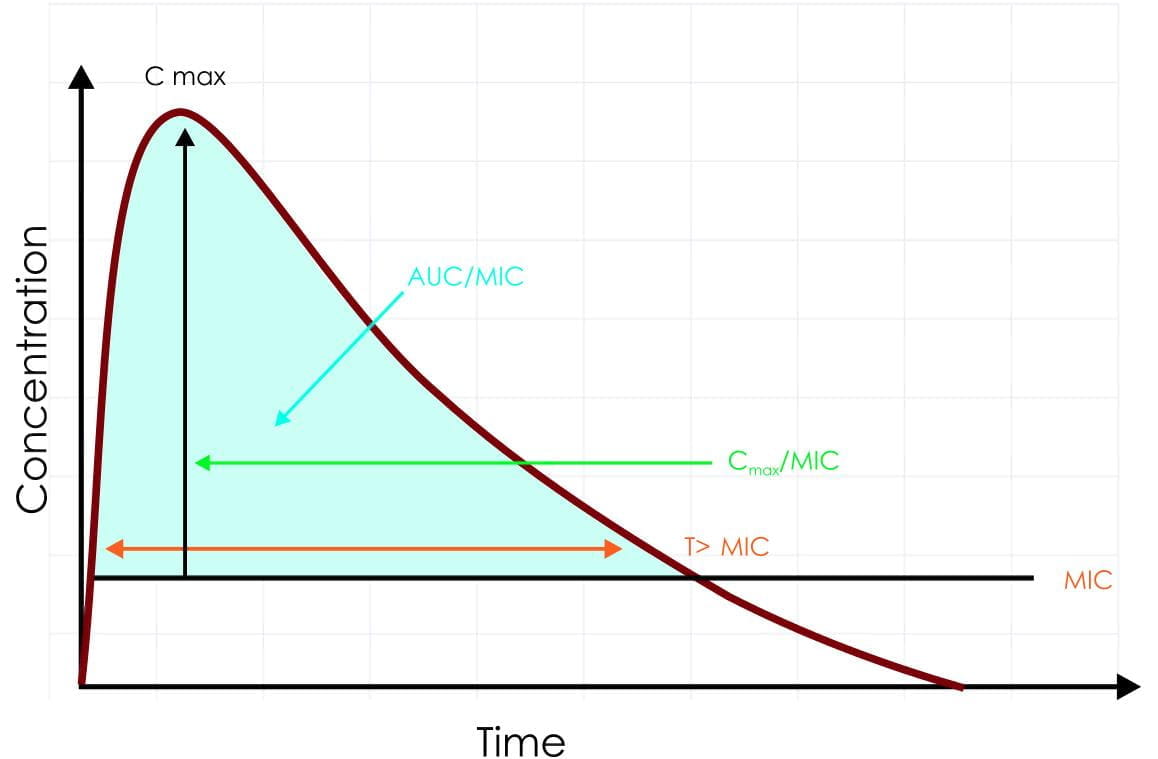
In general antibacterial agents are classified into two classes on the basis of their antibacterial killing patterns. These include concentration and time - dependent killing.
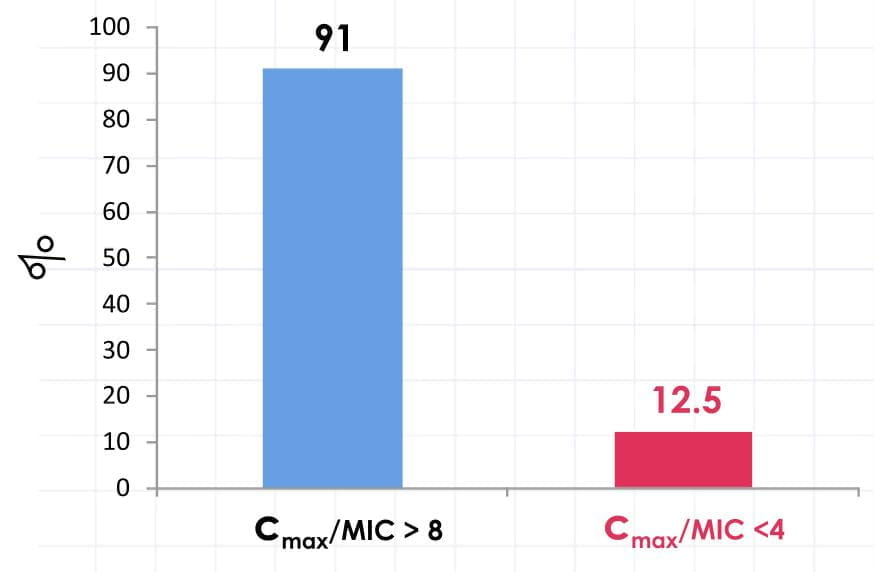
Pattern of In Vitro Bactericidal Activity and PK-PD Measures Correlating with Efficacy
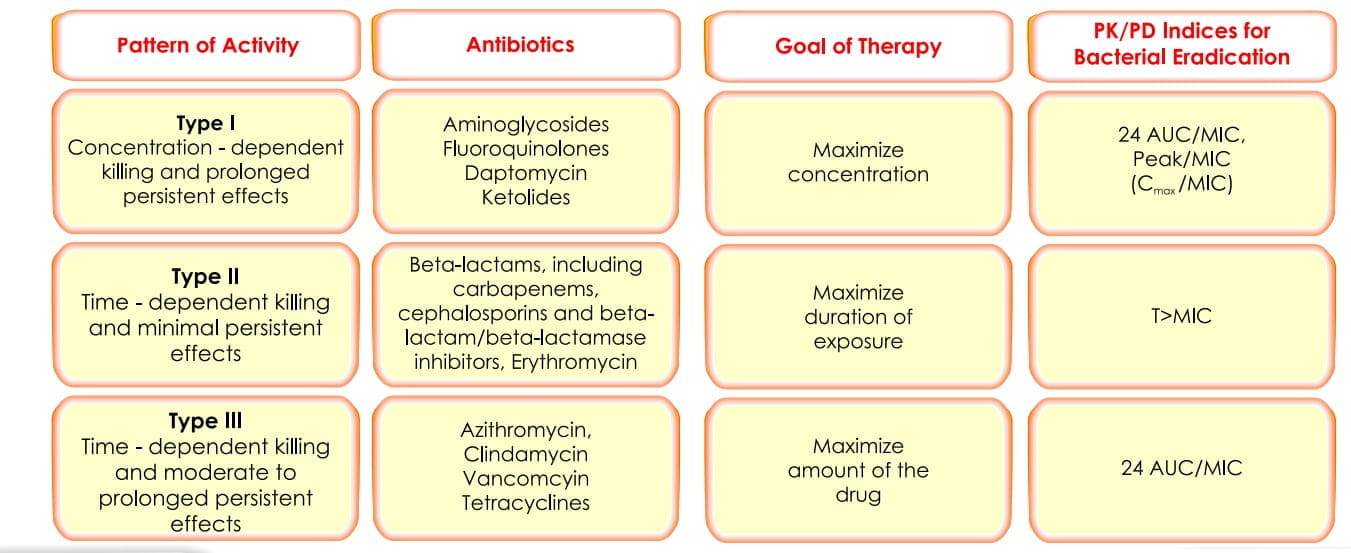
Concentration Dependent Antibacterials
Time Dependent Antibacterials
Beta-Lactams
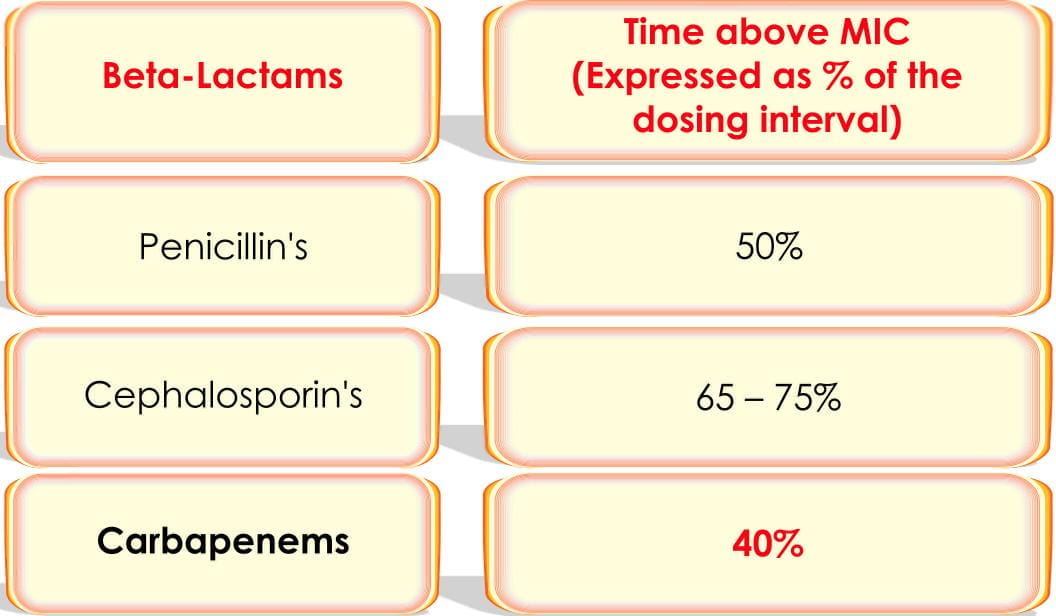
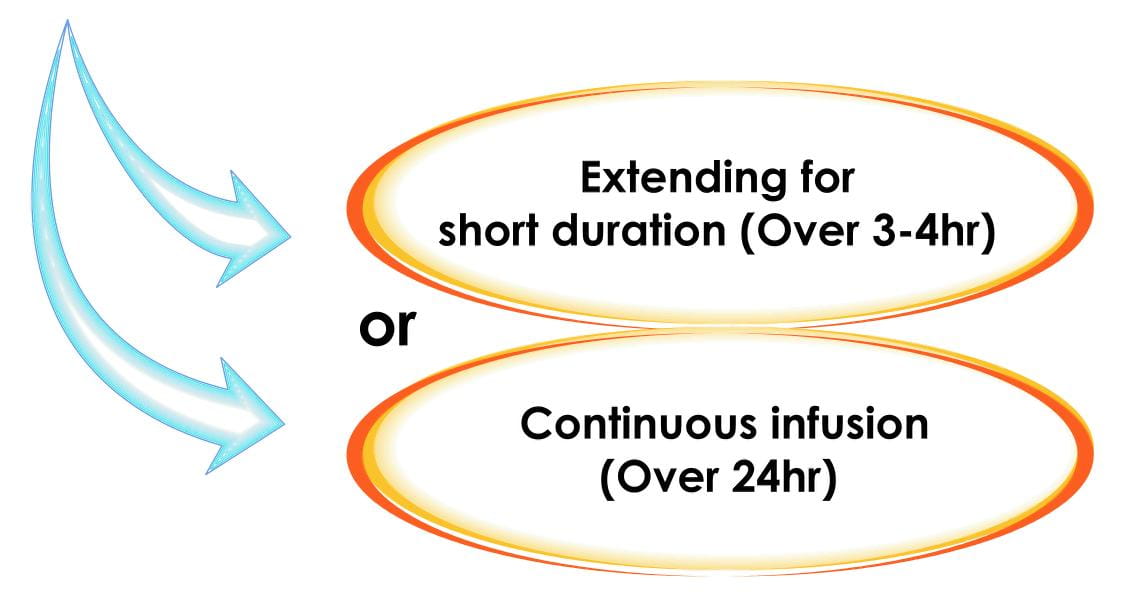
To Maximize the PD Parameters of % T>MIC, the Conventional Dosage Scheme May be Modified as Follows
- Increase the dose
- Frequent administration
- Increase the duration of IV Infusion by
Clin Ther 2004; 26(8): 1187-1197
Piperacillin/Tazobactam: Extended Infusion
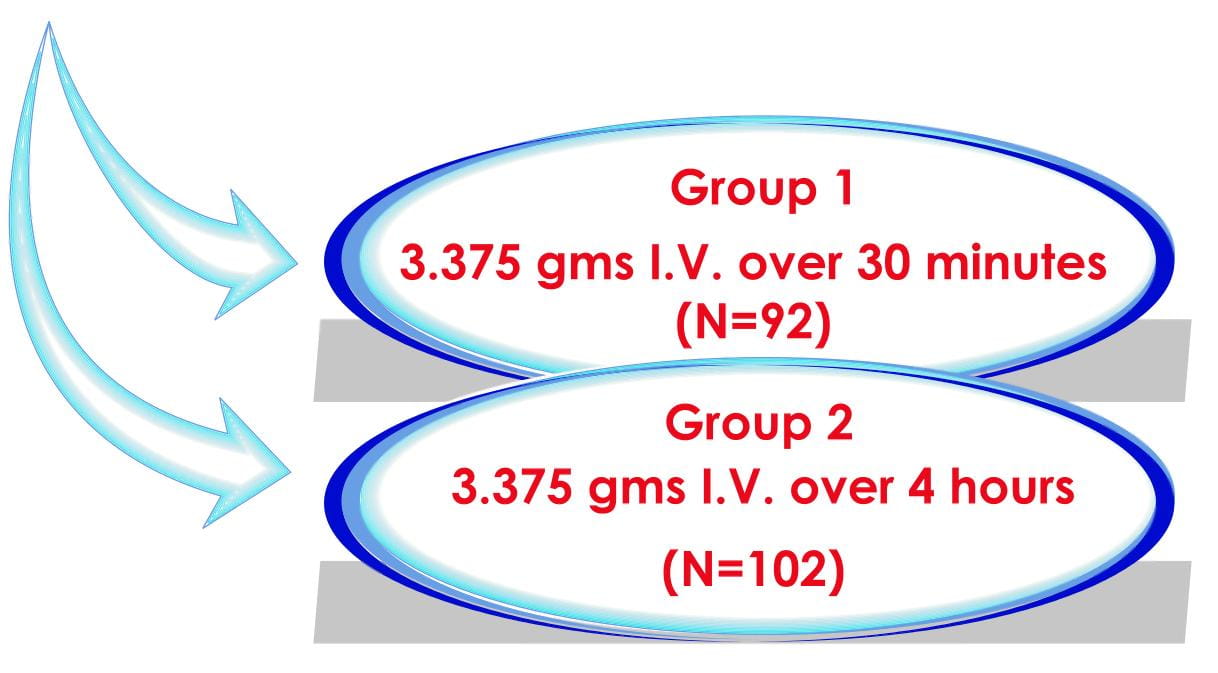
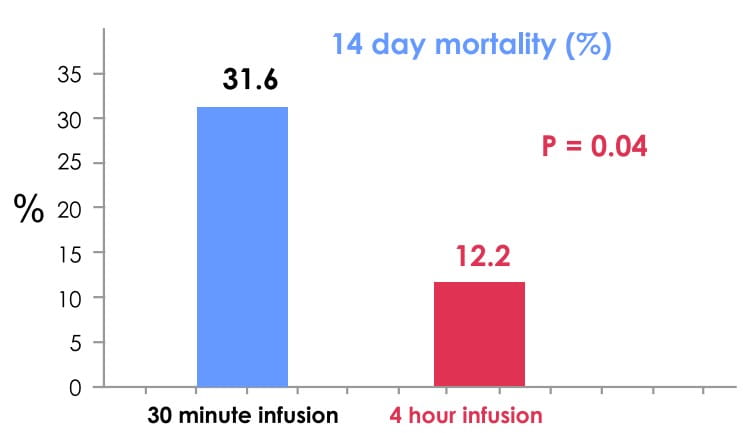
Comparisons of two dosing regimens for serious P. aeruginosa infections. N=194
Clinical Infectious Diseases 2007; 44: 357-63
A Better Way to Dose Piperacillin/Tazobactam
- A suitable alternative to intermittent-infusion
- Study suggests that improved outcomes may be realized by administering extended-infusion of Piperacillin/Tazobactam to critically ill patients with P. aeruginosa infection
Continuous Infusion More Effective Than Intermittent Infusion for VAP Caused by Gram-Negative Bacteria
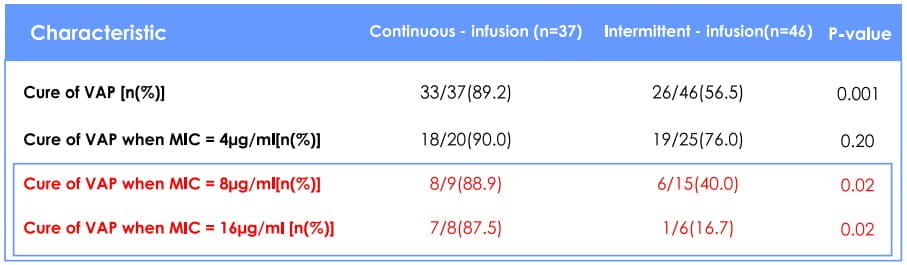
Leonardo Lorente et al International Journal of Antimicrobial Agents 2009.
Meropenem
- Potent carbapenem from the beta - lactam class of antibiotics
- Clinical dose: 0.5-2 g
- Dosing interval: Every 8 hour
Clin Ther 2004; 26(8): 1187-1198
1 g Meropenem as Extended vs Intermittent Infusion
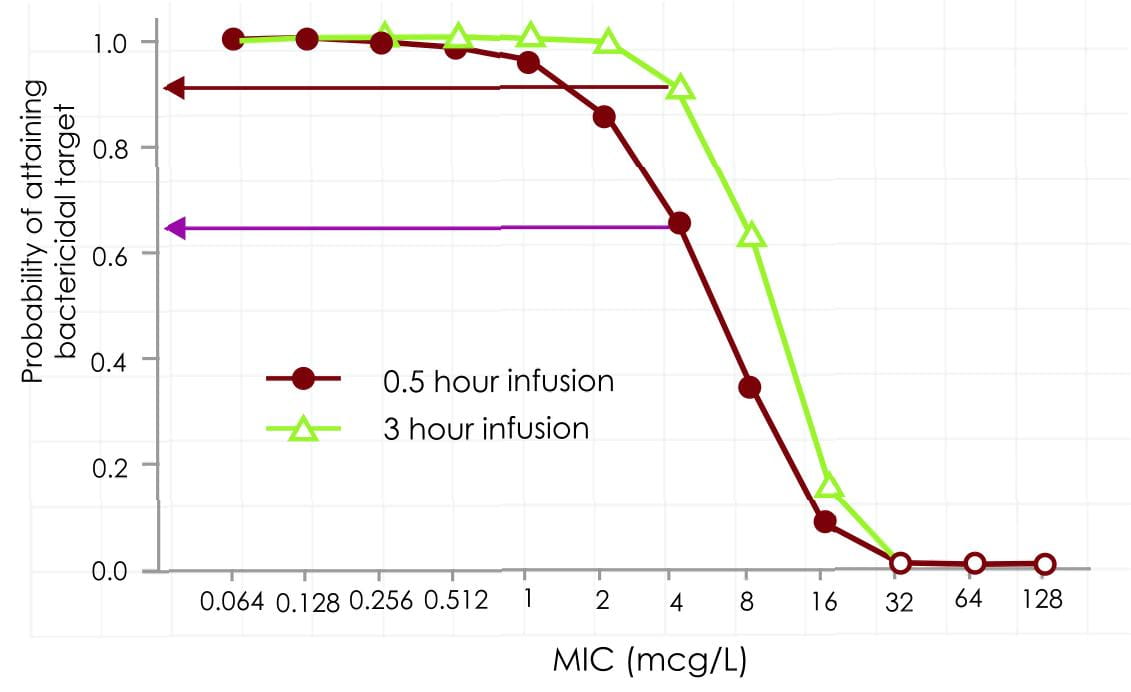
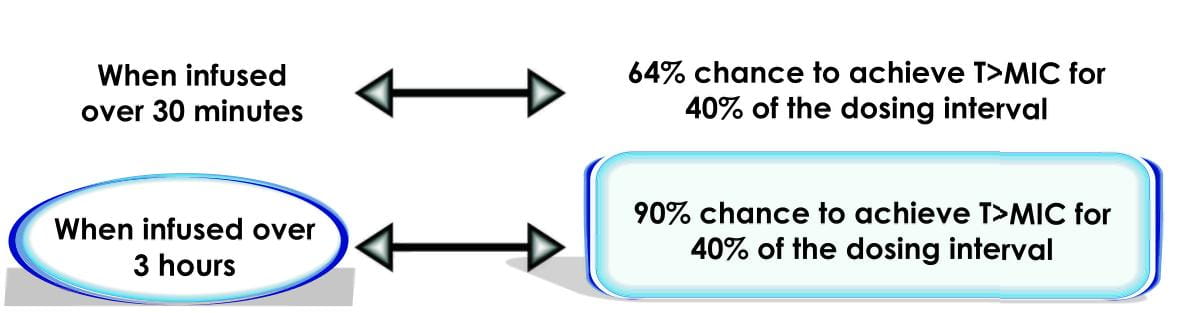
A 3 Hour Infusion of 2 g Meropenem can Achieve Concentrations Above the MIC for 60% of the Dosing Interval for Resistant Pathogens
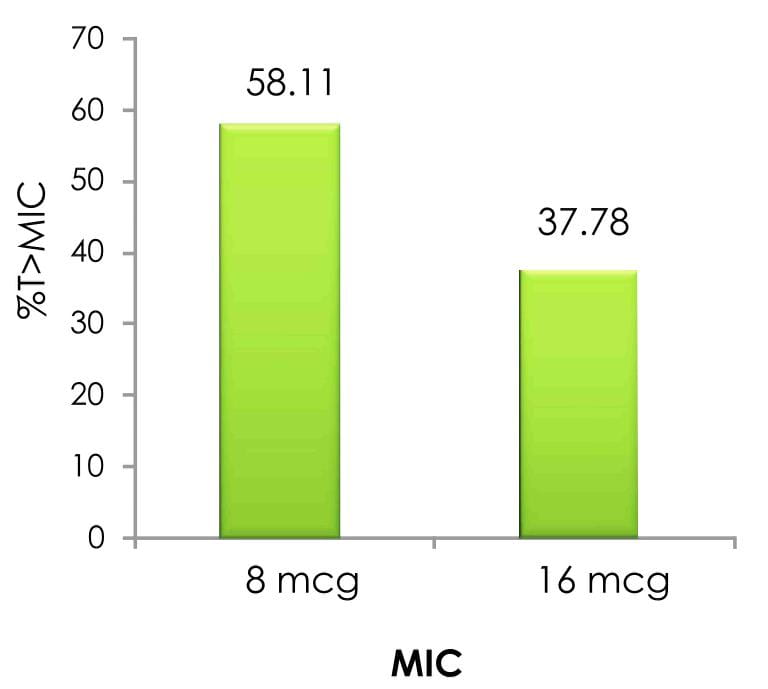
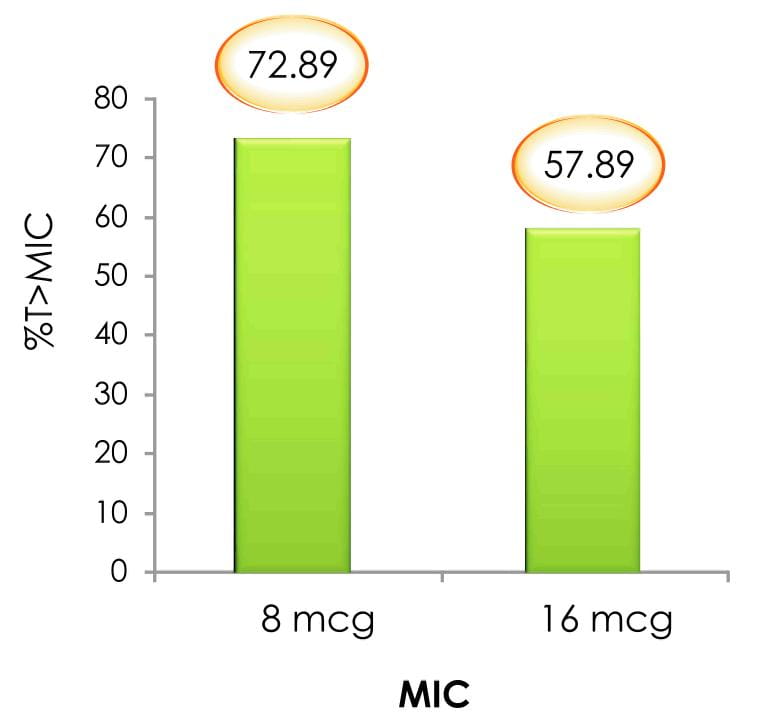
Antimicrob Agents Chemother 2005;49(4): 1337-1339 Clin Ther 2004; 26(8): 1187-1197
Meropenem Continuous Infusion Has More Clinical Efficacy Than Intermittent Infusion in VAP
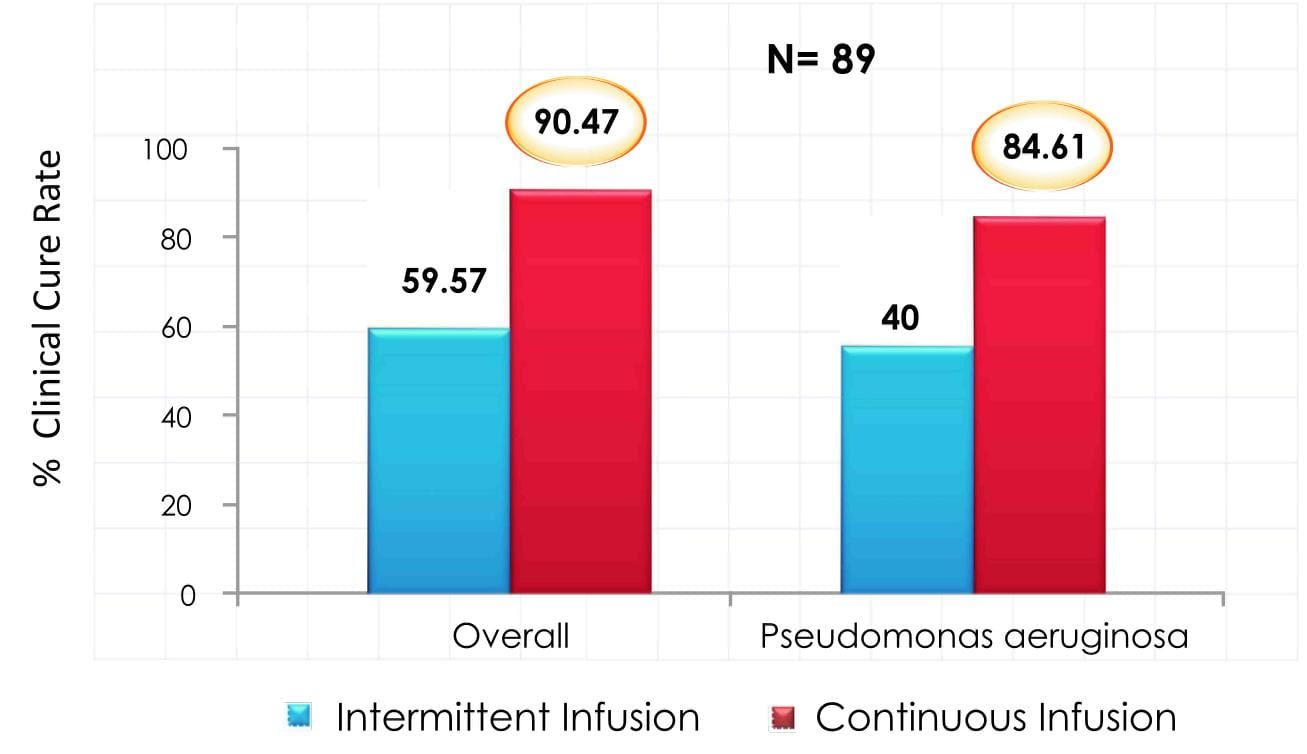
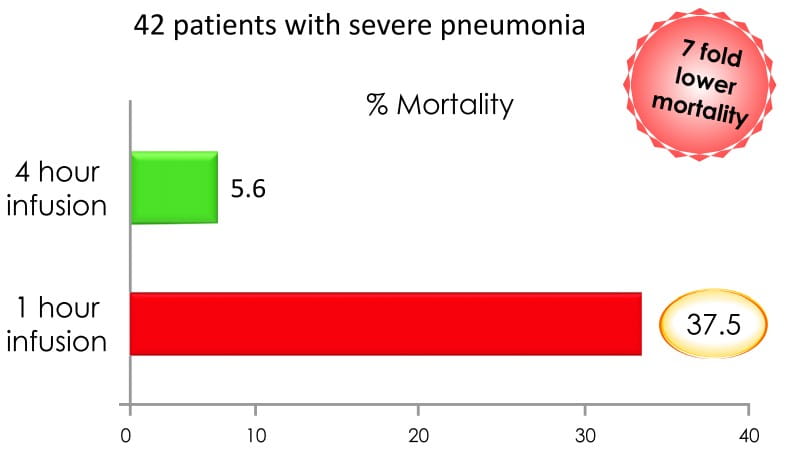
Prolonged Infusion: Associated with Lower Mortality
Jpn J Antibiot. 2007Jun;60(3): 161-70.
Prolonged Infusion and Meropenem
- A 3 hours infusion of 2g achieves bactericidal exposure for pathogens that are considered to be resistant to meropenem.
- More clinical efficacy than intermittent infusion in VAP caused by gram-negative bacilli.
- Prolonged Infusion is associated with 7 fold lower mortality.