




Tonsillitis is one of the most common paediatric ailments. The current recommended indications for paediatric tonsillectomy is that patients should fulfil all of the following criteria: sore throats are due to tonsillitis; five or more episodes of sore throat per year; symptoms for at least a year; the episodes of sore throat are disabling and prevent normal functioning. In addition to these infective indications the other indications for tonsillectomy are obstructive sleep apnoea, or suspicion of malignancy.
Important Markers of Recurrent Acute Tonsillitis

12 Oct, 11
Important Markers of Recurrent Acute tonsillitis
Background
Objective and Methods
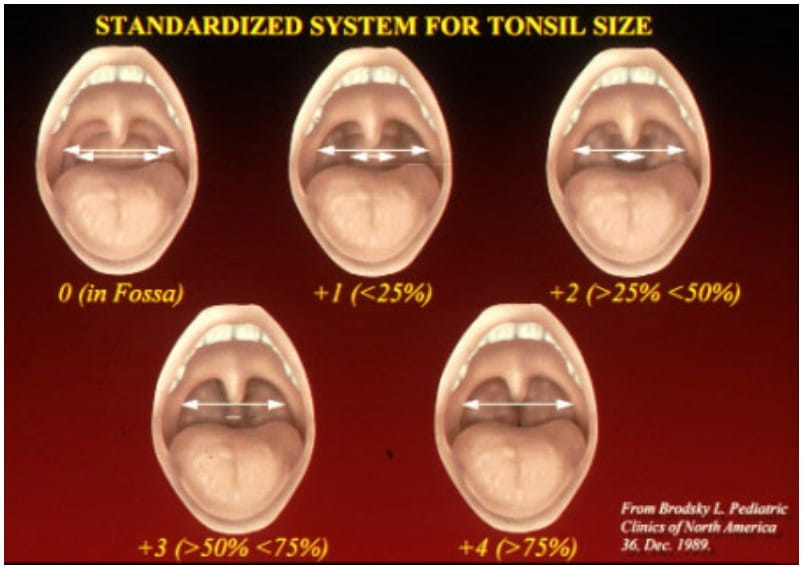
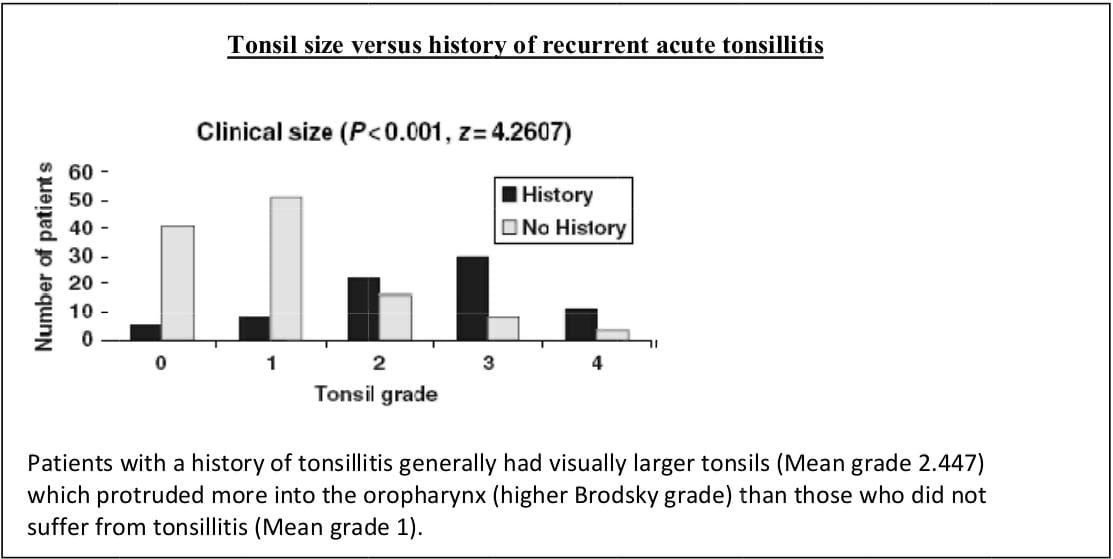
This prospective study conducted at the outpatient department of the Royal Liverpool Childrens' Hospital was designed to identify important clinical features in patients with recurrent acute tonsillitis. A total of 195 consecutive children aged from 1 to 16 years were examined and a history of recurrent acute tonsillitis or peritonsillar abscess and previous admission to hospital due to tonsil infection was recorded. Signs recorded were the presence of hyperaemia on the anterior pillars, crypt debris, intratonsillar abscess, asymmetry of the tonsils, clinical size (according to Brodsky Grade) (Fig. 1), and presence of cervical lymph nodes. Patients with obstructive sleep apnoea or recent acute tonsillitis were excluded.
Fig: 1 Tonsil size (Brodsky grade)
Results
Conclusion
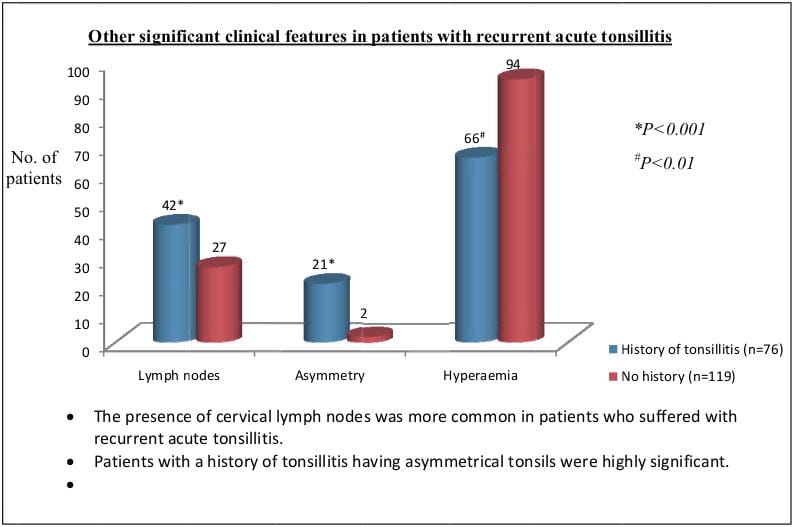
- Features like tonsil 'size' (higher Brodsky grade), asymmetrical tonsils, and the presence of upper cervical (level II) lymph nodes in the clinical examination can be used as a marker of recurrent acute tonsillitis.
- Tonsil size and symmetry as well as presence or absence of cervical lymphadenopathy should be taken into account apart from the recommended current referral criteria for tonsillectomy.
Discussion
- After repeated acute attacks the tonsil can remain enlarged even when not infected that causes the tonsils of patients with recurrent acute tonsillitis to be larger.
- Not all patients always suffer bilaterally symmetrical acute tonsillitis and therefore the tonsils may not be the same size.
- Repeated infection of the upper cervical lymph nodes (level II) specifically the jugulo? digastric nodes results in fibrosis within the node, and subsequently enlarged palpable nodes in the absence of an acute infection.
- More medially protruding tonsils have a larger surface area exposed to the oropharynx with correspondingly more surface crypts may play a part in recurrent tonsil infections. However, deeper tonsil fossae can accommodate larger tonsils before they encroach on the oropharynx.
Clin. Otolaryngol. 2004; 29: 369-371
Related Topics
More From Area Of Interest
You may also like

12 Oct, 26

21 Sep, 26
21 Sep, 26
21 Sep, 26

13 May, 26

17 Apr, 26
Latest Items
12 Oct, 26

12 Oct, 26
Journal Scans
8 Oct, 26

8 Oct, 26


