




International Confederation of Midwives (ICM) and International Federation of Gynaecologists and Obstetricians (FIGO) are key partners in global Safe Motherhood efforts to reduce maternal death and disability in the world, with a common commitment in promoting the health, human rights and well-being of all women, especially those at greatest risk for death and disability associated with childbearing. They promote evidence-based, effective interventions that can reduce the incidence of maternal mortality and morbidity in the world.
ICM and FIGO Joint Statement on Management of Third Stage of Labour to Prevent Postpartum Haemorrhage

10 Oct, 10
Management of the Third Stage of Labour to Prevent PPH -
Adaption of ICM and FIGO
Joint Statement
Introduction
Incidence of PPH
Every pregnant woman may face life-threatening blood loss at the time of delivery. PPH accounts for 25-30% of the unacceptably high rate of maternal deaths globally and in India. Anaemia during pregnancy has a high prevalence of 80% and these women are particulariy vulnerable since even moderate amounts of blood loss may not be tolerable.
Active Management of the Third Stage of Labour (AMTSL)
FIGO and ICM agree, according to the available evidence, that AMTSL is proven to reduce the incidence of PPH, the quantity of blood loss, and the use of blood transfusion.
AMTSL should be Offered to Women since it Reduces the Incidence of PPH due to Uterine AtonyAMTSL is an effective measure to facilitate the delivery of the placenta by increasing uterine contractions and to prevent PPH by preventing uterine atony. Steps of AMTSL are -
- Administration of uterotonic agents
- Controlled cord traction and
- Uterine massage after delivery of the placenta
Administration of Uterotonic Agents
- Within 1minute of the delivery of the baby, Palpate the abdomen to rule out the presence of an additional baby(s) and administer the uterotonic.
Uterotonics that can be used are-

- Misoprostol can also be used, Especially in situations where other Uterotonics are not available or when safe administration and/or appropriate storage conditions for injectable oxytocin and ergot alkaloids are not possible.
- Patients should be counseled on the uterotonics side efftects.
Do not give Ergometrine or Oxytocin + Ergometrine Maleate to Women with Pre-Eclampsia, Eclampsia or High Blood Pressure
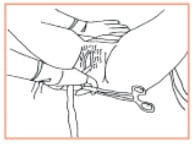
Controlled Cord Traction (CCT)
- Clamp the cord close to the perineum and hold in one hand.
- Place the other hand just above the women's pubic bone and stablize the uterus by applying counter-pressure during CCT.
- Kepp slight tension on the cord and await a strong uterine contraction (2-3 minutes).
- With the strong uterine contraction, encourage the mother to push and very gently pull downward on the cord to deliver the placenta. Continue to apply counter-pressure to the uterus.
- It the placenta does not descend during 30-40 seconds of CCT, do not continue to pull on the cord -
- Gently hold the cord and wait until the uterus is well contracted again;
- With the next contraction, repeat CCT with counter-pressure.
Never Apply Cord Traction (Pull) WIithout Applying Counter Traction(Push) Above the Public Bone on a Well-Contracted Uterus
- As the placenta delivers, hold the placenta in two hands and gently turn it until the membranes are twisted. Slowly pull to complete the delivery.
- If the membranes tear, gently examine the upper vagina and cervix wearing sterile/disinfected gloves and use a sponge forceps to remove any pieces of membrane that are present.
- Look carefully at the placenta to be sure none of it is missing. If a portion of the maternal surface is missing or there are torn membranes with vessels, suspect retained placenta fragments and take appropriate action.
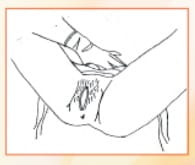
Uterine Massage
- Immediately massage the fundus of the uterus until the uterus is contracted.
- Palpate for a contracted uterus every 15 minutes and repeat uterine massage as needed during the first 2 hours.
- Ensure that the uterus does not become relaxed (soft) after you stop uterine massage.
http://www.internationalmidwives.org/assets/uploads/documents/FIGO/PPH%20Joint%20Statement.pdf.
Last accessed on May 2009.
Related Topics
More From Area Of Interest
You may also like

12 Oct, 26
21 Sep, 26
21 Sep, 26
21 Sep, 26

13 May, 26

17 Apr, 26
Latest Items
12 Oct, 26

12 Oct, 26
Journal Scans
8 Oct, 26
8 Oct, 26


