ERA Series 2: Cardiovascular

Prevention of CVD
Principles: The intensity of efforts to prevent CVD depends on the underlying risk of CVD, which can be estimatedi. The preventive efforts are diverse in nature and require involvement of a relevant specialists, in particular if the risk of CVD is high and always in persons with a history of CVD
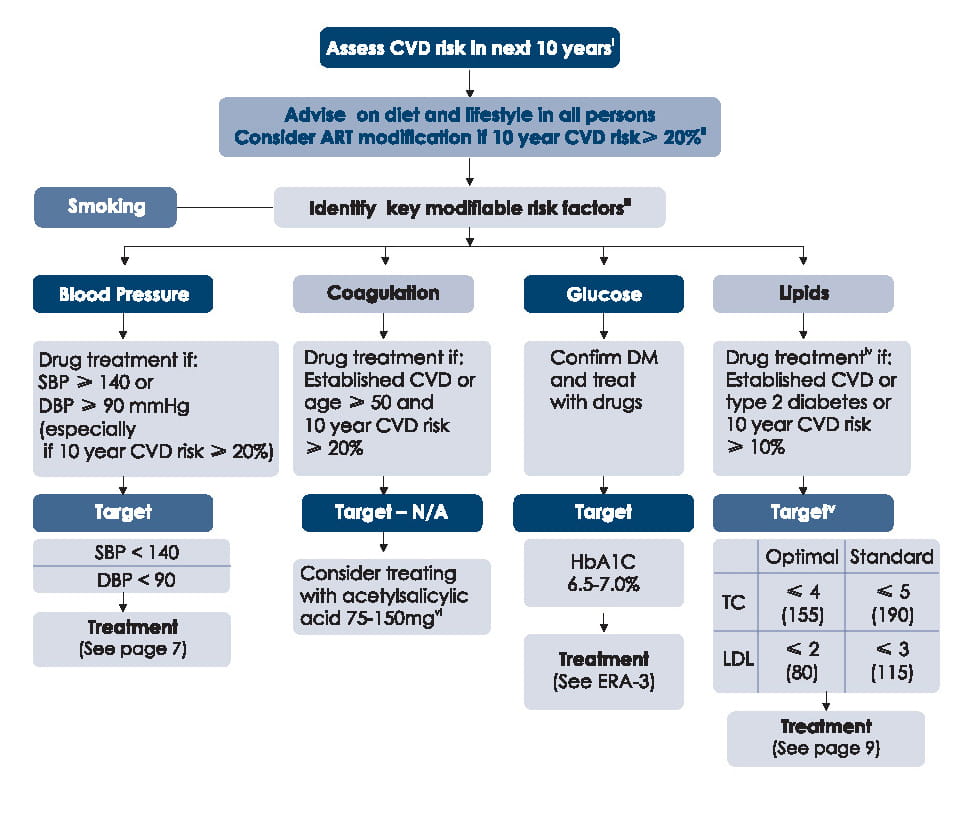
CVD: Cardiovascular Disease; SBP: systolic blood pressure; DBP: diastolic blood pressure; DM: diabetes mellitus
iUse the Framingham equation or whatever system local National Guidance recommends; a risk equation developed from HIV populations (see http://www.hivpv.org). This assessment and the associated considerations outlined in this figure should be repeated annually in all persons under care (see ERA 1) to ensure that the various interventions are initiated in a timely way.
iiOptions for ART modification include:
1. Replace with NNRTI, INSTI or by another PI/r known to cause less metabolic disturbances
2. Consider replacing ZDV or ABC with TDF or use an NRTI sparing regimen
iiiOf the modifiable risk factors outlined, drug treatment is reserved for certain subgroups where benefits are considered to outweigh potential harm. Of note, there is a combined benefit of various interventions in target groups identified. Per 10 mmHg reduction in systolic blood pressure, per 1 mmol/L (39 mg/dL) reduction in TC and with use of acetylsalicylic acid, each reduces risk of IHD by 20-25%; the effect is additive. Observational studies suggest that smoking cessation results in about 50% less risk in IHD – and this is additive to other interventions.
ivSee discussion on drug treatment of persons with lower CVD risk at www.nhlbi.nih.gov/guidelines/cholesterol/atp3_rpt.htm.
vTarget levels are to be used as guidance and are not definitive expressed as mmol/L with mg/dL in parenthesis. In case LDL cannot be calculated because of high triglyceride levels, the non-HDL-c (TC minus HDL-c) target should be used which is 0.8 mmol/L (30 mg/dL) higher than the corresponding LDL-c target. Target levels for TG are not listed because an independent contribution from TG to CVD risk is uncertain and hence whether this condition should be treated (See page 9)
viEvidence for benefi t when used in persons without a history of CVD (including diabetics) is less compelling. BP should be reasonably controlled before aspirin use in such a setting
|
Intervention |
Principles |
|
Dietary counselling |
· Dietary intervention should not interfere with the dietary requirements necessary for appropriate absorption of ART drugs · Keep caloric intake balanced with energy expenditure · Limit intake of saturated fat, cholesterol and refined carbohydrates · Reduce total fat intake to <30% and dietary cholesterol to <300 mg/day · Emphasize intake of vegetables, fruits and grain products with fibre · Cut back on beverages and foods with added sugar · Choose and prepare foods with little or no salt. Aim to eat less than 1,500 mg of sodium per day · Emphasize consumption of fish, poultry (without skin) and lean meat · Consider referral to a dietician, one week food and drink diary to discover ‘hidden’ calories · Avoid binge eating (‘yo-yo dieting’) · In persons with HIV-related wasting and dyslipidaemia, address wasting first and consider referral to a dietician · Persons who are obviously overweight should be motivated to lose weight. Starvation diets are not recommended (immune defence mechanisms potentially decreased). Malnutrition has to be addressed where observed. Normal BMI range: 18.5-24.9; Overweight: 25.0-29.9; Obesity: >30.0 kg/m2 · The following questions are helpful to determine average alcohol intake 1. How often do you drink alcohol: never, ≤ 1/month, 2-4x/month, 2-3x/week, > 4x/week 2. If you drink alcohol, how much typically at a time: 1-2, 3-4, 5-6, 7-9, > 10 drinks 3. How many times do you have 6 or more alcoholic drinks at one occasion: never, < 1/month, 1x/month, 1x/week, more or less daily. · Intake of alcohol should be restricted to no more than one drink per day for women and two drinks per day for men (< 20-40 g/day). · In particular, persons with hepatic disease, adherence problems, inadequate CD4 cell increase, tumours, past tuberculosis, diarrhea and other conditions associated with high alcohol intake should be motivated to decrease or stop alcohol intake. |
|
Exercise promotion |
· Promote an active lifestyle to prevent and treat obesity, hypertension and diabetes · Encourage self-directed, moderate level of physical activity (take the stairs, cycle or walk to work, cycling, swimming, hiking etc.) · Emphasize regular moderate-intensity exercise rather than vigorous exercise · Achieve cardiovascular fitness (e.g. 30 minutes brisk walking > 5 days a week) · Maintain muscular strength and joint flexibility |
iBased on recommendations by the US Preventive Services Task Force.
Smoking Cessation
HIV-positive tobacco users should be made aware of the substantial health benefi ts of smoking cessation which include reducing the risk of tobacco-related diseases, slowing the progression of existing tobacco related disease, and improving life expectancy by an average of 10 years.
Regularly consider the following algorithm with two major questions:
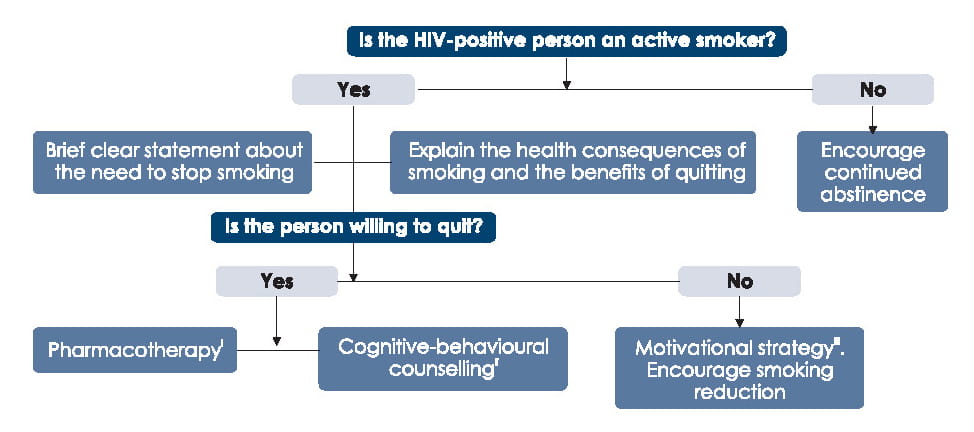
iPharmacotherapy: Nicotine replacement therapy: Nicotine substitution (patch, chewing gum, spray) varenicline and bupropion are approved by the EMA.
Buproprion is contraindicated with epilepsy and varenicline may induce depression. Bupropion may interact with PIs and NNRTIs.
iiCognitive-behavioral counselling: Use specific available resources. Either individual or group interventions to better suit and satisfy the HIV-positive person. The programme should consist of four or more sessions lasting 30 minutes for 3-4 months.
iiiMotivational strategy: Identify potential health risks of the smoker and to stratify both acute (e.g. exacerbations of COPD) and long-term (e.g. infertility, cancer) risks. Show the HIV-positive person the personal benefits of stopping smoking. Identify the barriers or obstacles that might impede the success of a quit attempt. Smoking cessation interventions should be delivered repeatedly, as long as the HIV-positive person is not willing/ready enough to quit smoking.
|
Other risk factors, Asymptomatic organ damage or disease |
Blood pressure (mmHg) |
Blood pressure (mmHg) |
Blood pressure (mmHg) |
Blood pressure (mmHg) |
|
High normal SBP 130-139 or DBP 85-89 |
Grade 1 hypertension: SBP 140-159 or DBP 90-99 |
Grade 2 hypertension: SBP 160-179 or DBP 100-109 |
Grade 3 hypertension: SBP ≥180 or DBP ≥110 | |
|
No other risk factors
|
· No BP intervention |
· Lifestyle changesi for several months · Then add BP drugs targeting <140/90 |
· Lifestyle changesi for several weeks · Then add BP drugs targeting <140/90 |
· Lifestyle changesi · Immediate BP drugs targeting <140/90 |
|
1-2 risk factors |
· Lifestyle changesi · No BP intervention |
· Lifestyle changesi for several weeks · Then add BP drugs targeting <140/90 |
· Lifestyle changesi for several weeks · Then add BP drugs targeting <140/90 |
· Lifestyle changesi · Immediate BP drugs targeting <140/90 |
|
≥3 risk factors |
· Lifestyle changesi · No BP intervention |
· Lifestyle changesi for several weeks · Then add BP drugs targeting <140/90 |
· Lifestyle changesi · BP drugs targeting <140/90 |
· Lifestyle changesi · Immediate BP drugs targeting <140/90 |
|
Organ damage, CKD stage 3 or diabetes |
· Lifestyle changesi · No BP intervention |
· Lifestyle changesi · BP drugs targeting <140/90 |
· Lifestyle changesi · BP drugs targeting <140/90 |
· Lifestyle changesi · Immediate BP drugs targeting <140/90 |
|
Symptomatic CVD, CKD stage ≥ 4 or diabetes with organ damage/risk factors |
· Lifestyle changesi · No BP intervention |
· Lifestyle changesi · BP drugs targeting <140/90 |
· Lifestyle changesi · BP drugs targeting <140/90 |
· Lifestyle changesi · Immediate BP drugs targeting <140/90 |
BPBlood pressure
DBPDiastolic blood pressure
SBPSystolic blood pressure
Repeated blood pressure measurements should be used for stratification
iRecommended lifestyle interventions
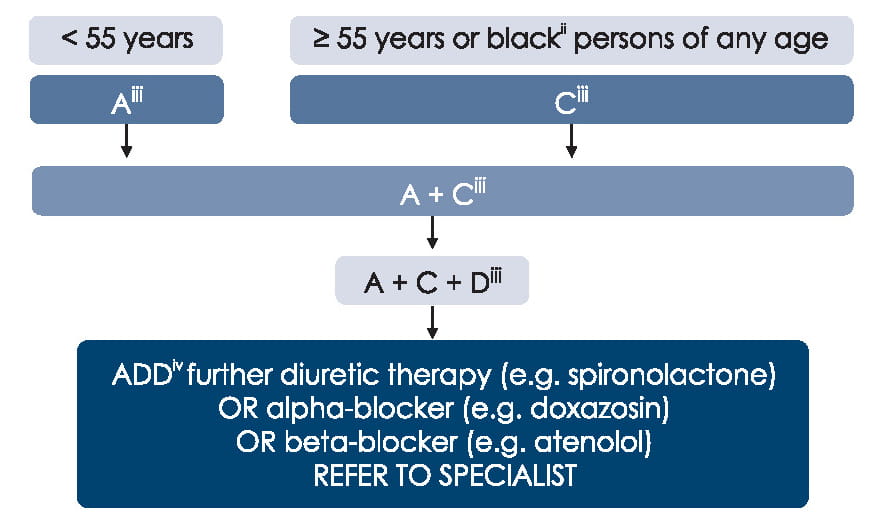
Abbreviations + details:
A ACE inhibitor (e.g. perindopril, lisinopril or ramipril) or low cost angiotensin receptor blockers (ARB) (e.g. losartan, candesartan)
C Dihydropyridine calcium-channel blocker (e.g. amlodipine). If not tolerated or if deemed at high risk of heart failure, ’D’ drugs can be used instead. Where a ’C’ drug is preferred but not tolerated, verapamil or diltiazem may be used (note: dose with caution with PIs as these may increase plasma concentrations of these calcium channel blockers, potentially leading to toxic reactions)
D Thiazide-type diuretic* e.g. indapamide or chlorthalidone
i. Some calcium-channel blockers interact marginally with the pharmacokinetics of ARVs
ii. Black persons are those of African or Caribbean descent, and not mixed race, Asian or Chinese persons
iii. Wait 4-6 weeks to assess whether target, is achieved; if not, go to next step
iv. Requirement of 4-5 drugs to manage hypertension needs specialist training
* This excludes thiazides (e.g. HCTZ, bendroflumethiazide etc)
Dyslipidaemia
Principles: Higher LDL-c levels increase risk of CVD, hence reduction diminishes this risk (see table below for drugs used in this indication). The reverse is probably true for HDL-c but trial data are less compelling. The CVD risk implications from higher than normal TG levels are even less clear, as TG has not consistently been shown to independently predict the risk of CVD. Furthermore, the clinical benefit of treating moderate hyper triglyceridaemia is uncertain; very high TG (> 10 mmol/L or > 900 mg/dL) increase the risk of pancreatitis.
Less calories, more exercise, reducing bodyweight, and stopping smoking tend to improve HDL. Eating fish, reducing calories, saturated fat and alcohol intake reduce triglyceride levels. Reducing dietary saturated fat intake improves LDL-levels; if not effective, consider change of ART, then consider lipid-lowering medication. Statins should be used by all those with established vascular disease and among those with type 2 diabetes or at high risk of CVD, irrespective of lipid levels.
|
Drug class |
Drug |
Dose |
Side effects |
Advice on use of statins together with ART | |
|
Use with PI/r |
Use with NNRTIs | ||||
|
Statini,ix |
Atorvastatinii |
10-80 mg qd |
Gastrointestinal symptoms, headache, insomnia, rhabdomyolysis (rare) and toxic hepatitis |
Start with low dosev (max: 40 mg) |
Consider higher dosevi |
|
Fluvastatiniii |
20-80 mg qd |
Consider higher dosevi |
Consider higher dosevi | ||
|
Pravastatiniii |
20-80 mg qd |
Consider higher dosevi,vii |
Consider higher dosevi | ||
|
Rosuvastatinii |
5-40 mg qd |
Start with low dosev (max: 20 mg) |
Start with low dosev | ||
|
Simvastatinii |
10-40 mg qd |
Contraindicated |
| ||
|
Intestinal cholesterol absorption inhibitor↓i,viii |
Ezetimibeiv |
10 mg qd |
Gastrointestinal symptoms |
No known drug-drug interactions with ART | |
i A statin is preferred first-line therapy; different statins have variable intrinsic LDL-c lowering ability
ii, iii, iv Target levels for LDL-c, refer page 2. In persons where LDL-c targets are difficult to achieve, consult/refer to a specialist
ii, iii, iv Expected range of reductions of LDL-c: ii 1.5-2.5 mmol/L (60-100 mg/dL), iii 0.8-1.5 mmol/L (35-60 mg/dL), iv 0.2-0.5 mmol/L (10-20 mg/dL)
v, vi The ARV may v inhibit (statin toxicity, ↓ dose) or vi induce (=less effect of statin, ↑ dose gradually to achieve expected benefit ii, iii) the excretion of the statin
vii Exception: If used with DRV/r, start with lower dose of pravastatin
viii This agent can be used for HIV-positive persons intolerant of statins or added to a statin when LDL reduction is inadequate despite maximally tolerated statin
ix Pitavastatin has, as yet, no morbidity/mortality trial data to support its use but may have advantages of fewer drug-drug interactions, more HDL increase and less adverse glucose effect than other statins
Reference
EACS Guidelines Version 8.0 - October 2015.