Invasive fungal infections have emerged as a serious nosocomial threat, particularly among critically ill patients. Candida and Aspergillus are the most common causes of invasive fungal infections, accounting for 70-90% and 10-20% of all invasive mycoses, respectively. Invasive candidiasis and aspergillosis are associated with substantial morbidity and high mortality (40-60% and 60-90%, respectively), prolonged hospital stay and increased healthcare costs. Early diagnosis and prompt initiation of antifungal therapy are, thus, essential to reduce morbidity and mortality.
For decades, amphotericin B deoxycholate has been the standard therapy for invasive fungal infections. Unfortunately, amphotericin B deoxycholate is often poorly tolerated and associated with infusion-related acute reactions and nephrotoxicity. In the late 1970s and 1980s, the emergence of azoles (first, miconazole and ketoconazole and, then, fluconazole and itraconazole), a new class of antifungal agents inhibiting the synthesis of the cell membrane, provided an alternative therapeutic strategy to amphotericin B deoxycholate. In recent years, several new antifungal agents have become available, offering additional therapeutic options for the management of invasive fungal infections. Today, the antifungal armamentarium has further expanded to include the newer, extended-spectrum triazoles and the echinocandins.1,2
The echinocandins represent the fourth class of antifungal agents available for the treatment of systemic fungal infections. At present, there are three echinocandins approved by the Food and Drug Administration (FDA). Caspofungin was approved first, in 2001, followed by micafungin in 2005 and anidulafungin in 2006.3
The echinocandins are a valuable addition to the present-day antifungal armamentar-ium for the treatment of invasive fungal infections. Although they have a narrow antifungal spectrum, these agents cover the two most common fungal pathogens, i.e., Candida and Aspergillus. As a class of antifungal agents, they are safe, well tolerated, and demonstrate favourable pharmacokinetic and pharmacodynamic profiles. The echinocandins do not appear to demonstrate any differences in clinical efficacy in the disease entities studied and it is unlikely that any one agent would be found to be clearly superior with regard to clinical outcomes.
All the echinocandins are approved for the treatment of invasive candidiasis; however, caspofungin is the only echinocandin that covers the broadest range of indications (US FDA-approved):4
- Invasive aspergillosis in patients intolerant of or refractory to other therapies.
- Empirical treatment of presumed invasive fungal infections in febrile neutropenic patients.
- Oesophageal and oropharyngeal candidiasis.
- Fungal infections in paediatric patients, 3 months of age and older.
Caspofungin, the first inhibitor of fungal beta-(1,3)-D-glucan synthesis to receive approval by the US FDA, is effective for the treatment of mucosal and invasive candidiasis and invasive aspergillosis. In comparative clinical trials, caspofungin was no less effective than liposomal amphotericin B in the empirical treatment of neutropenic patients with persistent fever, amphotericin B deoxycholate in the treatment of invasive candidiasis or fluconazole in the treatment of oesophageal candidiasis. Caspofungin also displayed broadly similar efficacy to amphotericin B deoxycholate in oesophageal or oropharyngeal candidiasis and was effective as salvage therapy in patients with invasive aspergillosis who were refractory to or intolerant of standard therapy. The tolerability profile of caspofungin was similar to that of fluconazole and superior to that of amphotericin B deoxycholate and liposomal amphotericin B. Therefore, in the appropri-ate indications, caspofungin is a viable alternative to amphotericin B deoxycholate, liposomal amphotericin B or fluconazole.5
Caspofungin Acetate for Injection (Lyophilized)
Caspogin I.V. 50 mg
Each vial contains:
Caspofungin acetate
Equivalent to caspofungin ...... 50 mg
Excipients ............................... q.s.
Caspogin I.V. 70 mg
Each vial contains:
Caspofungin acetate
Equivalent to caspofungin ...... 70 mg
Excipients ............................... q.s.
Lyophilized powder for solution for I.V. (intravenous) use.
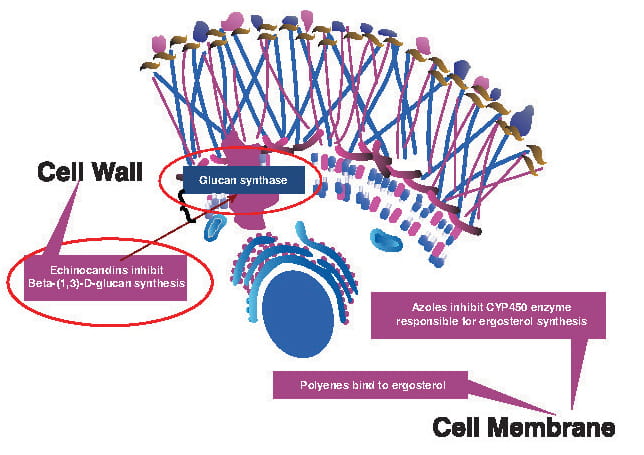
Mechanism of action5
It blocks the synthesis of beta-(1,3)-D-glucan, an important fungal cell wall component, leading to osmotic instability and lysis of the fungal cell. Caspofungin has low potential to develop cross-resistance with other antifungal classes due to its novel mode of action.
Spectrum
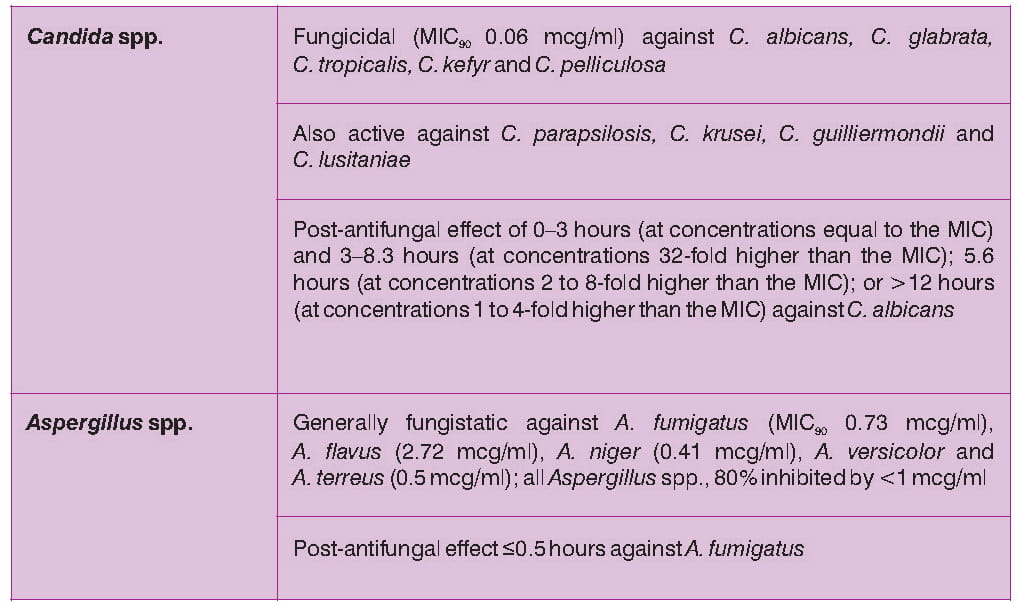
Most active against Candida spp. and Aspergillus spp.5
Fungal biofilms6
Biofilms of the Candida species play a growing role in human medicine. Indeed, the majority of manifestations of candidiasis at both the mucosal and systemic sites are associated in one way or another with the formation of biofilms on inert or biological surfaces. More than their planktonic (free- living) counterparts, cells grown in biofilms can be very recalcitrant to antimicrobial treatment.
Studies show >97% reduction in the metabolic activity of sessile cells, with caspofungin concentrations as low as 0.125 mcg/ml. Overall, these results indicated that caspofungin was highly efficacious against preformed C. albicans biofilms at concentra-tions similar to the MICs against planktonic cells.
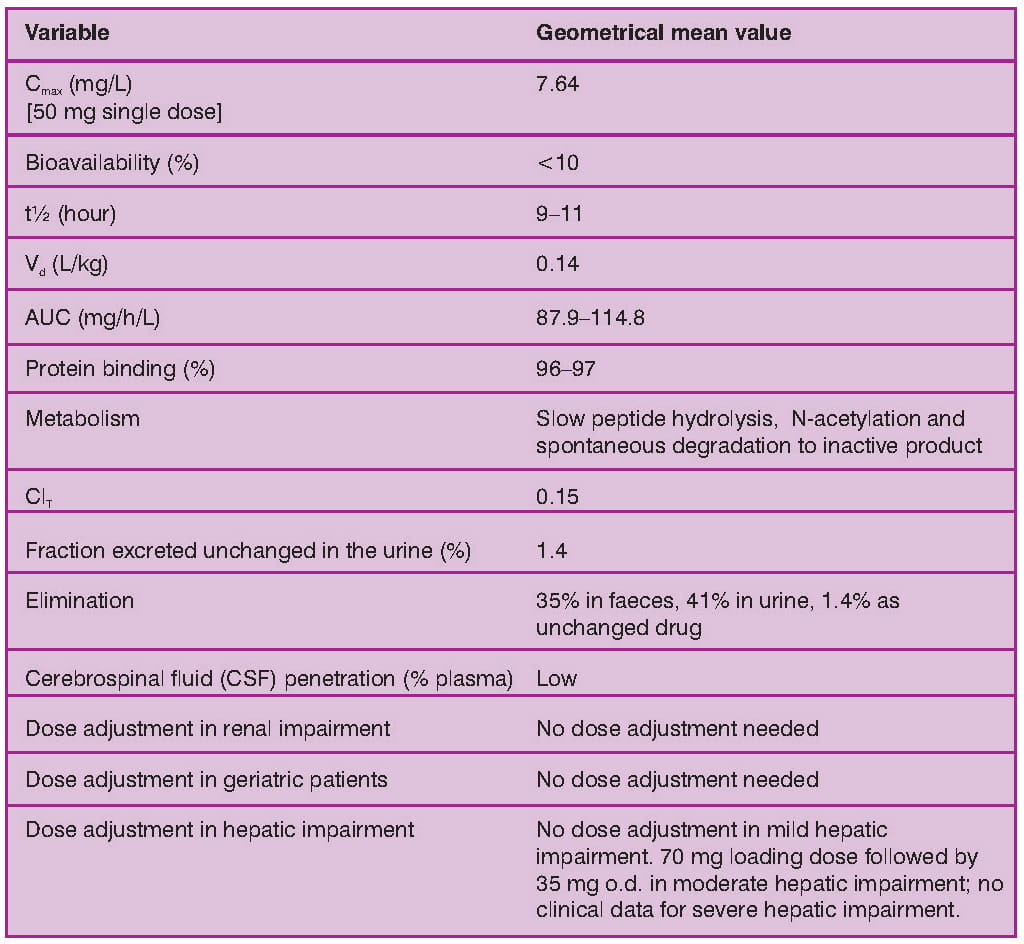
- Single doses of 50 and 70 mg produced mean peak (1 hour) plasma concentrations of 7.6 and 12.3 mg/mL respectively and trough (24 hours) concentrations of 0.8 and 1.3 mg/mL respectively.
- The steady state was reached after 14-21 days of multiple-dose administration.
- Plasma clearance of caspofungin is slow and is determined primarily by the distribution of the drug into the tissues, notably hepatocytes, rather than by the rate of metabolism or excretion.
- Slowly metabolized in the liver and dosage reduction is recommended in patients with moderate hepatic impairment.
- Excretion is minimal in the first 2 days following a single dose of radiolabelled caspofungin, and excretion in the urine and faeces peaked at 6-7 days.
Caspofungin does not readily interact with the cytochrome (CY) P450 system or P-glycoprotein. However, pharmacokinetic interactions between caspofungin and tacrolimus, ciclosporin (cyclosporin), rifampin (rifampin) and other inducers of drug clearance have been reported.
Caspogin I.V. is indicated in adults and paediatric patients (3 months of age and older) for the following:
- Empirical therapy for presumed fungal infections in febrile, neutropenic patients.
- Treatment of candidaemia and the following Candida infections: intraabdominal abscesses, peritonitis and pleural space infections.
- Treatment of oesophageal and oropharyngeal candidiasis.
- Treatment of invasive aspergillosis in patients who are refractory to or intoler-ant of other therapies (e.g., amphotericin B, lipid formulations of amphotericin B, itraconazole).
Increasing rates of invasive candidiasis caused by non-albicans Candida spp. have been reported worldwide.
N=212; patients who had received caspofungin monotherapy for at least 10 days were analysed.
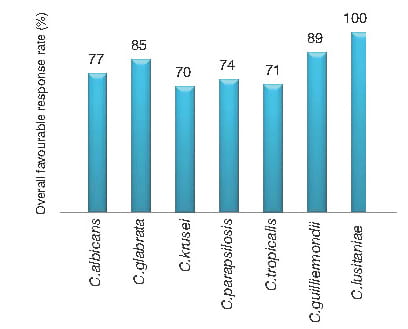
- The overall favourable response rate across all the candidal species was 77%.
- The time lo negative blood culture was similar for all the species.
- Favourable safety profile.
Caspofungin proved to be an effective first-line agent for invasive candidiasis caused by non-albicans Candida spp.
Caspofungin belongs to a relatively new class of antifungal agents that inhibits the fungal cell wall component, beta-(1-3)-D-glucan, with activity against Candida and Aspergillus spps.
N=1,095 patients
Group 1 (N=556):
Caspofungin I.V. 50 mg o.d., following a 70 mg loading dose on day 1
Group 2 (N=539):
Liposomal amphotericin B I.V. 3 mg/kg o.d
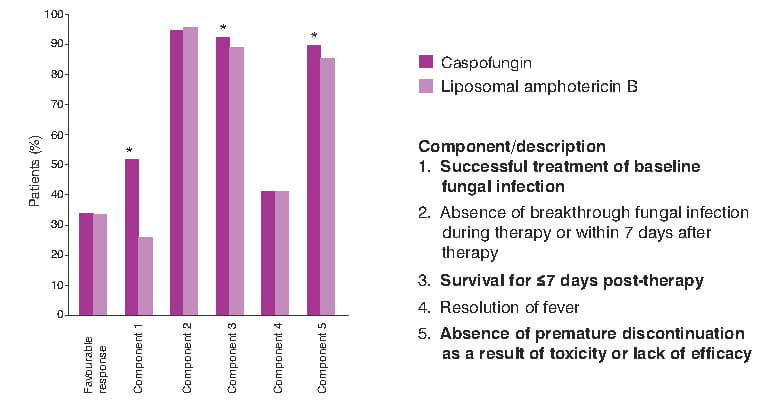
Caspofungin recipients had a significantly higher response rate than liposomal amphotericin B in the following three of the five individual components:
- Successful treatment of baseline fungal infections.
- Better survival rates.
- Absence of premature discontinuation as a result of lack of efficacy or toxicity.
Invasive aspergillosis has emerged worldwide as an important fungal infection among a wide spectrum of immunocompromised patients. Several recent studies have indicated that the overall response rate to treatment is <40% and may be as low as 10-15% in patients undergoing allogenic haematopoietic stem cell transplantation (HSCT).
N=90; immunocompromised patients with proven or probable invasive aspergillosis
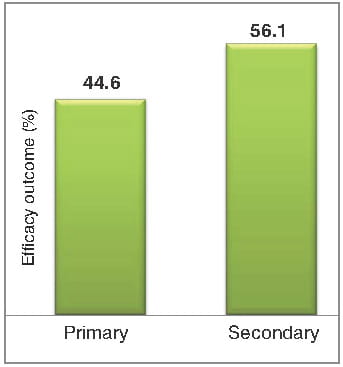
Trend towards a higher proportion of favourable responses were observed among patients with:
- pulmonary disease vs. extrapulmonary disease; and,
- neutropenic patients vs. non neutropenic patients.
The therapy was well tolerated in 97.8% patients, with the most common infusion-related events being fever, nausea and vomiting.
Oesophageal candidiasis is one of the most common opportunistic infections in patients with advanced HIV infection and is often responsible for incapacitating morbidity in otherwise highly functional persons, with high recurrence rates. Amphotericin B, despite its myriad toxicities, is generally regarded as the treatment of choice for symptomatic patients failing azole therapy. Although some of the side effects of conventional amphotericin B can be ameliorated with the use of the newer lipid formulations, significant residual toxicities have limited their widespread use.
Caspofungin can assume an important role in the treatment of azole-refractory Candida oesophagitis as a generally well-tolerated, alternative option to amphotericin B.
N=128; patients with symptomatically and microbiologically documented Candida oesophagitis were included in the study.
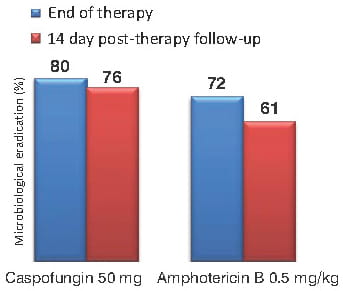
Caspofungin was found to be equally effective but safer and, hence, is an alternative treatment option to conventional amphotericin B therapy for HIV-infected patients with azole-refractory Candida oesophagitis.
The mortality rates in children with candidaemia range from 16% to 31%, whereas invasive aspergillosis in children is associated with even greater mortality, approaching rates as high as 77%.
N=49; patients aged 3 months to 17 years of age with proven or probable invasive aspergillosis, proven invasive candidiasis or proven oesophageal candidiasis were included in the study.
Dose: *Caspofungin 70 mg/m2 on day 1, followed by 50 mg/m2 per day (maximum: 70 mg/day), as primary or salvage monotherapy.
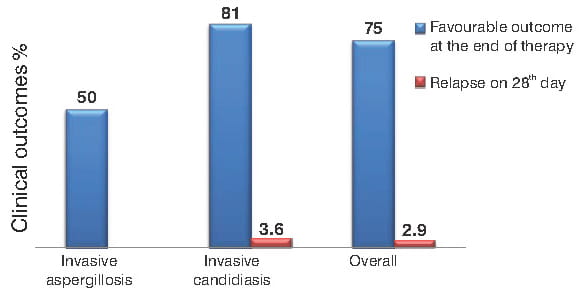
Effective, well-tolerated alternative for the treatment of Candida and Aspergillus infections in paediatric patients.
<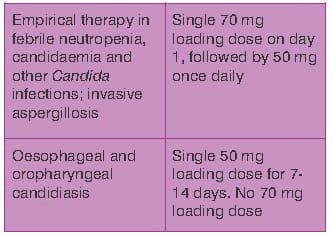
- Single 70 mg/m2 loading dose on day 1, followed by 50 mg/m2 once daily.
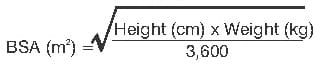
- Loading dose is calculated as the body surface area (BSA) (m2) x 70 mg/m2. The maintenance dose is calculated as BSA (m2) 50 mg/m2.
- If a 50 mg/m2 daily dose is well tolerated but does not provide an adequate response, the daily dose can be increased to 70 mg/m2.
- Maximum loading and maintenance dose should not exceed 70 mg, regardless of the patient's calculated dose.
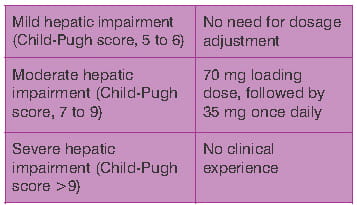
- Paediatric patients
- There is no clinical experience in paediatric patients with any degree of hepatic impairment.
no dosage adjustment required. Caspofungin is not dialyzable; thus, supplementary dosing is not required following haemodialysis.
No dose adjustment is recommended for elderly patients; however, the greater sensitivity of some older individuals cannot be ruled out.
There are no adequate and well-controlled studies in pregnant women. Caspogin I.V. should be used during pregnancy only if the potential benefit justifies the potential risk to the foetus.
Women receiving caspofungin should not breast-feed.
No dosage adjustment is necessary based on gender or race
Dosing with rifampin and other inducers of drug clearance
- Use70mg once daily of Caspogin I.V. for adult patients on rifampin.
- Consider a dose increase to 70 mg once daily of Caspogin I.V. for adult patients on nevirapine, efavirenz, carbamazepine, dexamethasone or phenytoin.
- In paediatric patients receiving these same concomitant medications, an increase in the dose to 70 mg/m2 of Caspogin I.V. once daily (maximum daily dose not to exceed 70 mg) should be considered.
- Duration of empirical therapy should be based on the patient's clinical response. Patients found to have a fungal infection should be treated for a minimum of 14 days; treatment should continue for at least 7 days after both neutropenia and clinical symptoms are resolved.
- Duration of treatment oi invasive candidiasis should be dictated by the patient's clinical and microbiological response. In general, antifungal therapy should continue for at least 14 days after the last positive culture. Patients who remain persistently neutropenic may warrant a longer course of therapy pending resolution of the neutropenia
- Duration of treatment of invasive aspergillosis should be based upon the severity of the patient's underlying disease, recovery from immunosuppression and clinical response.
Administer by slow I.V. infusion over approximately 1 hour. Nol for I.V. bolus administration.
Do not mix or co-infuse Caspogin I.V. with other medications. DO NOT USE DILUENTS CONTAINING DEXTROSE ([ALPHAJ-D-GLUCOSE). Visually inspect the infusion solution for particulate matter or discolouration.
- Step 1: Equilibrate the refrigerated vial of CASPOG IN I.V. to room temperature.
- Step 2: Reconstitution
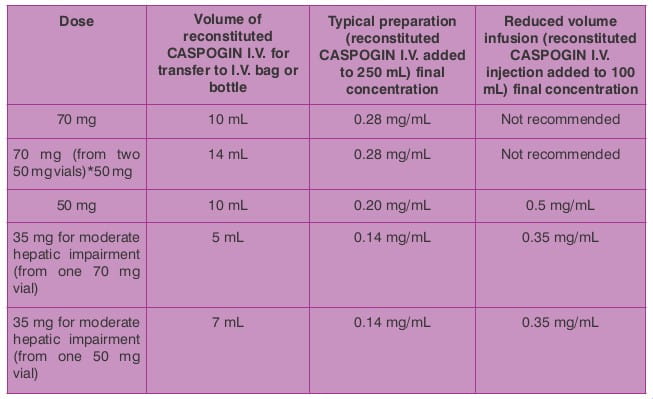
Aseptically add 10 mL of 0.9% Sodium Chloride Injection, Sterile Water for Injection or Bacteriostatic Water for Injection along with methylparaben and propylparaben, or Bacteriostatic Water for Injection along with 0.9% benzyl alcohol to the vial.
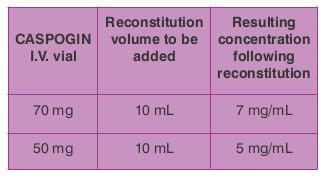
- Mix gently until a clear solution is obtained. Visually inspect the reconstituted solution for particulate matter or discolouration during reconstitution and prior to infusion. Do not use if the solution is cloudy or has precipitated.
- Caspogin I.V. vials are for single use only; the remaining solution should be discarded. However, the reconstituted solution may be stored for up to 24 hours at ≤25 C (≤77F) prior to preparation of the patient infusion solution.
- Step 3: Preparation of the Patient Infusion Solution
- Aseptically transfer the appropriate volume (mL) of reconstituted Caspogin I.V. to an I.V bag (or bottle) containing 250 mL of 0.9%, 0.45% or 0.225% Sodium Chloride Injection or Lactated Ringer's Injection.
- Alternatively, reduced volume infusions of 100 ml may be used, where medically necessary, for 50 mg or 35 mg daily doses.
- Do not use if the solution is cloudy or has precipitated.
- This infusion solution must be used within 24 hours if stored at ≤ 25C, or within 48 hours if stored, refrigerated, at 2-8C.
- Determine the actual loading dose to be used in the paediatric patient by using the patient's BSA and the following equation:
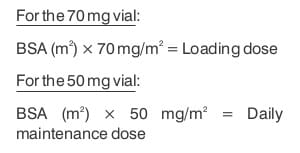
The maximum loading dose on day 1 should not exceed 70 mg, regardless of the patients calculated dose.
- Follow Step 1 and Step 2.
- Remove the volume of drug equal to the calculated loading dose from the vial. Aseptically transfer this volume (mL) of reconstituted > Caspogin I.V. to an I.V. bag (or bottle) containing 250 mL of 0.9%, 0.45% or 0.225% Sodium Chloride Injection, or Lactated Ringer's Injection. Alternatively, the volume (mL) of reconstituted Caspogin I.V. can be added to a reduced volume of 0.9%, 0.45% or 0.225% Sodium Chloride Injection or Lactated Ringer's Injection, not to exceed a final concentration of 0.5 mg/mL. This infusion solution must be used within 24 hours if stored at ≤25°C (≤77°F) or within 48 hours if stored, refrigerated, at 2-8°C (36-46°F).
- If the calculated loading dose is <50 mg, then the dose may be prepared from the 50 mg vial.
- If the calculated maintenance dose is >50 mg, then the dose may be prepared from the 70 mg vial.
The lyophilized vials should be stored refrigerated at 2-8°C (36-46°F).
It is recommended that the reconstituted solutions be used immediately. However, the reconstitutes may be stored ≤25°C (≤77°F) for 24 hours prior to the preparation of the infusion solutions for the patients.
It is recommended to use the reconstituted solution immediately; however, the final infusion solution for the patient in the I.V. bag or bottle can be stored at ≤25°C (≤77°F) for up to 24 hours, or up to 48 hours when refrigerated at 2-8°C.
Clinical studies suggest that, caspofungin acetate and cyclosporin should only be used concomitantly in those patients for whom the potential benefit outweighs the potential risk. Patients who develop abnormal liver function tests during concomitant therapy should be monitored and the risks/benefits of continuing therapy should be evaluated.
Laboratory abnormalities in liver function tests have been seen in healthy volunteers and in adult and paediatric patients treated with caspofungin acetate. Patients who develop abnormal liver function tests during caspofungin acetate therapy should be monitored for evidence of worsening hepatic function and evaluated for the risk/benefit of continuing caspofungin acetate therapy.
Studies in vitro show that caspofungin acetate is not an inhibitor of any enzyme in the CYP450 system. In clinical studies, caspofungin did not induce the CYP3A4 metabolism of other drugs. Caspofungin acetate is not a substrate for P-glycoprotein and is a poor substrate for CYP450 enzymes.
Clinical studies in adult healthy volunteers show that the pharmacokinetics of caspofungin acetate is not altered by itraconazole, amphotericin B, mycophenolate, nelfinavir or tacrolimus. Caspofungin acetate has no effect on the pharmacokinetics of itraconazole, amphotericin B or the active metabolite of mycophenolate.
There were transient increases in liver ALT and AST when caspofungin acetate and cyclosporin were co-administered.
For patients receiving both therapies, both standard monitoring of tacrolimus blood concentrations and appropriate tacrolimus dosage adjustments are recommended.
A drug-drug interaction study with rifampin in healthy adult volunteers has shown a 30% decrease in caspofungin trough concentrations. Adult patients on rifampin should receive 70 mg of Caspogin I.V. daily.
When Caspogin I.V. is co-administered to adult patients with inducers of drug clearance, such as efavirenz, nevirapine, phenytoin, dexamethasone or carbamazepine, use of a daily dose of 70 mg of Caspogin I.V. should be consid-ered; in paediatric patients, a dose of 70 mg/m2 daily (not to exceed an actual daily dose of 70 mg) should beconsidered.
Contraindicated in patients with a hypersen-sitivity to any component of this product.
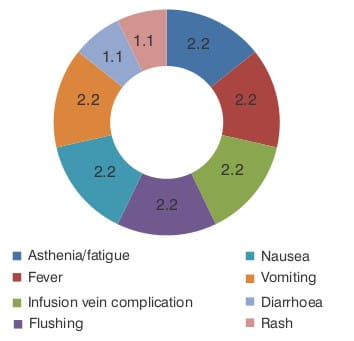
Caspofungin was generally well tolerated in patients with fungal infections. The most frequent clinical adverse events with caspofungin usually include phlebitis/thrombophlebitis, fever, chills, headache, nausea and vomiting, abdominal pain, diarrhoea, rash or flushing. The incidence of individual adverse events varied in different studies and ranged from 0 to 28% of caspofungin recipients.
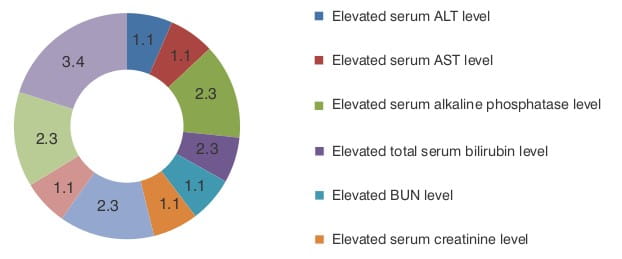
The most common laboratory abnormalities observed with caspofungin therapy, although occurring with different frequencies (<1-20% of patients) in different prospective trials, were hypokalaemia, hypoalbuminaemia, elevated ALT, AST or alkaline phosphatase, decreased haemoglobin, increased urinary protein,hypercalcaemia, leucopenia and elevated creatinine.
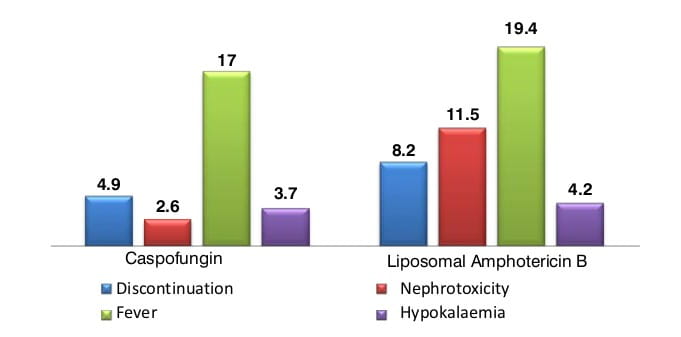
Significantly fewer patients in the caspofungin group than in the liposomal amphotericin B group had an event associated with nephrotoxicity, an infusion-related event or any drug-related adverse event or discontinued therapy because of a drug-related adverse event.
Although the rates of drug-related adverse events reported most frequently were similar in the two groups, several of them chills, nausea, vomiting, a decrease in the serum potassium level, an elevation in the serum alkaline phosphatase level and an elevation in the serum creatinine level occurred less often with caspofungin than with liposomal amphotericin B.
N=1,095patients
Group 1 (N=556): Caspofungin I.V 50 mg o.d. following a 70 mg loading dose on day 1
Group 2 (N=539) Liposomal amphotericin B I.V°C.3mg/kg o.d.
In 6 healthy subjects who received a single 210 mg dose, no significant adverse reactions were reported. Multiple doses above 150 mg daily have not been studied. Caspofungin is not dialyzable. The minimum lethal dose of caspofungin in rats was 50 mg/kg, a dose, which is equivalent to 10 times the recommended daily dose, based on relative BSA comparison.
In clinical trials, 1 paediatric patient (16 years of age) unintentionally received a single dose of caspofungin of 113 mg (on day 1), followed by 80 mg daily for an additional 7 days. No clinically significant adverse reactions were reported.
1. Proc Am ThoracSoc 2010; 7:222-228
2. Swiss Med Wkly 2006; 136:447-463
3. Ann Pharmacother 2009; 43:1647-57
4. Drugs2011;71;1:11-41
5. Drugs2005; 65; 14:2049-2068
6. Antimicrob Agents Chemother2002:3591-3596
7. Antimicrob Agents Chemother 2010:1864-1871
8. N Engl J Med 2004; 351:1391 -402
9. Clin. Infect Dis. 2004; 39:1563-71
10. Clin. Infect. Dis. 2001;33:1529-35
11. Pediatrics 2009; 123:877-884