




Firstly, planning ahead is most important. So, it would help both physician and patient if the physician informs all his/her asthmatic patients right at the outset that, any time they decide to plan a vacation, it is essential that all such travelling plans be discussed with him/her, preferably 2-3 weeks in advance.
Asthma and Travel

7 Aug, 11


Asthma and Travel
Early Planning
Before Departure
To begin with, it is very important that a patient's asthma is completely under control ahead of the vacation. Here are some key points that a physician can take note of:
- Achieving maximal control: As is said, 'Better safe than sorry.' So, it must be impressed on the patient that it is most important that he/she should keep taking the prescribed medications regularly and not miss any of the doses. If needed, the asthma medications should be reviewed and the treatment should be stepped up as per the current guidelines.
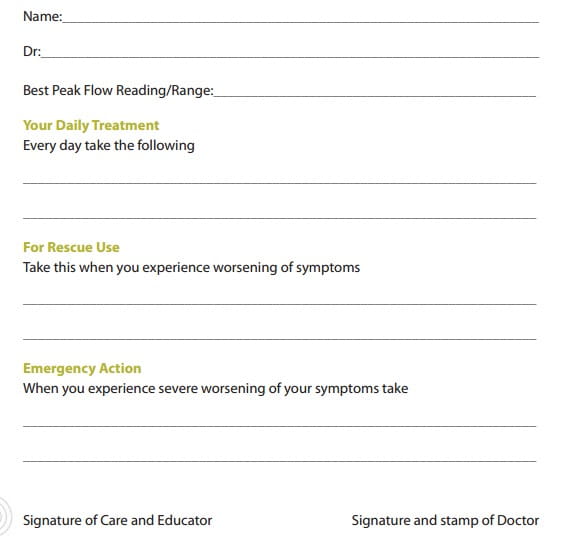
- Asthma action plan: Does the patient have a written asthma action plan? It has been proven that having a written asthma action plan helps; so, if any patient does not have such a plan, this would be the right time to provide him/her with it.
- Measuring peak flow: The patient should be encouraged to get a peak flow meter so that he/she can measure the lung function daily. It would help to explain the need to do so and, thereby, the importance of carrying it with him/her when travelling.
- Daily diary: The patient should also be asked to maintain a daily diary of his/her symptoms as well as peak flow readings. This would help him/her to recognize the deterioration of his/her symptoms.
- List of medications: Writing down the list of medications that the patient needs to take regularly,
i.e. controller, as well as the medication he/she needs to take during worsening of the symptoms, i.e.
relievers, would be practical. This list should also include the following information:
- Explaining how to recognize the signs of an asthma attack.
- Asking him/her to carry a course of oral steroids for use in case of a severe attack and also a course of an antibiotic in case an infection triggers the attack.
- Explaining how to recognize the signs of an infection, e.g. the onset of fever.
- In case he/she is allergic to aspirin or any other medication, writing it down clearly and advising him/her to avoid it.
- Informing the patient of the generic names of the medications he/she is taking, in case they have to be bought at the place he/she is travelling to, especially abroad, where the local brands won't be available.
- Clearly indicating the medication timing, if he/she is travelling to a different time zone.
- Prescribing anti-viral drugs for prophylaxis in case of a viral infection as also written instructions on when to use them.
- List of devices: Another big help would be to include a list of devices (along with their brand names) that the patient needs to carry to use his/her medication, such as an inhaler or spacer and, if required, a face mask. Also along with the brand name, mentioning the general type of the device would be helpful in case a particular brand is not available at the travel destination and that patient needs to buy it.
- Management of asthma exacerbations: In addition to the written asthma action plan, it is also important to provide a clearly explained, written plan on the initial management of an exacerbation till the patient is able to reach the nearest emergency medical service. This would involve including the criteria for identifying an impending attack, the medication doses, when to seek help, when to start oral steroids and also the emergency contact numbers (the physician's as well as his/her colleagues in another city/ country (if available) in case the former is unreachable).
- Immunizations: Travellers with asthma can receive the usual recommended for their particular destination unless contraindicated for other reasons. Any recent use of high- dose oral steroids should be enquired about before immunization. Annual influenza immunization as well as pneumococcal immunization can be recommended for those with asthma.
- Performing allergy testing: This can be done if deemed necessary. This will also help in advising the patient regarding the avoidance of specific asthma triggers.
- Checking for exercise-induced asthma: It may be useful to ask the patient to undergo an exercise test of similar intensity to that expected on his/her travels and, with a peak flow meter and a diary, record the peak flow rate during and after such exercise. These results would be helpful in adjusting the medication accordingly.
- Travel partner: The patient should also be advised to have a travelling companion, who should also be made aware of all the above pointers.
- Travel insurance: The patient should be advised to have this arranged before setting out on vacation.
- Emergency contacts: The physician may wish to provide his/her emergency contact number or email address.
- Medical services info: The patient should be advised to find out the location of the nearest emergency medical services at the travel destination so that he/she can be prepared for any emergency.
Asthma Travel Kit for an Asthmatic Traveller
- Written medical history with current medication, plus phone numbers/email of his/her physician.
- Asthma action plan as well as the list of medications, along with the physician's written prescription.
- Written plan to manage exacerbations.
- Daily symptom dairy.
plus
- Peak flow meter for recording daily lung function.
- Peak expiratory flow/symptom charts.
- Spacer and, if required, face mask.
- One course of oral steroid tablets such as prednisolone 10 mg.
- One course of an antibiotic in case of chest infections.
plus
A reminder to the patient to keep the above asthma travel kit with him/her where it is easily accessible, e.g. the hand luggage.
While Travelling
It is important that the physician works with the patient in helping him/her identify various asthma triggers and also know how to avoid them. Here are some tips that a physician could give to his/her patient, which may prove beneficial:
While Travelling by Road/Train
- To keep the car/bus/train windows shut, as far as is possible. In case this cannot be done, to use a scarf for protection.
- If the patient has cold-induced asthma, to avoid switching on the car air conditioning or travelling in an air-conditioned bus/train.
- To always carry and use a scarf/mask in case of pollen and/or dust allergies.
- To arrange to travel during the early morning or late evening when the quality of air is much better and heavy traffic can be avoided.
- To remember to make sure his/her travel vehicle is clean.
While Travelling by Air
Those with severe asthma may have difficulties due to reduced air pressure within the cabin. As a guide, if someone can walk for 50 metres at a steady pace without feeling breathless or needing to stop, he/she should be able to cope with the reduced cabin pressure.
- To remember to carry every item indicated in the asthma travel kit discussed earlier in his/her hand luggage.
- Since the air inside a plane is quite dry, to carry a saline nasal spray and use it every hour to keep the nasal membranes moist.
- If the patient suffers from sinusitis or ear infections, asking him/her to delay the travel plans till the symptoms improve.
- If the patient is suffering from severe chronic asthma (especially oxygen- dependent), asking him/her to ensure the availability of supplemental oxygen in the airplane. The patient will have to arrange this in advance by notifying the airline he/she will be travelling with.
- To carry two sets of the asthma travel kit in case of loss/theft.
- To carry all the medications in their original packaging along with the physician's written prescription, so that there will be no issue with the legal formalities at any airport.
While Travelling Across Water
- To ensure that necessary medical facilities are available if he/she is taking a cruise, prior to making reservations.
- Also, to remember to keep a check on the climate at his/her travel destinations.
About Hotel Accommodation
- To always ensure his/her accommodations are clean and dry.
- To make reservations beforehand and, if possible, to check the photographs of the room.
- To request for a sunny, dry room in a non-smoking zone.
- To ensure that medical facilities are available with the hotel in case of emergencies.
During Adventure Trips
- To avoid camping during the high pollen season.
- To avoid planning trips to places with inaccessible medical facilities.
- To indulge in walking, leisure biking and hiking, which are, typically, good activities for people with asthma or allergies.
- To take adequate precautions if he/she is planning on going to places above 5,000 feet levels, because here the oxygen levels decrease. The precautions may include carrying a portable oxygen cylinder, covering the mouth to avoid exposure to cold, and taking medications like carbonic anhydrase inhibitor (acetazolamide) to prevent acute mountain sickness. (for more information, log on to www.asthma.org.uk/document.rm?id=12).
- Also, if the vacation is to places located at higher altitudes, recommending that he/she gets completely acclimatized as is generally advised for travellers going to high altitudes.
- To avoid places with extreme weather and also explaining as to how cold weather can make his/her asthma worse.
- To note that aerosol medications for use in pressurized metered dose inhalers (pMDIs) and breath-actuated inhalers (BAIs) may freeze in extreme cold conditions and these may need to be warmed by hand first.
- To avoid sports such as scuba-diving (snorkelling is much safer).
- To avoid travelling in the hot afternoon sun as, generally, the high ozone level during this time can prove to be problematic.
Travelling with an Asthmatic Child
Managing an asthmatic child during travel can be challenging as well as stressful for the parents, and a physician will often find such anxious parents visiting him/her many times for advice. The tips discussed above also apply to travelling asthmatic children. In addition, the following may be useful:
- If the child uses a nebulizer, advising his/her parents on choosing the right portable devices, which will be easy to operate and carry around. Also, advising them to carry an adapter in case they need to use it.
- To make sure the child is well-hydrated during air travel.
- To make sure the family's travel accommodations are regularly aired out.
- If possible, to carry their child's personal blanket and pillow.
- To keep in mind the child's triggers while planning sightseeing or any other activity.
- If the child will be travelling with a travel caregiver/guardian (not parents), then explaining to him/her and the travel companion everything discussed so far.
- Asking the parents to provide a written consent stating that the child's travelling care-giver/guardian is permitted to care for the child in the parents' absence.
Asthma is an easily controllable and manageable disease, which should not hamper a patient's normal life if he/she takes the necessary precautions as advised by the physician. With sound advice, a written action plan and a handy asthma travel kit, physicians can, thus, ensure that their patients with asthma travel worry-free and confidently.
References
1. Arch Intern Med 2002; 162: 2421-2426
2. http://www.fitfortravel.nhs.uk/advice/advice-for-travellers/asthma.aspx
3. http://kidshealth.org/parent/medical/asthma/travel_asthma.html#
4. http://www.aaaai.org/patients/publicedmat/tips/travelingwithallergies.stm
5. http://www.on.lung.ca/Page.aspx?pid=438
6. http://www.betterhealth.vic.gov.au/bhcv2/bhcarticles.nsf/pages/Asthma_and_travel?open
7. http://www.allergy.org.au/content/view/174/156/
2. http://www.fitfortravel.nhs.uk/advice/advice-for-travellers/asthma.aspx
3. http://kidshealth.org/parent/medical/asthma/travel_asthma.html#
4. http://www.aaaai.org/patients/publicedmat/tips/travelingwithallergies.stm
5. http://www.on.lung.ca/Page.aspx?pid=438
6. http://www.betterhealth.vic.gov.au/bhcv2/bhcarticles.nsf/pages/Asthma_and_travel?open
7. http://www.allergy.org.au/content/view/174/156/
Asthma Action Plan

More From Area Of Interest
You may also like

13 May, 26

17 Apr, 26
Our Research
23 Feb, 26

23 Feb, 26

11 Feb, 26

11 Feb, 26

11 Feb, 26
Latest Items
Journal Scans
26 Jun, 26

26 Jun, 26

26 Jun, 26
Journal Scans
25 Jun, 26

25 Jun, 26


