

Approach to Hepatitis B in Pregnancy

Introduction
Chronic hepatitis B virus (HBV) infection in pregnancy is an important global health problem. Over 50% of the estimated 240–350 million chronic hepatitis B carriers acquire the infection perinatally. Without immunoprophylaxis, infants born to HBeAg-positive mothers have a 40–90% risk of vertical transmission. Women of childbearing age with chronic HBV infection remain an important source of HBV transmission. Hence, management of chronic HBV during pregnancy and strategies to prevent mother to child transmission is important in the global control of HBV infection and the morbidity and mortality associated with it. The knowledge of newer developments like father to baby transmission and the use of antivirals to prevent transmission are necessary for the treating physician.
This booklet outlines the latest updates for the optimal approach to HBV infection in pregnancy and includes strategies for the prevention of perinatal transmission of HBV.
HBV: Epidemiology, Transmission and Effects on Pregnancy
HBV infection in pregnancy has several challenging aspects, few of which include the effect of pregnancy on HBV infection, the potential of mother to child transmission (MTCT), possible prevention through antiviral drugs, and the potential teratogenic effect of these drugs.
Recent estimates by the World Health Organization (WHO) suggest that 240 million people are chronically infected across the globe. Among the routes of transmission for hepatitis B virus, vertical transmission (MTCT during pregnancy or delivery) is the most frequent, accounting for 40–50% of all cases. Without vaccination of the newborn child, the risk of vertical transmission reaches approximately 90% in some HBV-infected populations.
The distribution of HBV infection across the globe is heterogenous, with some regions having greater infection loads than others. The rates of detectable hepatitis B surface antigen (HBsAg) ranges from 15% in highly endemic areas such as Sub-Saharan Africa, Asia (excluding Japan), the Pacific Basin, parts of the Middle East and the Amazon Basin to less than 2% in North America and western Europe.
Vertical Transmission of HBV
HBV is effectively transmitted via percutaneous or mucosal exposure to infectious blood or bodily fluids that contains blood. The likelihood of chronic infection in a newly infected individual is highly dependent on age at the time of infection. Fig. 1 shows the different time points for vertical transmission of HBV in pregnancy. In regions of high endemicity, perinatal transmission from an infected mother to her newborn child remains an important mode of HBV infection.
Modes of Vertical Transmission
A. Intrauterine transmission
- Intrauterine transmission risk is linked to high HBV DNA levels in the blood and can occur in two ways:
- HBV can reach the fetus by crossing the placental barrier; and during its passage, HBV can infect and replicate in all types of placental cells before it reaches the fetus.
- HBV may reach the fetus through transplacental leakage of the maternal blood into fetal circulation, a condition that is associated with prolonged threatened preterm labor or threatened abortion due to increased uterine contractions.
- In utero or transplacental HBV infection cannot be blocked by HBV vaccine or hepatitis B immune globulin (HBIG) given at birth, and is an important reason for immunoprophylaxis failure.
B. Transmission during delivery (perinatal transmission)
- This is the most frequent method of vertical transmission.
- Mechanisms may include transfusion of the mother’s blood to the fetus during labor contractions (micro-transfusions), infection after the rupture of membranes, and direct contact of the infant’s mucosal membranes with infected secretions or blood from the maternal genital tract.
- An elective cesarean section can reduce the rate of unsuccessful immunoprophylaxis to 2.1% as compared with 5.9% by vaginal delivery. However, more data is required before recommendations for this procedure can be made.
C. Postpartum (NATAL transmission)
- A proportion of babies (as high as 34%) may acquire the infection after birth due to close contact with the mother. However, breastfeeding is not a risk factor for HBV infection
D. Father to infant transmission
- Father to infant transmission is of two types—horizontal and vertical. If HBV is passed on from father to infant through daily contact, it is defined as horizontal transmission. And if HBV is transmitted to the child via the father’s sperm, it is vertical transmission. The possibility of father to infant vertical transmission was first explored in 1985 but was confirmed only in 2007. This form of vertical transmission is an important route of continuing new infections, with some research suggesting that it may be the second largest cause of infections in infants.
- The risk of father to infant vertical transmission is higher when HBsAg, HBeAg, and HBcAb is positive. Preventing paternal vertical transmission is possible with the use of nucleos(t)ide analogs. In a small study, these drugs were found to be safe and effective in preventing transmission when used prior to conception. However, the optimal time to initiate treatment before conception is not clear.
Risk Factors for Vertical Transmission
Without prophylaxis, the risk of HBV vertical transmission is high in HBsAg+ and HBeAg+ mothers. The two main risk factors for transmission are maternal viral load and maternal HBeAg positivity.
The likelihood of chronic infection in a newly infected individual is highly dependent on age at the time of infection. Children infected perinatally have a much higher risk of chronicity, with 90% of infants progressing to chronic infection after exposure compared with 25–50% of children infected between the ages of 1 and 5 years, <10% of those infected in later childhood, and <5% of those infected in adulthood.
Some factors such as the presence of anti-HBe have a protective effect and reduce the risk of transmission from an infected mother to her child. The risk with viral load and HBeAg status has been elaborated below;
A. Maternal HBV viral load
- The risk of transmission in spite of immunoprophylaxis is
- 3% when the maternal viral load is 106–107 copies/mL;
- about 7% for a viral load 107–108 copies/mL; and,
- and about 8% for a viral load >108 copies/mL
B. HBV replicative status (HBeAg status)
- Maternal HBeAg positivity is strongly correlated with high levels of maternal viremia.
- HBeAg-positive mothers have a higher risk of transmitting HBV infection to newborns, by the age of 6 months, than HBeAg-negative mothers (70–90% versus 10–40%), in the absence of post-exposure immunoprophylaxis.
Effects of HBV on Pregnancy
HBV infection during pregnancy does not appear to increase maternal mortality and morbidity. Miscarriages are, however, more common in mothers infected with HBV.
A higher incidence of low birth weight and prematurity has been reported during acute infection than in the general population. Gestational diabetes mellitus, antepartum hemorrhage, intrahepatic cholestasis, caesarean section and preterm delivery are more frequent in chronic maternal HBV infection than in the general population.
Chronic HBV infection is associated with increased levels of pro-inflammatory cytokines, which may account for the adverse outcomes of pregnancy in HBV-infected women. Women with advanced chronic liver disease, regardless of cause, have decreased fertility as a result of frequent occurrence of anovulatory cycles and amenorrhea.
Pregnant women with cirrhosis have higher rates of maternal complications, including gestational hypertension, placental abruption and peripartum hemorrhage, compared with age-matched controls.
Effect of Pregnancy on Liver Disease
During pregnancy, the liver undergoes metabolic, immunologic and hemodynamic changes, which can unmask, modulate, or worsen the underlying liver disease.
Several modifications in the maternal immune system, namely, a shift in the Th1-Th2 balance towards a Th2 response, increased amounts of regulatory T cells, etc., that leads to a depressed immune response against HBV and prevent rejection of the fetus.
A normal pregnancy is associated with high levels of adrenal corticosteroids and modulation of cytokines involved in the immune response, which can result in an increased HBV viremia, often leading to clinically insignificant fluctuations in liver function tests.
Exacerbations of underlying liver disease can lead to HBV seroconversion in mothers. Monitoring HBV-infected women closely for several months after delivery for hepatitis flares and seroconversion is necessary.
The main risk to mothers with liver disease is rupture of the esophageal varices and consequent bleeding (20–25%), especially during the second trimester or during labor from increased intra-abdominal pressure and volume expansion.
Other complications include thromboembolic complications, Budd-Chiari syndrome, worsening of cholestasis, and acute decompensation with ascites.
In Vitro Fertilization and Hepatitis B
The impact of the presence of hepatitis B is important for couples undergoing infertility procedures like in vitro fertilization. A retrospective study assessed serodiscordant couples undergoing their first IVF and embryo transfer cycle. This study found that the percentage of normal sperm morphology was significantly lower in males infected with HBV. As compared with non-infected couples, those couples infected with HBV had experienced infertility for a longer duration. The presence of HBV also lowered the top-quality embryo rate as compared with infection-free individuals. Lastly, HBV also lowered the rate of fertilization. There is a clear and significant negative impact of HBV on fertility.
Screening
Liver disease maybe suspected in the presence of certain signs and symptoms. Common symptoms of liver disease, such as fatigue and abdominal pain, are common during pregnancy. Physical signs associated with liver disease such as palmar erythema, spider angiomas and pedal edema are also common in pregnancy, particularly in the third trimester.
In most cases, the presumptive diagnosis of liver disease and subsequent medical management is based on clinical information, such as duration of disease and past evaluations, combined with blood tests (AST, platelets), HBeAg status, viral load and noninvasive imaging (right upper quadrant ultrasound with a Doppler study).
The American Association for the Study of Liver Disease (AASLD) recommends that all pregnant women be screened for HBsAg during the first trimester, even if previously vaccinated or tested.
Screening allows for identification of infants requiring immunoprophylaxis with HBV vaccine and HBIG, antiviral treatment of pregnant carriers if indicated, and counseling of sexual and household contacts. Women who test negative for HBsAg and are at risk of acquiring HBV infection should be immunized during pregnancy. The hepatitis B vaccine is considered safe during pregnancy with no adverse reactions reported.
When advanced liver disease is suspected, an upper endoscopy to confirm the diagnosis of portal hypertension and varices can be safely performed in pregnancy. The risk of liver biopsy may be justified and is not higher in pregnant women as compared with non-pregnant women where diagnosis is critical. Noninvasive tests of liver fibrosis (such as AST-to-platelet ratio index, transient elastography, MR elastography) may be useful but have not been validated in pregnancy.
Management of HBV in Pregnancy
All pregnant women should be screened for HBV infection. Pregnant women found to be HBsAg-positive should be investigated:
- To rule out chronic liver disease and cirrhosis, which might require special care during pregnancy and delivery.
- To determine the risk of MTCT so that, if required, measures can be taken to reduce the risk.
All decisions about the treatment of HBV in pregnancy must include an analysis of the risks and benefits for the mother and the fetus.
Treatment of HBV during Pregnancy
Seven drugs have been approved by the United States Food and Drug Administration (US-FDA) for the treatment of hepatitis B: pegylated-interferon alfa-2a, interferon alfa-2b, lamivudine, adefovir, entecavir, telbivudine, and tenofovir (Table 1).
Interferon, contraindicated during pregnancy, can be used in women of childbearing age because it is usually given for a defined period (48–96 weeks). However, it must be accompanied by contraception during treatment. The oral antiviral agents, namely nucleoside or nucleotide analogs that inhibit viral polymerase, are generally used for long periods. However, they also interfere with replication of the mitochondrial DNA, thereby resulting in potential mitochondrial toxicity, the effects of which are poorly known in the developing fetus.
The five oral nucleos(t)ide analogs for HBV treatment are classified as either category B or category C agents according to their possible teratogenic effects in humans or in animal models. Tenofovir has both a high potency and a high genetic barrier to resistance. Telbivudine has a high potency, but a low barrier to resistance.
|
Drug |
FDA pregnancy category |
|
Lamivudine |
C |
|
Telbivudine |
B |
|
Tenofovir |
B |
|
Entecavir |
C |
|
Adefovir |
C |
|
Interferon alfa-2b |
C |
|
Pegylated-interferon alfa-2a |
C |
Category B: Category B drugs, namely telbivudine and tenofovir, are those that, according to the results of animal studies, carry no teratogenic or embryogenic risk and for which there have been no controlled human studies, or for which animal studies may indicate a risk but controlled human studies refute these findings.
Category C: Those that exert teratogenic or embryocidal effects in animals and for which there are no controlled studies in humans.
Antiviral Therapy in Women of Childbearing Age
When evaluating a non-pregnant woman of childbearing age chronically infected with HBV, it is crucial to establish the stage of her disease and assess the need for therapy. At the same time, a discussion regarding family planning will be required to chart out an appropriate course while minimizing the risk to the future mother and child.
Multiple scenarios can arise in this patient population and have been covered below:
1. Young woman planning a pregnancy in the distant future
These patients can be considered for a course of interferon therapy as it has a finite course of 48 weeks; however, it is noted that the likelihood of response to interferon is low in persons with immune tolerance (many young women of childbearing age will be in the immune-tolerant stage of the disease with HBsAg positivity, HBeAg positivity, and very high levels of viremia with normal serum ALT).
2. Woman planning a pregnancy in the near future
In this situation, interferon therapy is not appropriate. There is insufficient data to suggest the use nucleos(t)ide antiviral therapy in early pregnancy. It has been noted that nucleos(t)ides have the potential for mitochondrial toxicity and the benefit from them in this situation is not clear.
3. Woman has advanced fibrosis or cirrhosis
Patients with highly active disease with significant liver damage, indicated by advanced fibrosis or cirrhosis, will benefit from initiating and continuing therapy with antivirals.
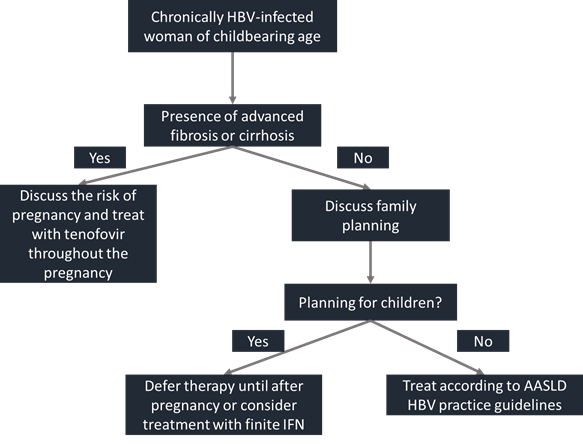
IFN=interferon
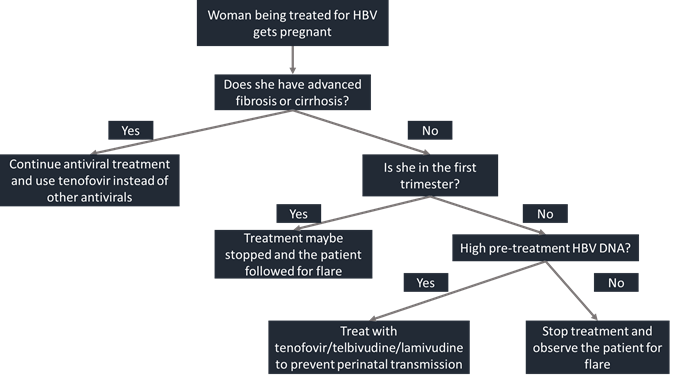
4. Known HBV-infected woman with unexpected pregnancy
- In this patient, the decision of whether to stop therapy, continue therapy, or switch agents is a complex one.
- If she presents early in the first trimester and has no significant underlying liver disease, stopping therapy, along with close monitoring, may be an option.
- If she presents later in pregnancy (i.e., the second or third trimester) and had high viremia at baseline before initiating therapy, it is likely that discontinuation of therapy would result in viral rebound, necessitating discussion of antiviral therapy for reducing perinatal HBV transmission anyway, so continuing therapy would be considered.
5. Pregnant woman newly diagnosed with HBV
- If a woman is newly diagnosed with HBV in the first trimester of pregnancy, assessment of her disease status is important. Treatment may be warranted and outweighs the risk of decompensation if the patient is discovered with advanced liver disease.
Prevention of Vertical Transmission of HBV
Predicting the Risk of Vertical Transmission
The factors that suggest the highest risk of vertical transmission include high HBV viral load and the presence of the “e” antigen. The inclusion of immunoprophylaxis has dramatically brought the rates of transmission in these women from up to 90% to less than 10%. However, it is estimated that between 5 and 15% of infants are infected perinatally despite timely post-exposure prophylaxis. In these children, the likely factors linked to transmission include HBV-infected germ cells, transplacental infection, invasive prenatal diagnostic tests, maternal viral status, mode of delivery, presence of HBV DNA in cord blood, and acute infection during the third trimester.
It is, however, clear that perinatal transmission is usually dependent on maternal HBeAg positivity or high levels of HBV DNA in the serum (>106 copies/mL) at delivery. To further lower the risk of vertical transmission, it is important to identify those at an increased risk of transmission despite immunoprophylaxis. Recently, quantification of HBsAg has been validated as a reliable way to identify these women. The optimal qHBsAg cut-off value for predicting maternal viremia associated with immunoprophylaxis failure was 4.3 log10 IU/mL (accuracy 98.7%, sensitivity 94.7%, and specificity 94.4%). This test is cheaper than HBV DNA viral load testing and, thus, is accessible in resource-challenged regions.
Immunoprophylaxis
Passive immunoprophylaxis consists of the administration of HBIG, whereas active immunoprophylaxis is the administration of the hepatitis B vaccine.
Infants born to HBsAg-positive women should receive both HBIG and hepatitis B vaccine within 12 hours of birth, preferably in the delivery room, followed by at least two more doses of hepatitis B vaccine within the first 6 months of life. This approach provides 90–95% protection from perinatal infection, and is superior in reducing MTCT than HBIG or vaccine alone.
After completion of the vaccine series, testing for HBsAg and anti-HBs should be performed by 9 months of age. HBsAg-negative infants with anti-HBs levels >10 million international units (MIU)/mL are considered protected and no further medical management is required.
Those with anti-HBs levels <10 MIU/mL are not protected and should be revaccinated with a second three-dose series, followed by retesting at 1–2 months after the final dose.
Those with HBsAg-positive status should be referred to specialized centers.
Periodical HBIG administration to the mother during pregnancy at the antepartum stage could induce a >2 log10 decline in maternal HBV DNA. However, since this strategy was not shown to prevent MTCT, it is not recommended.
Standard passive-active immunoprophylaxis with HBIG and hepatitis B vaccination administered immediately after birth to infants of HBsAg-positive mothers significantly reduces the risk of HBV transmission. However, despite these measures, 5–10% of infants born to HBeAg-positive mothers subsequently become HBsAg-positive, which may be related to high levels of maternal viremia, intrauterine infection, or HBV mutation of the surface protein.
Prophylaxis with Antiviral Agents
Antiviral agents can be used to further decrease the risk of vertical transmission. These agents reduce the maternal viral load, which, subsequently, reduces placental transmission and intrauterine infection rates.
Not every pregnant woman with chronic HBV infection may need antiviral therapy. The decision to start antivirals must be discussed in detail between the patient and the physician. However, it should be strongly considered in HBsAg-positive pregnant patients with high viral load and/or active viral disease.
Antiviral agents, although not approved, are usually initiated in the late second or third trimester of pregnancy. Since most intrauterine transmission occurs after 28 weeks of pregnancy, starting antivirals around this period is seemingly rationale.
Of the drugs used to treat hepatitis B infection, only tenofovir and telbivudine have been categorized as pregnancy category B. The 2015 Asian Pacific Association for the Study of the Liver Guidelines for hepatitis B has recommend tenofovir as the drug of choice in this situation because of its safety and high barrier to resistance. In clinical trials, tenofovir was started around the 28th week of pregnancy and continued until delivery in highly viremic HBV women. This approach was safe and effective in conjunction with serovaccination in preventing transmission of hepatitis B to the infant.
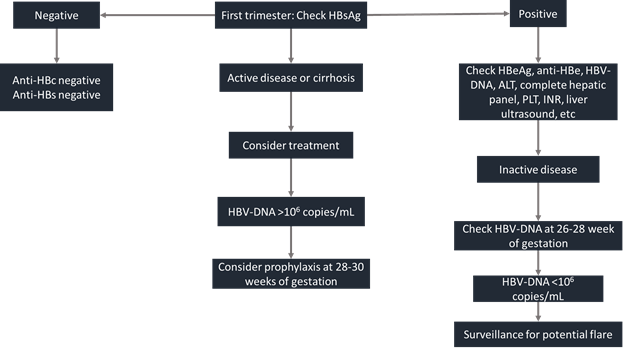
HBV: Hepatitis B virus; ALT: Alanine aminotransferase; PLT: Platelet count; INR: International normalized ratio; Anti-HBe: Antibody to hepatitis B e antigen; Anti-HBc: Anti-hepatitis B core antigen; anti-HBs: Antibodies to hepatitis B surface antigen.
Tenofovir in Pregnancy
In pregnancy, HIV-infected women have been safely treated with tenofovir-based regimens. The experience in HIV patients, along with its safety and efficacy, makes tenofovir a suitable option to prevent MTCT of hepatitis B. The use of tenofovir in highly viremic HBV-infected women reduced the rate of transmission from 8.3% (in spite of appropriate immunoprophylaxis) to 0%. In trials, tenofovir is usually started between week 28 and week 32 and continued until birth or up to 2 months after birth. A distinct reduction in maternal viral load by 3.64 ± 0.9 log10 IU/mL after treatment with tenofovir was thought to explain the reduction in viral load. Tenofovir appears to be suitable as the first choice of treatment to reduce viral load and instance of transmission in highly viremic pregnant women.
Other Management Issues
Serum Alanine Aminotransferase (ALT) and Hepatitis B DNA Flares
Hormone-mediated changes during pregnancy allow the mother to tolerate the fetus. This also changes the immune response to hepatitis B. As a consequence, hepatitis B may reactivate because of pregnancy, leading to flaring up of the infection. In 2016, a study followed 113 pregnancies in untreated women chronically infected with hepatitis B. It was noted that HBV DNA flared 9% of the time during pregnancy, and 4% of the time after delivery. ALT, a marker of liver inflammation, flared in 6% during pregnancy, and in 10% within the first 3 months of delivery. One of the risk factors identified for flares is the presence of the HBeAg. Encouragingly, most of these flares were asymptomatic and resolved by themselves. However, some patients experience severe flares that led to hepatic decompensation. A treating clinician will, thus, need to closely monitor mothers with chronic hepatitis B during and after pregnancy.
Cirrhotic Patients
- Need close monitoring during pregnancy and in the postpartum period for signs of hepatic decompensation.
- Varices: In the presence of known esophageal varices, women planning a pregnancy should be considered for endoscopic therapy, shunt surgery, or even liver transplantation before pregnancy. Acute variceal bleeding is managed endoscopically, as in the non-pregnant setting, though vasopressin is contraindicated. All patients should undergo upper endoscopy for assessment of varices in the second trimester.
- For cesarean delivery, correction of coagulopathy and steps to prevent bacterial peritonitis are recommended.
- Ascites and hepatic encephalopathy are treated with the use of diuretics, rifaximin, lactulose, etc.
Recommendations for Breastfeeding
- Current guidelines do not contraindicate breastfeeding in HBV-infected mothers who are not on antiviral therapy and whose infants receive immunoprophylaxis.
- Breastfeeding can be avoided when the nipples are cracked or bleeding as blood can mix with the breast milk and transfer the virus to the infant.
- The WHO recommends breastfeeding even for infants of HBsAg-positive mothers in endemic areas where the HBV
vaccination may not be readily available.
- For mothers on antiviral therapy, breastfeeding is debatable because few data are available about the safety of antiviral exposure during breastfeeding.
Elective Cesarean Section versus Vaginal Delivery
- Elective cesarean section (ECS) has been tried for preventing MTCT of HBV. A meta-analysis of four randomized trials found that ECS versus vaginal delivery significantly reduced the rate of maternal transmission of HBV (ECS: 10.5%; vaginal delivery: 28.0%) (P<0.000 001).
- However, these results are not reliable since the studies included in this analysis were noted to have a high risk of bias.
- The role of ECS in preventing MCT transmission of HBV is uncertain. Currently, there is no convincing evidence that ECS reduces the rate of MTCT transmission of HBV compared with vaginal delivery.
Guideline Recommendations from AASLD, EASL, APASL and WHO
- In women of childbearing age without advanced fibrosis planning a pregnancy in the near future, it may be prudent to delay therapy until the child is born.
- In those of childbearing age with advanced fibrosis or cirrhosis who agree for a ‘‘planned pregnancy’’ in the future, peg-IFN therapy may be tried as it is given for a finite duration. It should be noted that effective contraception is required during peg-IFN therapy.
- If peg-IFN is not possible or has failed, treatment with a nucleos(t)ide analog has to be initiated and maintained even during a future pregnancy.
- The treatment plan should be fully discussed with the patient and relatives, especially regarding the risks of maternal liver disease status, fetal development, vertical transmission of HBV, long-term plan for treatment, and pregnancy. Maternal HBeAg, HBV DNA status, and ALT level should be checked during pregnancy.
- In pregnant females with chronic HBV infection who need antiviral therapy, tenofovir is the drug of choice for mothers indicated for antiviral treatment during the first through third trimester of pregnancy. It is a pregnancy category B drug with adequate safety data in HIV-positive females and the least chance of viral resistance.
- For reduction of risk of MTCT that occurs during the perinatal period, short-term maternal nucleos(t)ide analogs starting from 28 to 32 weeks of gestation is recommended, using either tenofovir or telbivudine for those mothers with HBV DNA above 6–7 log10 IU/mL. Since, the HBV transmission could occur even with lower maternal HBV DNA levels, nucleos(t)ide analogs could be administered after discussion with the patient, even in patients with lower DNA levels. The nucleos(t)ide analogs could be stopped at birth and when breastfeeding starts, if there is no contraindication to stopping them.
- Pregnant HBsAg-positive women should be advised to inform their providers so that HBIG and hepatitis B vaccine can be administered to their newborn immediately after delivery.
- If a pregnant woman remains untreated or anti-HBV therapy is discontinued during pregnancy or early after delivery for any reason, close monitoring of the patient is necessary as there is a risk of hepatic flares, especially after delivery.
- Breastfeeding is discouraged during maternal nucleos(t)ide analogs treatment. For those with ALT flares detected during the treatment period, continuation of antiviral treatment according to maternal liver disease status may be indicated.
*AASLD: American Association for the Study of Liver Disease, EASL: European Association for the Study of Liver, APASL: Asia Pacific Association for the Study of the Liver, WHO: World Health Organization
Conclusion
Addressing the global burden of chronic HBV infection requires a cohesive strategy. Since prevention is the only available strategy today to reduce the burden of this condition, attention naturally falls on the sources of transmission. Hence, population-based screening and universal vaccination programs are needed. One of the largest reasons for infection is transmission of the virus from infected mothers to their children. This can be prevented by prompt immunoprophylaxis and is the mainstay of therapy in pregnant women, especially those with low HBV DNA viral loads. Emerging evidence is beginning to favor the adjunct use of antiviral therapy during pregnancy in order to reduce the risk of perinatal transmission. Guidelines recommend the use of tenofovir or telbivudine in these patients.
References
- Wong F. Hepatitis B in pregnancy: a concise review of neonatal vertical transmission and antiviral prophylaxis. Annals of Hepatology 2014; 13: 187-195
- Lamberth JR. Chronic hepatitis B infection in pregnancy. World J Hepatol 2015; 7(9): 1233-1237
- BMC Pregnancy Childbirth. 2016 Apr 26;16:87
- Scand J Gastroenterol. 2016 Oct 31:1-7
- Eur J Gastroenterol Hepatol. 2014 Nov;26(11):1286-91
- J Perinat Med. 2016 Nov 22. pii: /j/jpme.ahead-of-print/jpm-2016-0201/jpm-2016-0201.xml.
- Eur J Gastroenterol Hepatol. 2016 Nov 22 DOI: 10.1097/MEG.0000000000000793
- Int J Infect Dis. 2014 Nov;28:41-4
- J Viral Hepat. 2016 Oct;23(10):812-9
- J Clin Transl Hepatol. 2016 Sep 28;4(3):241-247
- Am J Gastroenterol. 2016 Oct;111(10):1410-1415
- J Med Virol. 2014 Jul;86(7):1099-104
- Exp Ther Med. 2015 Jun;9(6):2251-2256
- Hepatology Research 2009; 39: 569–576
- Gut. 2015 Nov; 64(11):1810-5
- Piratvisuth T. Optimal management of HBV infection during pregnancy. Liver Int. 2013 Feb;33 Suppl 1:188-94
- Gentile I and Borgia G. Vertical transmission of hepatitis B virus: challenges and solutions. Int J Womens Health. 2014; 6: 605–611
- ter Borg MJ. Exacerbation of chronic hepatitis B infection after delivery. J Viral Hepat. 2008 Jan; 15(1): 37-41.
- G. Borgia. Hepatitis B in pregnancy. World J Gastroenterol 2012; 18: 4677-4683.
- Tram T. Tran. Hepatitis B Virus in Pregnancy. Clinical Liver Disease 2013; 2:29-33.