

Allergy Express- Issue 5


Impaired Driving Performance due to Untreated Allergic Rhinitis A Safety Risk

Untreated allergic rhinitis (AR) is associated with diminished productivity, discomfort, reduced functional ability and impaired psychomotor functions. Earlier studies have concluded that AR can impair cognitive functions, especially functions like driving. A recent study published in Allergy journal, aimed to determine the effect of AR per se on actual driving performance and compare it with the effects of treated AR.
A total of twenty-one patients with a documented positive medical history of mild to severe AR were recruited in the study. Out of these, nineteen patients underwent a unique and validated 1-h on-the-road driving test outside the pollen season. The study was conducted following a double-blind randomized four-leg crossover design, in which each patient participated in 4 conditions. Before the commencement of the driving test, the patients underwent a nasal provocation test with either pollen or inactive control. In the three conditions in which patients underwent pollen provocation, patients were pretreated with cetirizine 10 mg, fluticasone furoate 27.5 µg, or placebo to alleviate the provoked AR symptoms.
The impairing effects of AR per se on driving were significant and meaningful. An increase in Standard Deviation Lateral Position (SDLP) of 2.07 cm as compared to placebo was seen in the untreated provocation condition, which is comparable to the effect of driving with a blood alcohol concentration of 0.03%. When an additional task is performed during driving, such as a secondary memory task during driving, their performance deteriorated further. Treatment of AR with either antihistamine or steroid reduced the effects of AR on driving to nonsignificant levels as measured over the entire 60 min of driving test.
Thus, the results of this study confirmed the hypothesis that AR per se influences driving performance and that treating the AR symptoms can ameliorate this effect. Drug therapy reduces this impairment, and thus physicians should educate their AR patients to treat their condition.
Allergy 2014; 69: 906-912
Relationship between Obesity and Asthma A Study Done In Indian Population
Both obesity and asthma are growing epidemics in today’s world and both are characterized by the presence of inflammation. It has been seen that obesity affects lung mechanisms leading to reduced functional residual capacity (FRC) and tidal volume (TV), which promotes further airway narrowing and exacerbation in patients of asthma. Even in the absence of intrinsic lung disease, obesity causes physiological impairment in lung function due to mass loading of the respiratory system. However this relationship between obesity and asthma is not clearly understood. Hence, this study was undertaken to determine whether systemic or pulmonary inflammation has a role in development of asthma in patients with obesity by comparing the pulmonary function parameters, atopic profile and inflammatory markers in obese and non-obese asthmatic patients of Indian population.
Sixty bronchial asthma patients (30 males and 30 females) aged between 20 and 50 years were recruited for the study, and were divided equally into obese (BMI>30 kg/m 2 ) and non-obese (BMI<25 kg/m 2 ) groups. These were assessed for pulmonary function parameters, lipid profile, blood hs-CRP levels, exhaled breath analysis of nitric oxide and skin prick testing for atopic profile. PFT was performed on a spirometer to measure dynamic lung volumes like forced vital capacity (FVC) and forced expiratory volume (FEV1) and also static (or absolute) lung volumes like vital capacity, residual volume and total lung capacity. The diffusion capacity of the lungs was measured using the single-breath (SB) method. The hs-CRP levels were estimated by ELISA method and exhaled nitric oxide was measured using single breath exhaled NO analysis (online method) on breath analyser.
The results of this study showed that the functional residual capacity (FRC% predicted) (100.9 ± 4.21 vs 80.40 ± 4.03; P = 0.009) and expiratory reserve volume (ERV% predicted) (95.13 ± 6.71 vs. 67.03 ± 4.54; P = 0.001) both were significantly lower in the obese group. The non-obese and obese group had hs-CRP levels of 3.01 mg/L and 4.07 mg/L, respectively; the difference being statistically insignificant (P = 0.15). Similarly, FENO levels of non-obese and obese group were 63.20 ppb and 63.75 ppb, respectively; difference was not statistically significant (P = 0.95). Atopic profile of both the groups did not differ significantly.
This study demonstrated that obese group had significant decrease in FRC and ERV in comparison to normal BMI group which is consistent with studies conducted earlier. It however demonstrated no significant difference in between the groups for inflammatory markers. Thus according to this study, obesity does not appear to increase the local and systemic inflammatory responses in bronchial asthma patients in Indian population.
Lung India 2014; 31: 121-6
Allergy to Food Items A Population based Survey in Kolkata

A large number of people around the globe suffer from food allergies, and Asian countries are no exception. Yet, there is a paucity of data on the prevalence of food allergy in India. A study published in the ‘International Archives of Allergy and Immunology’ journal conducted a cross-sectional study in a metropolis of Eastern India to record the presence of food allergy among the local population.
A total of 5161 patients reporting to the Institute of Child Health and Mediland Diagnostics in Kolkata, India were investigated for the prevalence of food allergy. The patients were subdivided into 3 age groups and surveyed accordingly. The evaluation was conducted through a food allergy questionnaire and a skin prick test.
Out of the 5161 patients tested, 4160 showed a positive response to one or more food items. Banana (32%) was found to be the most dominant food allergen, followed by brinjal (29%), wheat (22%), and egg (23%). Sixty-three percent of patients with a family history of allergy showed either a sudden or an insidious mode of onset, whereas the remaining 37% suffered insidious allergic symptoms with no record of a family history of allergy. Patients in the age group of 15-40 years were the most susceptible. The results showed that symptoms like skin rashes, cough, and sneezing were frequently observed.
Thus, the trend shows that certain specific foods consumed in specific regions may cause allergies that are unique to that population. In the present study, the most commonly consumed foods in the region of Kolkata showed that banana, brinjal, wheat, and egg, had severe effects on the local population. Factors like genetics, cultural habits and occupation were the common influencing factors for causing food allergies. Avoidance of the culprit allergen is the primary therapeutic strategy in the management of food allergy.
Int Arch Allergy Immunol 2014: 16; 164(3):218-221.
Allergic Rhinitis and Asthma in Children from South India
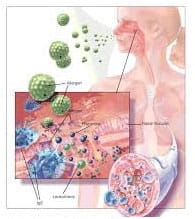
A recent questionnaire based study from Mysore in Southern India has found an increasing trend in the prevalence of allergic rhinitis and asthma in children. This increase was especially found to be steeper in the last five years.
The prevalence trends were evaluated amongst 6-14 year old children using ISAAC core questionnaire self-administered to the parents in 1998, 2003, 2008 and 2013. In 2013, a total of 1800 questionnaires were administered of which 1307 were returned with a response rate of 72.6%.
The prevalence of asthma was estimated to be 17.14% whereas the prevalence of allergic rhinitis was 21.29% in 2013. The corresponding prevalence of asthma in 1998, 2003 and 2008 was 4%, 6% and 9% respectively while that of the allergic rhinitis was 6%, 9% and 13% respectively. Interestingly, twin children were found to have a higher risk of asthma (2.95%, 1.43-6.06) and attending child-care facility was found to be protective (0.68%, 0.49-0.94). Additionally, having an elder sibling was found to be associated with an increased risk of allergic rhinitis whereas having younger sibling, term delivery and normal birth weight was found to be protective.
The investigators concluded that such steep increase in the prevalence needs further evaluation.
P1187, presented at European Respiratory Society (ERS) conference, September 6-10, 2014; Munich, Germany.
Allergic Nasal Inflammation A Cause of Change in Sinonasal Microbiota
Acute bacterial rhinosinusitis (ABRS) is one of the most common disease causing indirect costs such as absenteeism and reduced productivity. There is a need to understand factors that predispose to or exacerbate this condition, thus providing an enormous public health benefit. It is known that allergic inflammation creates an environment suitable for bacterial growth. This study evaluated whether allergens can stimulate the nasal mucosa, altering the microbiome at the mucosal surface.
In this 2-week observational study of adults with seasonal allergic rhinitis (SAR; grass or tree, n = 20) or nonallergic subjects (n=19). Sinonasal samples were obtained by endoscopy from the middle meatus and vestibule before and during the relevant season. These samples were then analyzed by terminal restriction fragment length polymorphism. Standard ecological measures of bacterial diversity were used to assess the differences in bacterial microbiodata. Quality of life and symptom scores were recorded, and nasal lavages for eosinophils were performed.
Allergic subjects showed a decreased quality of life, increased nasal symptoms, and increased nasal eosinophils, confirming allergic disease during the allergy season in these subjects, whereas there were no differences in nonallergic controls. Subjects with SAR showed a significant increased bacterial diversity (in bacterial number and ecological diversity indices) during the allergy season at the middle meatus relevant for ABRS as compared with nonallergic subjects (p = 0.036). A significant positive correlation was found between bacterial diversity in the middle meatus during the season and the nasal lavage eosinophil count of SAR subjects. In contrast, there was no significant changes in the nasal vestibule (p= 0.05, all comparisons).
The authors of the study concluded that alterations in the sinonasal microbiome might be one mechanism that predisposes allergic subjects to ABRS. The most interesting finding is that specific patterns of organisms are associated with allergic status and seasons. Thus, controlling inflammation may prevent change of sinonasal microbiota and decrease number of acute bacterial sinus infections.
Am J Rhinol Allergy 2014; 28, 281–286.