

A Clinician's Guide

Section 1: Queries on Small Airways Disease
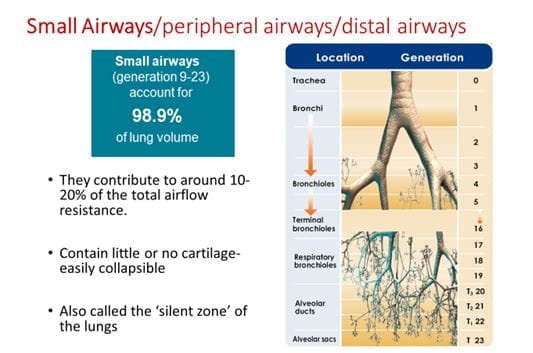
What Are the Small Airways?
The small airways are defined as the bronchioles that are <2 mm in diameter and located beyond the seventh or eighth generation of the tracheobronchial tree. These airways account for >98% of the cross-sectional area of the lungs and terminate with the alveolar sacs, but accounts for ~10 % of total airway resistance. This unique characteristic of small airways allow them to be obstructed without significantly affecting overall airway resistance and hence called ‘silent zone’ in lungs.
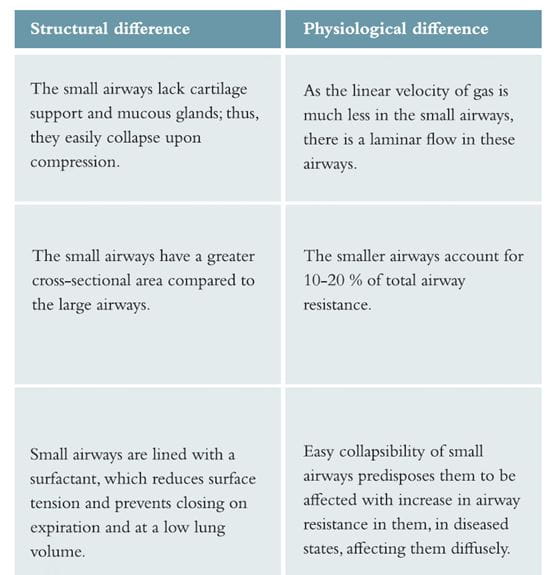
What are the Significant Differences Between the Large and Small Airways?
Why has the Focus on Small Airways Increased in Recent Years?
Historically, the small airways have been called ‘the quiet zone’ because they are difficult to assess and a high level of disease activity would be necessary before they cause a drop in the lung function to be picked up in routine spirometry. However, the recent advances in lung imaging, such as high-resolution computed tomography (HRCT), and immuno-histochemistry has led to enhanced recognition of small airways as critical sites of inflammation in obstructive airways diseases (OADs) and serve as key to look for targeted therapy. Despite being a major site of pathology in various chronic respiratory diseases, small airway obstruction is not routinely reported & recognized in most of the cases. However, evaluation of small airways obstruction is important for the following reasons:
- Small airways constitute a major site of pathology for many common chronic respiratory diseases
- They get involved early in the diseases, even before symptoms manifest clinically or there is a detectable change in spirometric or imaging parameters.
- Inhaled medications delivered through conventional formulations do not have adequate deposition in the smaller airways owing to their coarse particle sizes of >2µm MMAD (Mass Median Acrodynamic Diameter).
- The development of novel extra-fine particle inhalational formulations (<2µm MMAD) to target small airways is likely to address this gap significantly.
Small Airways Obstruction has been Traditionally Known to be a Pathophysiological Feature of Chronic Obstructive Pulmonary Disease (COPD), But are the Small Airways Involved in Asthma Too?
Yes. While there is enough evidence that small airways are involved in COPD (upto 96% of patients in one study), we now have studies of small airways involvement in asthma (seen in nearly 50%-60% of the cases studied), mainly in specific asthma phenotypes. When calculating peripheral airways resistance in patients with nocturnal asthma, distal lung units were functionally altered at 4.00 am. Similarly, distal/small airways involvement has also been demonstrated in patients with exercise-induced asthma, severe asthma and patients with asthma related recurrent exacerbations.
Are the Small Airways Involved Only in Severe Forms of The Disease?
It is increasingly recognised that the small airways are involved in asthma and COPD, not only in patients with severe disease but also in those with milder diseases. Small airways disease is reported in the early stages of COPD (49% of the GOLD stage A cases studied) and becomes more widespread over time as the disease progresses to more severe COPD (96% of GOLD D patients). Prevalence studies of small airways disease in asthmatics report that the small airways were involved in 50–60% of the patients across all asthma severities.
Gold standard for diagnosis of small airway diseases is by evaluation of surgical lung specimens, but this is not easy in clinical practice. Non-invasive techniques, including spirometry, plethysmography, nitrogen washout, impulse oscillometry, and cross-sectional imaging, have been utilised to assess and infer the extent of small airways disease in asthma, COPD and can be used longitudinally to assess response to treatment. There are pros and cons to each technique. Practically available options as of now are body plethysmography, impulse oscillometry (IOS) and paired inspiratory & expiratory lung scans on HRCT thorax.
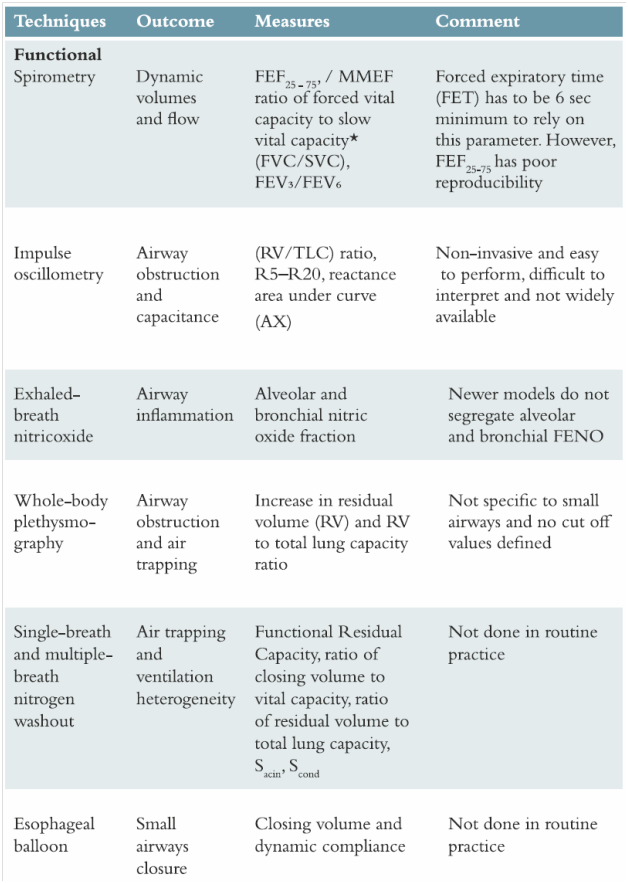
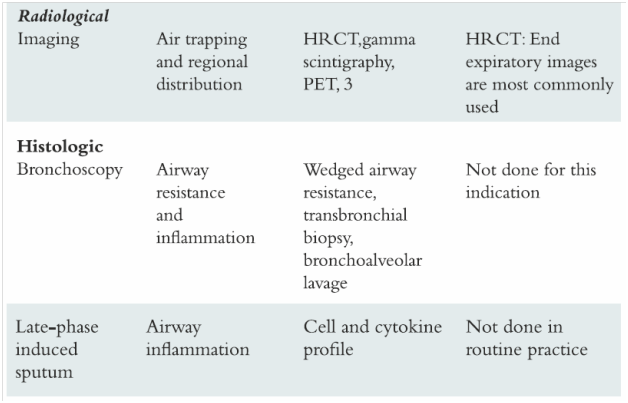
FEF25–75 = forced mid-expiratory flow between 25% and 75% of forced vital capacity; MMEF= maximum mid-expiratory flow rate,Sacin= acinar (diffusion)-dependent ventilation heterogeneity; Scond = conductive (convection)-dependent ventilation heterogeneity. R5–R20=peripheral airways resistance as difference between measurements at 5 Hz and 20 Hz; RV: Residual Volume, TLC: Total lung capacity*Forced vital capacity can be reduced in severe asthma due to air trapping, whereby the relaxed vital capacity (VC) will exceed the forced vital capacity, FENO: Fractional Exhaled Nitric Oxide, FET forced expiratory time
What Pattern on Routine Spirometry Can Be Suggestive of Small Airway Disease And How to Confirm it?
FEF25–75 (Mid Expiratory Flow) < 60% in patients who have normal FVC, FEV1and FEV1/FVC ratio ( >80%) is suggestive of reduced flow in small airways and its further strengthened by increase in RV and RV/TLC ratio demonstrating air trapping. Confirmation can be done with IOS demonstrating R5 > 150%, R5-R20 > 15% and increase in AX > 0.93 kPa sl-1 or evidence of multiple areas of air trapping on paired inspiratory & expiratory HRCT scans.
When Should I Clinically Suspect That My Patient with Asthma May Also Have Small Airways Disease?
Based on various studies and the views of clinical practitioners, the situations that might raise the suspicion of significant small airways involvement in asthma are as follows:
- Severe asthma
- Treatment resistant asthma or poorly controlled asthma despite being on medium to high dose inhaled corticosteroids/long-acting beta2-agonists (ICS/LABA) combination
- Frequent exacerbations indicating disease progression, poor asthma control and worsening quality of life
- Nocturnal asthma
- Mild asthma / Occult asthma
- Exercise-induced asthma
- Patients who are controlled on consistently high doses of corticosteroids
- Patients who respond only to oral corticosteroids
Section 2: Extra-fine Beclomethsone/Formoterol – What You Need to Know
How is Extra-fine Beclomethsone/Formoterol Inhaler Different from Other Conventional Hydrofluoroalkane (HFA)-Based Inhalers?
Extra-fine beclomethasone/formoterol in an HFA solution form. Both beclomethasone and formoterol in the combination have an MMAD of <2 microns and, hence, the particles can reach the small airways. All other inhaled formulations have a coarse-particle formulation with an MMAD of 2–5 µm.
MMAD = Mass Median Aerodynamic Diameter. MMAD is defined as the diameter at which 50% of the particles by mass are larger and 50% are smaller.
Why Has Formoterol Been Selected as The LABA In the Combination?
Formoterol is the most widely used LABA for the treatment of asthma. Additionally, the solution formulation of formoterol was shown to have a good chemical stability profile, enabled reproducibility of the delivered drug dose and particle size distribution of the aerosolised drug.
Clinically, there is strong evidence that the extra-fine formulation of formoterol results in optimised lung delivery and uniform distribution of the drug throughout the bronchial tree in asthmatics, COPD patients and healthy subjects, irrespective of the underlying disease.
Since adequate chemical stability and reproducibility of the delivered drug dose was not obtained with other LABAs in solution form, formoterol was the most appropriate LABA developed into an extra-fine formulation. Furthermore, the dose of formoterol did not need reduction as both the coarse and extra-fine formulations of formoterol had similar efficacy and safety profiles.
There is Limited Experience with Beclomethasone Dipropionate in Clinical Practice Today. It Has Been Extensively Used in the 1990s Following Which Its Usage Declined Due to The Emergence of Newer ICS Molecules. What Are Its Specific Characteristics as A Molecule?
Inhaled beclomethasone dipropionate was introduced in the late eighties. It was the first ICS that was available for use in asthma. Beclomethasone is a prodrug that is rapidly activated by hydrolysis to the active monoester, beclomethasone-17-monopropionate (B-17-MP). Beclomethasone is absorbed rapidly, with peak plasma concentrations observed (tmax) at 0.3 hours. B-17-MP appears more slowly, with a tmaxof 1 hour. The elimination of BDP and B-17-MP are characterised by high plasma clearance (150 L/hour and 120 L/hour) with corresponding terminal elimination half-lives of 0.5 hours and 2.7 hours. Beclomethasone has high topical activity but low systemic activity. Multiple studies have established the clinical efficacy and safety of beclomethasone in asthmatics.
The maximum recommended dose is 800 mcg per day in divided doses.
Is BDP/FF India’s First Extra-fine Particle ICS/LABA Formulation?
In the past, extra-fine ciclesonide was available as monotherapy; however, when given as a combination with formoterol, it was not an extra-fine particle formulation. Thus, this combination is India’s first ICS/LABA combination wherein both beclomethasone and formoterol are present in an extra-fine particle formulation. An in vitro study has shown that the MMAD* of formoterol is 1.6 µm and the MMAD of beclomethasone is 1.59 µm. In contrast, the conventional coarse-particle formulations have an MMAD of >2 µm.
What is the Onset of Action and Duration of Action of the Extra-fine Beclometahsone/Formoterol Inhaler Currently Available in India?
FF is a long-acting bronchodilator, with an onset of action within 2–5 minutes, which is comparable with that of short-acting bronchodilators. Therefore, this combination has a quick onset of action. Its duration of action is around 10–12 hours and it is recommended twice a day.
Did the BDP/FF MDI, Which was Available in The Past, Also Use An Extra Fine-Particle Formulation?
No. Unlike the new extra-fine beclomethasone/formoterol combination, the older BDP/FF MDI used a combination of BDP/FF in a coarse-particle formulation, with CFC (Chlorofluorocarbon) as a propellant. It will still be available for some time though.
Since the Particle Size of Extra-fine Beclomethasone/Formoterol is <2 Microns, Won’t The Particles Get Exhaled Out Due to Inadequate Lung Deposition?
Particle size <1 µm is usually expected to be exhaled out of the lungs due to inadequate sedimentation, owing to the lack of residence time in the lungs after inhalation of the medication. A study that assessed the lung deposition and lung distribution of extra fine BDP/FF in HFA and delivered by a pMDI in healthy subjects, asthmatic and COPD patients showed that both components are distributed throughout the lungs, including the peripheral airways. Inhalation of extra-fine BDP/FF HFA) was shown to be efficiently delivered to the lungs and produced high lung deposition, low variability and homogeneous distribution of BDP and FF throughout the airways, regardless of the pathophysiological condition and independent of lung function.
Will Extra-Fine BDP/FF Offer Better Outcomes in My Patients Who Are Currently Being Treated with Coarse-Particle Combinations?
The efficacy of extra-fine BDP/FF has been demonstrated in various randomised clinical trials and real-world studies. The extra-fine particle formulation of BDP/FF has been demonstrated to have similar efficacy when compared with budesonide/formoterol or fluticasone/salmeterol but with the added advantage of reduction in the dose of ICS.
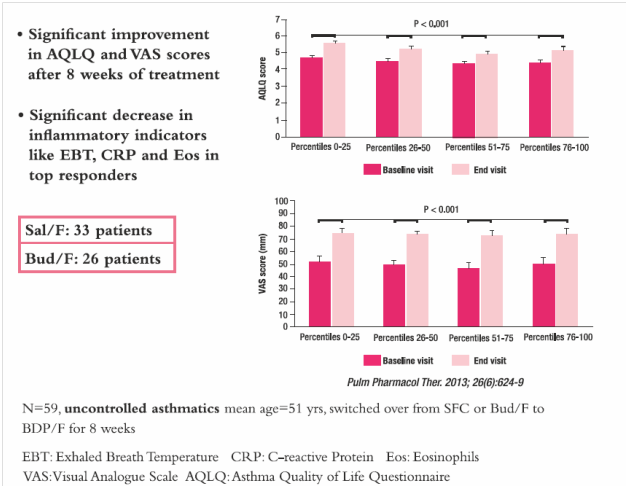
Popov et al. conducted a real-life clinical observation of uncontrolled asthmatic patients who were switched over from dry powder inhalers (DPIs) of fluticasone/salmeterol and budesonide/formoterol to extra-fine BDP/FF to assess the impact on asthma control. Patients with partially controlled asthma who were on maintenance treatment with one of the combinations of ICS with LABA — DPI of fluticasone propionate (250 mcg) with salmeterol (50 mcg) or budesonide (160 mcg) with formoterol (4.5 mcg) – and who perceived their condition as unsatisfactory were selected for the study.Lung function parameters and markers of airway inflammation upon switching to the extra-fine formulation and after 8 weeks of treatment were studied. Results showed a significant improvement in forced vital capacity after the transition to comparable doses of extra-fine BDP/FF (100/6mcg) from other combined ICS/LABA preparations as well as a significant decrease in the key indicators of airways/systemic inflammation.
Another observational study by Bruselle et al. aimed to assess the real-life effectiveness of BDP/FF extra-fine formulation in asthmatics.A total of 619 adult patients with persistent asthma, in whom treatment with an ICS/LABA combination was indicated, were included. All comparisons between smokers and non-smokers in terms of outcome measures of effectiveness (pulmonary function, patient-completed Asthma Control Questionnaire and physician-judged control of asthma according to the Global Initiative For Asthma criteria) revealed that not only was there an improvement in FEV1 (Forced expiratory volume in 1 second) and asthma control but also significant reduction in the dose of ICS (approximately 45.8% vs baseline) over a period of 8–12 months with extra-fine BDP/FF.
The results of these studies demonstrate the real-life effectiveness of the extra-fine fixed combination of BDP/FF (100/6 µg) in adult patients with asthma, resulting in statistically and clinically important improvements in pulmonary function and asthma control, despite a significant reduction in the ICS dose.
Do I Need to Prescribe A Separate Inhaler for The Large Airways Obstruction and A Separate Inhaler for The Small Airways Obstruction?
Airway inflammation in asthma involves both the large and small airways, and the combination of ICS and LABA is the mainstay of therapy. To evaluate whether treatment with an extra-fine inhaled combination provides additional effects versus a non-extra-fine combination on airways function, a study was conducted on 30 patients with asthma. A significant increase versus baseline was observed in pre-dose FEV1 in both extra-fine BDP/FF and non-extra fine fluticasone propionate/salmeterol groups. Methacholine challenge test (Mch) is a broncho-provocative test. PD20FEV1 improved significantly in the extra-fine BDP/FF group (P=0.01) but not in the fluticasone propionate/salmeterol group. A trend toward improvement versus baseline was observed for BDP/FF in closing capacity (CC) whereas no difference was recorded in the sbN2. The findings of this pilot study suggest that an extra-fine inhaled combination for the treatment of asthma has beneficial effects on both large and small airways function, as expressed by the Methacholine challenge test. Additionally, the extra-fine particles of BDP/FF deposit both in the large and small airways, as is evident from the in vitro data of the Anderson Cascade Impaction of BDP/FF pMDI available in India. The instrument consists of a series of stages (S), each made up of a sieve with specific nozzle arrangement and collection surface, simulating the human respiratory tract. Therefore, the deposition of aerosol particles in each of the stages is expected to show similar deposition patterns in various regions of the human lung. Induction port represents the oropharynx. Stage 3-5 of the impactor corresponds to large airways deposition and stages 6 and 7 correspond to the small airways deposition.
Particle size distribution by mass (mcg) in both small and large airways demonstrated by Cascade Impaction
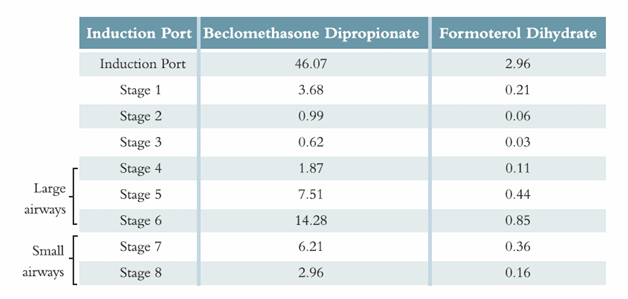
Thus, the drug is deposited both in the large as well as the small airways and a separate inhaler for the large airways is not required.
Nebulisers Are Also Known to Penetrate Deeper and Are Routinely Given in Asthmatic Patients with Severe Disease. Why Should I Prefer Extra-fine Beclomethasone/Formoterol pMDI over Nebulisers?
An in vitro study that evaluated around 30 jet nebuliser/compressor combinations demonstrated that there is inconsistency in the deposition efficiency of nebulisers, which varied depending on the delivery characteristics of the nebuliser used. Therefore, there is no standard data for lung deposition or particle size that can be uniformly represented for nebulisers, as the deposition was found to vary from machine to machine.
There Are No Guideline Recommendations for The Extra-Fine Particle Formulation. So Why Should I Consider Extra-fine Beclomethasone/Formoterol Formulation for My Patients?
The 2019 GINA statement recommends that all adults and adolescents with asthma should receive ICS-containing controller treatment to reduce their risk of serious exacerbations and to control symptoms. This gives choice of salbutamol + beclomethasone or formoterol + beclomethasone with added advantage of using formoterol + beclomethasone as single inhaler for even maintenance therapy.
The new ICS controller options include the following:
- For mild asthma, as-needed low-dose ICS-formoterol*, or if not available, low-dose ICS taken whenever SABA is taken†, or
- Regular ICS or ICS-LABA every day, plus as-needed SABA, or
- Maintenance and reliever treatment with ICS-formoterol, with the reliever being low-dose budesonide/formoterol or BDP/FF.
*Off-label; evidence only with budesonide-formoterol; †Off-label, combination or separate inhalers.
ICS: Inhaled corticosteroids, SABA: Short-acting beta2-agonist, LABA: Long-acting beta2-agonist
The present recommendations are generalised for ICS/LABA only, without specific segregation of coarse, fine, extra-fine or sub-micron particles. The small airways asthma phenotype is characterised by patients with suboptimal disease control who also have a disproportionate amount of small airways dysfunction. Conventional coarse-particle inhalers that emit particles larger than 2 μm might not be able to treat persistent small airways dysfunction. The efficacy and safety of the extra-fine formulation of BDP/FF has been well established in asthmatic and COPD patients. This product is guideline-recommended as it is an ICS/LABA combination, with proven efficacy and homogeneous deposition throughout the bronchial tree.
What Would A Clinically Comparable Dose of Extra-Fine BDP/FF Be for Patients Who Are Being Treated with 500 Mcg of Salmeterol Or 800 Mcg of Budesonide?
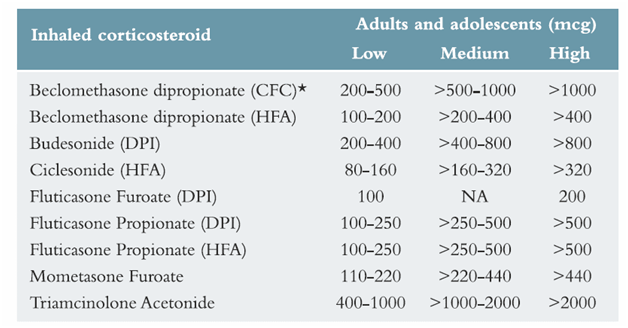
An adult patient maintained on 500 mcg of Fluticasone propionate or 800 mcg of Budesonide can be switched to 400 mcg of Beclomethasone dipropionate as per the high-dose comparability chart of the GINA guideline (2019). This is not a table of equivalence but of estimated clinical comparability, based on available studies and product information.
If The Drug Reaches The Small Airways, is There An Increase in The Systemic Absorption Leading to Increased Risk of Systemic Adverse Effects?
Decrease in the size of particles can cause an increase in overall systemic exposure, as there is increased lung deposition. Hence, the dose of beclomethasone in the extra-fine particle formulation has been titrated to be 2.5 times lower than the large-particle beclomethasone so as to take care of the concerns of increased systemic absorption. However, since no difference was found in the efficacy and safety of fine-particle formoterol versus coarse-particle formoterol, no change in the dose of formoterol was recommended. Also, clinical trials suggest no increased systemic side effects with this formulation, as detailed in Figure 4.
Is There Is A Risk of Cortisol Suppression and Hypokalaemia in Patients Using An Inhaler with An Extra-Fine Particle Formulation?
A study that evaluated serum cortisol and serum potassium at 24 hours’ post-dose showed that the extra-fine particle formulation of BDP/FF did not reduce serum potassium and serum cortisol levels. Therefore, there was no risk of cortisol suppression or hypokalaemia observed with the extra-fine particle formulation of BDP/FF.
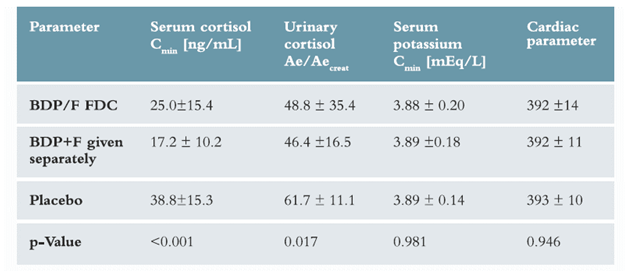
- Cmin : minimum plasma drug concentration
- Ae/ Aecreat : urinary cortisol excretion normalised for creatinine
- Cmin= minimum plasma drug concentration
- QTc: QTc over 12 h [msec] corrected QT interval
- The 24-hour serum cortisol concentrations were significantly higher with BDP/FF than with beclomethasone and formoterol administered separately (2.26 versus 1.90 mgh/mL; p<0.01), indicating an absence of cortisol suppression.
- No significant differences in the pharmacokinetic parameters of formoterol and no clinically relevant differences in serum potassium and cardiovascular or spirometric parameters were observed between the BDP/FF group and the placebo group.
Is The Risk of Palpitation Induced by Formoterol Greater with The Extra-Fine Particle Formulation?
In an open-label, crossover, placebo-controlled study involving 12 healthy male subjects, the mean diastolic blood pressure decreased by 2.7 mmHg after inhalation of a single dose of the fixed combination of BDP/FF 400 mcg/24 mcg, and by 1.3 mmHg after inhalation of the components separately. The mean heart rate increased by 2.2 and 3.6 beats/minute after administration of the fixed combination and the separate components, respectively. Systolic blood pressure did not differ significantly between treatments. No significant differences in the corrected QT interval (QTc) were observed between the treatment groups. The QTc remained below 440 msec in all subjects.
Is Extra-fine BDP/FF Indicated in Pregnancy?
There are no relevant clinical data on the use of extra-fine BDP/FF in pregnant women. Extra-fine BDP/FF should only be used during pregnancy if the expected benefits outweigh the potential risks. Both Formoterol and Salmeterol are category B3 drugs. Formoterol is not recommended for use during pregnancy and particularly at the end of pregnancy or during labour unless there is no other (safer) established alternative.
Should We Recommend The Use of A Spacer with the Currently Available Extra-fine Beclomethasone/Formoterol MDI?
Due to the smaller particle size of the formulation, the oropharyngeal deposition is in any case low; hence, with proper inhalation technique the use of spacer may not be required. However, use of a spacer device with the extra-fine BDP/FF (100/6 mcg) fixed-combination pMDI can be a valuable option for certain patients, such as patients with difficulties in achieving adequate inhalation technique. The total systemic exposure of B-17-MP (the active monoester) and formoterol was not significantly increased by the use of a spacer, thereby reasserting the safety of the extra-fine BDP/FF formulation with use of a spacer.
Can Extra-fine Beclomethasone/Formoterol Be Used Both as Maintenance and Reliever Therapy?
Yes, it can be used both as maintenance and reliever therapy. In this approach, the recommended dosage is 1 puff twice daily; Additional puff can be taken in response to symptoms. The maximum daily dose is 8 puffs in a day.
Since the Medication in Extra-fine Beclomethasone/Formoterol Inhaler Is in A Solution Form, Does The Inhaler Need to Be Shaken Before Use?
Since, the medication is in a solution form, shaking the inhaler before use is not required. However, there’s no harm done even if inhaler is shaken before use.
What Are the Consequences if the Currently Available Extra-fine Beclomethasone/Formoterol Inhaler is Not Stored Properly?
The currently available extra-fine beclomethasone/formoterol inhaler should be stored at 2–8⁰C and, hence, should ideally be refrigerated after purchase. When kept in the refrigerator at 2–8⁰C, it is stable for 12 months; however, when kept at room temperature i.e below 25⁰C, it is stable for only 3 months. If it is not stored according to the instructions given, there is a risk of the components of the product becoming unstable, thereby compromising the efficacy of the formulation.
Section 3: Clinical Practice- Issues & Solutions
Currently Only 1 Formulation of Extra Fine Beclomethasone/Formoterol (100/6mcg) is Available. What Do I Do if I Need More ICS Dosage in My Patient?
For the currently available extra-fine beclomethasone/formoterol combination in India, a maximum of 8 inhalations (800mcg of beclomethasone) per day is recommended when using SMART therapy. If there is a need to use more inhaled steroid for patient (more than 2 puffs BD of extra-fine beclomethasone/formoterol), a plain corticosteroid inhaler, either Budesonide or Fluticasone may be used, additionally.
Is Extra-fine Beclomethasone/Formoterol available in DPI?
No. It is currently only available as a p-MDI in India. However, extra fine formulation of beclomethasone/formoterol is available both as a DPI and pMDI internationally by the innovator company.
Can Extra-Fine Beclomethasone/Formoterol be Used in Children?
No. It is not recommended in children. The evidence available regarding the safety and efficacy of extra fine beclomethasone/formoterol is only with patients in the age group of 18yrs and above. Since, the safety of extra fine beclomethasone/formoterol has not been studied in children < 18yrs of age, there is currently no recommendation in children.
Can I Use Plain Salbutamol as A Reliever when Using Extra-Fine Beclomethasone/Formoterol Regularly?
Global Initiative of Asthma 2019 does not recommend SABA monotherapy as the preferred reliever option any longer. Should there be a need to use plain salbutamol as a reliever along with extra-fine beclomethasone/formoterol, it is recommended to either take an ICS along with plain SABA, or use a combination of ICS and SABA in the same inhaler.
Can I Use ICS/SABA as A Reliever Along with Extra-Fine Beclomethasone/Formoterol Inhaler?
the currently available extra-fine beclomethasone/formoterol in India is available as both controller and reliever medication. Therefore, it can be used as SMART therapy (maximum 8 doses in a day). However, over and above the maintenance dose of extra-fine beclomethasone/formoterol, if the patient is still symptomatic, ICS/SABA combination may also be used as an SOS medication.
Is There A Role for Extra Fine Beclomethasone/Formoterol in COPD?
Several studies have evidenced the efficacy of extra fine beclomethasone/formoterol formulation in COPD patients. Significant improvement in SGRQ symptom score, dysnoea and air trapping has been reported in patients with lung hyperinflation. (Currently the available formulation of extra-fine beclomethasone/formoterol is not licensed for use in COPD patients in India).
If My Patient is Stable on High Dose Foracort/Seroflo, Can I Switch to the Currently Available Extra-fine beclomethasone/formoterol Inhaler?
If the patient’s disease become poorly controlled while stepping down from high dose of budesonide/formoterol or fluticasone/salmeterol to a lower dose of ICS/LABA, an alternative option is to try extra-fine beclomethasone/formoterol in such patients. Patients who are controlled only on high doses of ICS/LABA are suspected to have significant small airways inflammation and might benefit from an extra fine particle formulation due to increased lung deposition and better bioavailability of the drug with the additional benefit of reduction in the dosage. The same patient may be able to achieve control on lower equivalent ICS dose. Remember, it is preferred to monitor peak flow readings whenever switching to a new formulation.
What Are Other Off Label Indications for Extra-fine Beclomethasone/Formoterol Inhaler?
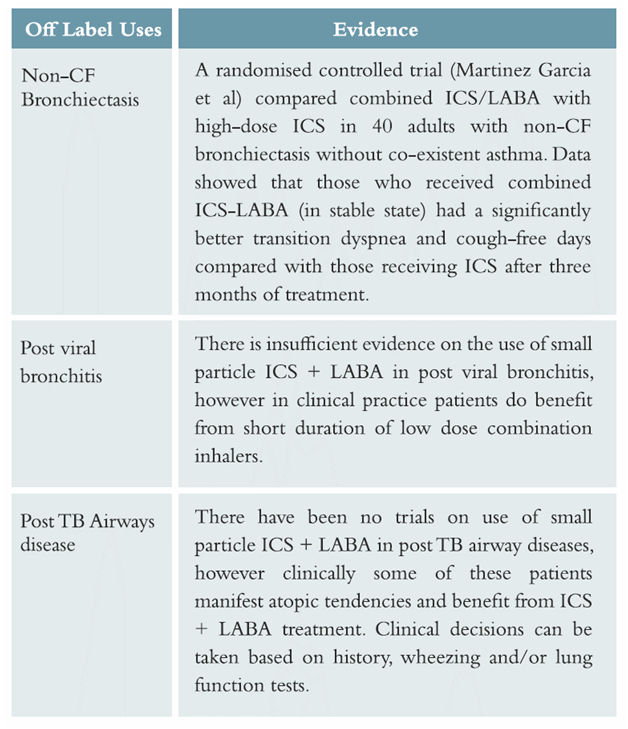
Extra-fine beclomethasone/formoterol is labelled for use only in asthma. However, it may be clinically used in the airway diseases where ICS/LABA combinations have been known to be efficacious namely post-viral bronchitis, non-cystic fibrosis bronchiectasis and post TB airways disease.
Can I Use Extra-Fine Beclomethasone/Formoterol Inhaler for My ‘New’ Asthma Patients Without Any Previous Steroid Use, and Without Proof of Small Airway Disease?
Yes. Extra-fine beclomethasone/formoterol targets both the small and large airways, therefore it can be used in patients without a documented history of small airways disease.
My Patient Has Mild Asthma and Uses Extra-fine Beclomethasone/Formoterol Inhaler Only When Symptoms Occur, About Once or Twice in A Month. Wouldn’t the Storage Condition Impact the Usage of My Patient?
Extra-fine beclomethasone/formoterol inhaler can be stored only for 3 months at room temperature. Therefore, in patients with mild asthma who are required to use inhalers infrequently, it is advisable to prescribe other ICS/LABA formulations which have a longer shelf life at room temperature.
References
- CHEST 2011; 139 (2): 412 – 423.
- Asthma Res Pract. 2015 Dec 1; 1:13.
- Am J RespirCrit Care Med. 1998 May;157(5 Pt 2):S181-3.
- Allergy 2013; 68: 16–26.
- Lancet Respir Med. 2014 Jun;2(6):497-506.
- Respir Med. 2016 Jul; 116:19-27.
- World Allergy Organ J. 2017 Jun 21;10(1):20.
- EurRespir J. 2002 Aug;20(2):254-9.
- EurRespir J. 1997 Feb;10(2):292-300.
- N Engl J Med. 2004 Jun 24;350(26):2645-53.
- J Allergy ClinImmunol. 2002 Feb;109(2 Suppl):S447-60.
- EurRespir J. 1998 Dec;12(6):1346-53.
- J Allergy ClinImmunol. 2000 Dec;106(6):1209-26.
- J Aerosol Med Pulm Drug Deliv. 2010 Jun;23(3):137-48.
- Respiration. 2013;86(5):393-401.
- Chest. 2017 Jun;151(6):1345-1355.
- Drugs. 2006;66(11):1475-83; discussion 1484-5.
- Allergy Asthma Proc. 2011 Nov-Dec;32(6):29-34.
- Allergy 2010; 65: 897–902.
- BMC Pulmonary Medicine 2011 11:60.
- Respir Med. 2012 Jun;106(6):811-9.
- Journal of Aerosol Medicine and Pulmonary Drug Delivery 2016;29(2);127-133.
- TubercRespir Dis 2017;80:317-324
- Respiration 2017; 93:32–41
- Chest February 2012;141(2):461–8.