

Zinc Supplementation-A Feasible Strategy to prevent Growth Retardation in Children Aged 6-24 Months


Background
Deficiency of zinc, which is an essential micronutrient can result in various health complications. Childhood zinc deficiency is a public problem in many developing countries and is worrisome as this growth phase highly relies on nutrient availability. Impaired immunity, growth retardation and impaired neurodevelopment are the most severe outcomes of zinc deficiency during infancy. Several reports have indicated that zinc supplementation is positively associated with linear growth in children.
Aim
To determine the feasibility and effectiveness of zinc supplementation strategy for reducing growth retardation in infants at national level
Profile of the Study Participants
- Children aged 6-24 months from rural areas of Iran (n=682)
Boys/Girls Ratio
- Intervention group: 140/132
- Control group: 156/152
Methods
Study Design
- A pragmatic, randomized, multicenter, double-blind, parallel group effectiveness trial conducted in rural centers of Iran.
Treatment Strategy
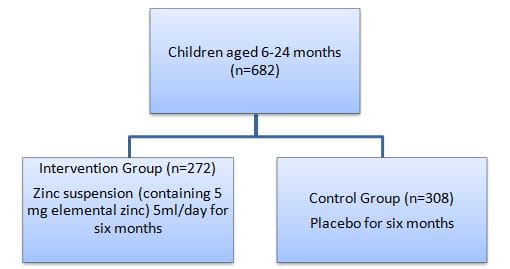
- All children were routinely administered iron, vitamin A and vitamin D supplements
Assessments
- Anthropometric evaluations conducted at baseline and every month thereafter
- Evaluation of serum zinc and ferritin concentration
- Information on occurrence of respiratory and diarrheal diseases between two visits was also collected
Follow-up
- Mean follow-up period 5.9 months
Outcomes
Primary Outcome
- Linear growth and length difference amongst children
Secondary Outcomes
- Serum zinc and ferritin concentrations
Results
- Children receiving zinc supplement rather than placebo had a significantly greater average length increment (Figure 1).
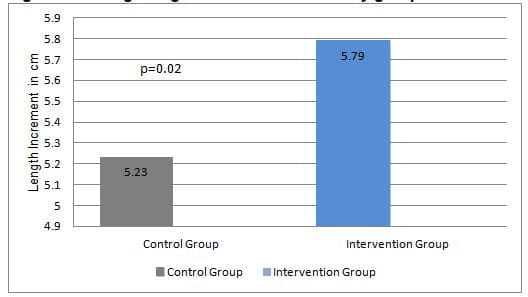
- Concentrations of serum zinc and ferritin did not differ significantly in the study groups.
- The prevalence of zinc deficiency after the termination of intervention was significantly lower in the intervention group vs. the placebo group.
- Zinc supplement did not reduce the risk of respiratory diseases or outbreak of diarrhea.
- There were no complications and adverse effects during the study period. The compliance during the study was good with only 7 of 344 children not complying with syrup intake.
Conclusion
- Zinc supplementation for six month among children aged 6–24 months had beneficial outcomes on growth and average length increment, decreasing the chance of stunting.
- Zinc supplementation is a feasible strategy for preventing growth retardation in children.
Heliyon. 2019 (Published Online); 5(11):e02581. doi: 10.1016/j.heliyon.2019.e02581.