Sustained Reduction in Incident Diabetes Even 3 Years after Withdrawal of Active SMS-based Lifestyle Intervention


Background
Lifestyle modification (LSM) is a safe and effective strategy for the primary prevention of type-2 diabetes mellitus (T2DM). The Indian SMS diabetes prevention study conducted earlier has demonstrated mobile phone based text messaging to be an effective tool for delivering lifestyle changes among Asian Indian men. In fact, use of such technology was associated with a substantial 36% relative risk reduction in incident diabetes over two years. However, persistence of beneficial effects of such intervention after withdrawal of the intervention is not known. This study was performed to evaluate long term impact of such programs in T2DM patients.
Aim
To determine whether beneficial effects of intervention on diabetes prevention persisted for an additional three years after withdrawal of active intervention.
Study Participants
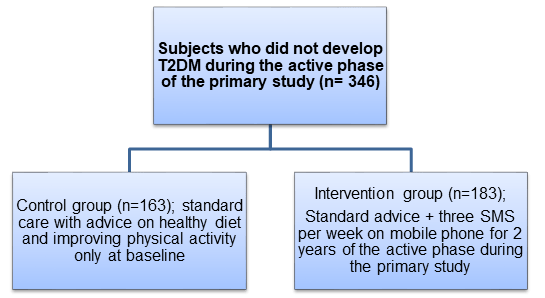
- Study participants free of T2DM at the second year of the primary study (n=346/537; men from southern India; age, 35–55 years)
Method
Study Design
- Observational follow-up of randomized controlled trial.
Study Groups
- Based on the intervention of the primary study, the study subjects were categorized as:
Study Follow-up
- All the study participants were advised on practicing LSM in the primary study but were contacted 3 years after the active phase of the primary trial via letter, phone, SMS, or e-mail.
Assessments
- Fasting, 2-hour post-prandial glucose and other measurements including; anthropometry, assessments of biochemical parameters, dietary and physical activity practices conducted during the primary study were repeated
- Dietary analysis was done only for those who had personal review
- Physical activity was quantified using a scoring system
Primary Outcome
- Incidence of T2DM
Results
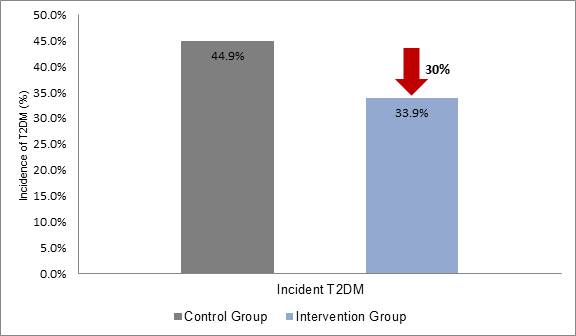
- The cumulative incidence of T2DM for five years was lower in intervention group compared to control group (33.9% vs. 44.9%; Figure 1).
- There was a sustained 30% relative risk reduction in incident T2DM in the intervention group vs. control group after a median follow-up of 5 years {Hazard ratio (HR); 0.70, 95% CI; 0.525- 0.934, p=0.009}.
- A significant improvement in dietary adherence was evident in the intervention group at 2nd and 5th year of follow up (trend ?2 = 21.35, p < 0.0001). The proportion of participants exhibiting dietary adherence was greater in the intervention group vs. control group at the end of 5 years (73.4% vs. 53.4%).
- The total calorie intake was significantly reduced at the 5th year of follow-up in the intervention group vs. the control group (p = 0.001).
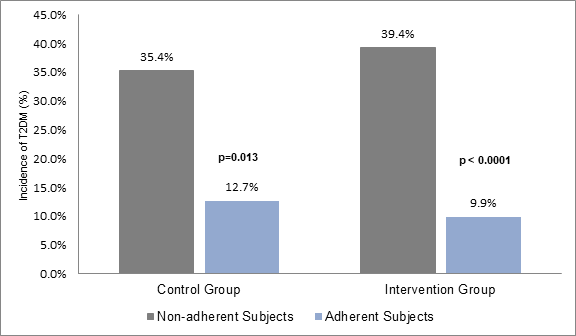
- The impact of dietary adherence was better in the intervention group with the adherent participants having significantly lower incidence of T2DM vs. the non-adherent participants. A similar trend was also evident in adherent vs. non-adherent subjects in the control group (Figure 2).
Conclusions
- Beneficial impact of lifestyle advice by text messages persisted for an additional period of three years after cessation of the two-year active phase of the intervention leading to a sustained reduction in the incidence of T2DM.
- Text messaging is an attractive option due to ease of delivery, minimal interference with patients’ lives, relatively high retention rates, low cost and sustained benefits.
Diabetes Res Clin Pract. 2018; 142: 213-21.