




Reducing LDL by >50% with 80 mg atorvastatin in stroke or TIA yields significantly greater reductions in the risk of stroke and major coronary events without any increase in brain hemorrhages: Analysis of SPARCL trial
SPARCL: Sub-Analysis in Patients with LDL Reduction >50%

18 Aug, 10


SPARCL: Sub-analysis in patients with LDL reduction >50%
Introduction
Aim
To evaluated the benefit and risks associated with achieving >50% reduction in LDL with 80 mg atorvastatin in patients with stroke or transient ischemic attack (TIA)
Methods
- Analysis of the LDL levels in patients enrolled in the Stroke Prevention by Aggressive Reduction in Cholesterol Levels (SPARCL) Trial
- LDL estimations were performed at 1, 3 and 6 months and every 6 months thereafter till trial completion, with a mean of 11.6 estimations per patient
Patients
Recent stroke or TIA (N=4731)
Study Groups
- Patients with no change or increase in LDL (N=1313)
- Patients with LDL reduction <50% (N=1776)
- Patients with LDL reduction >50% (N=1645)
Efficacy Outcome Measures
- Primary efficacy outcome was the incidence of nonfatal or fatal stroke
- Additional analysis was done to compare the incidence of clinical events in patients attaining LDL <70 mg/dl vs. those with LDL >100 mg/dl
Mean Follow-up Period
4.9 years
Results
- Almost all patients (96%) who experienced LDL reduction >50% were receiving atorvastatin
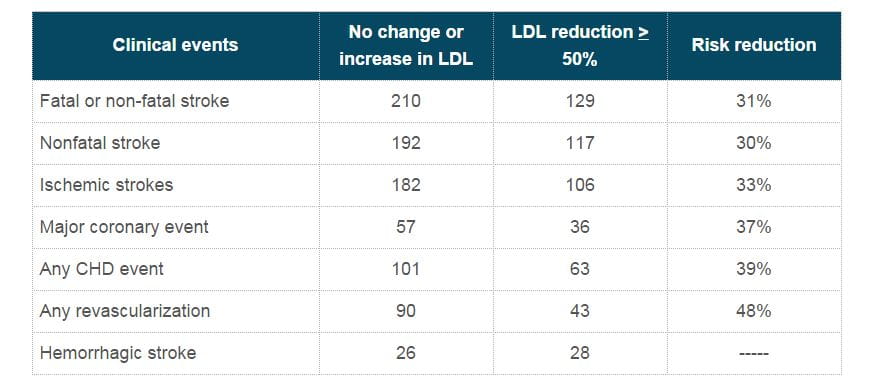
- Compared to patients with no increase or change in LDL, those with LDL reductions >50% experienced significant reductions in cerebrovascular and coronary events without any increase in hemorrhagic strokes (Table 1)
Table 1. Comparison of cerebrovascular and coronary events
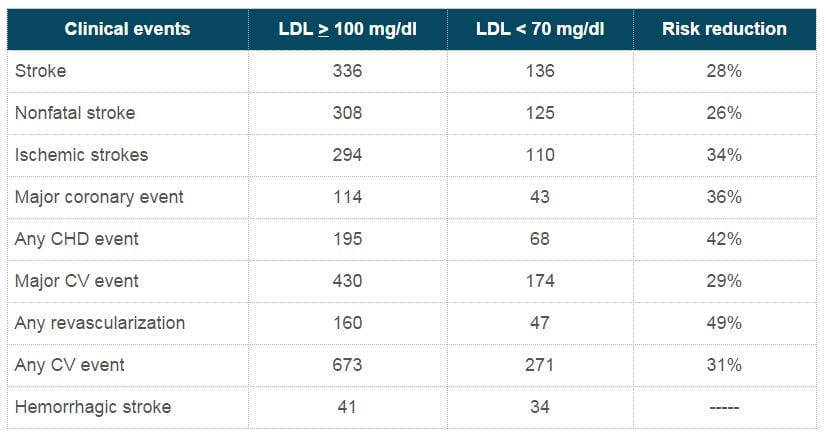
- Compared to patients with LDL >100 mg/dl, the patients with LDL <70 mg/dl had significant risk reductions in cerebrovascular and coronary events without an increase in hemorrhagic stroke (Table 2)
Table 2. Comparison of cerebrovascular and coronary events in patients with LDL <70 mg/dl vs. LDL >100 mg/dl
Conclusion
- Patients with stroke or TIA achieve maximum benefits with LDL reductions >50% with 80 mg atorvastatin
-
Analysis supports using LDL as a surrogate therapeutic target to guide the use of statins to reduce the risk of cerebrovascular events
Eur Heart J 2006;27:2323-9

More From Area Of Interest
You may also like
13 May, 26

17 Apr, 26
Our Research
23 Feb, 26
23 Feb, 26
11 Feb, 26
11 Feb, 26
11 Feb, 26
Latest Items
Journal Scans
26 Jun, 26

26 Jun, 26

26 Jun, 26

25 Jun, 26


