




ROsuvastatin Pretreatment in Patients Undergoing Elective PCI to Reduce the Incidence of MyocArdial Periprocedural Necrosis (ROMA) Study
ROMA (Reduce the Incidence of MyocArdial Periprocedural Necrosis)

18 Mar, 14


ROMA
Objective
To assess whether a single, high loading dose of Rosuvastatin (40 mg) administered within 24 hours before elective coronary stent implantation is effective in preventing peri-procedural MI.
Study Design
- Prospective, randomized single-center study.
- Patients in the rosuvastatin group were administered a dose of 40 mg rosuvastatin 24 hours prior to PCI.
- Patients in the control group were treated with dual anti-platelet therapy of aspirin and clopidogrel.
Primary End-point
Incidence of myonecrosis (defined as CK-MB >3 times the upper limit of normal) at 6, 12 and 24 hours.
Secondary End-point
Incidence of major adverse cardiac and cerebrovascular events (MACCE), defined as cardiac death, MI or stroke at 1 and 6 months.
Results
- Myonecrosis was significantly lesser in the rosuvastatin group vs. control group at 12 and 24 hours (figure).
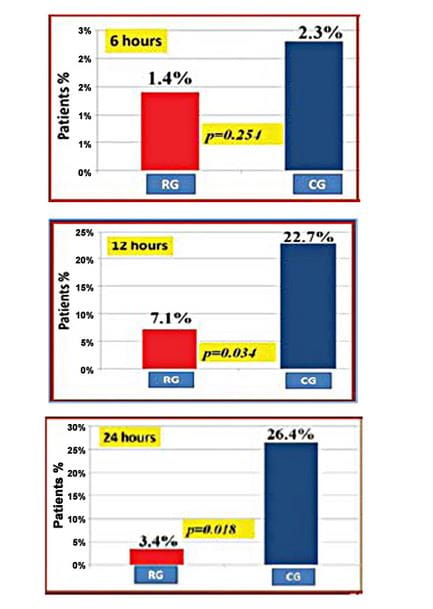
- The study indicated that a single-high loading dose of rosuvastatin can reduce (even acutely) the incidence of periprocedural non-Q wave MI in elective PCI.
- Cumulative incidence of MACCE was lower in the rosuvastatin group.

Conclusion
- The study indicated that a single-high loading dose of rosuvastatin can reduce (even acutely) the incidence of periprocedural non-Q wave MI in elective PCI.
-
Rosuvastatin also significantly lowered the incidence of major adverse cardiac and cerebrovascular events.
Adapted from www.tctmd.com, as accessed on Oct 18, 2010
Presented at Transcatheter Cardiovascular Therapeutics (TCT) 2010 scientific symposium, Washington DC, USA

More From Area Of Interest
You may also like

13 May, 26

17 Apr, 26
Our Research
23 Feb, 26
23 Feb, 26
11 Feb, 26
11 Feb, 26
11 Feb, 26
Latest Items
Journal Scans
26 Jun, 26

26 Jun, 26

26 Jun, 26

25 Jun, 26


