Remdesivir Improves Survival Outcomes in ICU Patients with COVID-19 under Mechanical Ventilation


Introduction
Severe acute respiratory distress syndrome coronavirus 2 (SARS-CoV-2) has spread worldwide and is associated with significant mortality in the elderly and in the patients with preexisting comorbidities. The increase in the number of cases overburdened the healthcare system leading to overcrowding in the ICUs. The efficacy of remdesivir, a prodrug that inhibits viral RNA polymerases, has already been demonstrated in trials related to Middle East Respiratory Syndrome CoV (MERS-CoV) and Ebola virus infection. However, the clinical efficacy of remdesivir in COVID-19 patients is being investigated.
Aim
This study assessed the clinical outcomes of intravenous remdesivir in critically ill patients infected with SARS-CoV-2 infection under mechanical ventilation in the ICU.
Methods
Study Design
- Retrospective study
Treatment Strategy
- Patients >18 years with SARS-CoV-2 infection admitted to ICU from 29 February to 20 March 2020
- Remdesivir was provided on a compassionate use basis to those who needed mechanical ventilation.
- The clinical characteristics and outcomes of patients treated with remdesivir were compared to those hospitalized in the same period
- Medical history, vital parameters and laboratory data were recorded.
- The Charlson Comorbidity Index and sequential organ failure assessment (SOFA) score was calculated at the time of entry into ICU
Endpoints
- Mortality rate at the end of follow-up
Results
- The study and control groups comprised 25 and 26 patients respectively
- Baseline characteristics were as follows
- Median age 67 years
- 92% men
- Symptom onset was 10 days before admission to ICU
- The most common comorbidities were high blood pressure (54.9%), diabetes mellitus (13.7%), ischemic heart disease (13.7%) and moderate kidney failure (7.8%)
- The median Charlson Comorbidity Index was 3, corresponding to an estimated 10-year survival of 77%
- The SOFA score calculated at the time of admission to the ICU was 5
- Median follow-up was 52 days
- Treatment with remdesivir was associated with a significant reduction in mortality; p<0.001 as seen in figure 1.
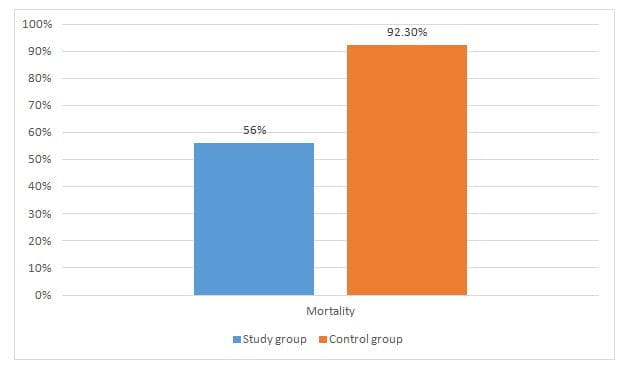
- Death occurred a median of 17 and 10 days after ICU admission in the remdesivir group and control group respectively
- The multivariate analysis showed that the Charlson Comorbidity Index was the only factor that had a significant association with higher mortality (OR 1.184; p = 0.020), while the use of remdesivir was associated with better survival (OR 3.506; p < 0.001).
Conclusion
- The mortality rate of patients with COVID-19 under mechanical ventilation is high
- Treatment with remdesivir resulted in improved survival outcomes in these patients
J Antimicrob Chemother. 2020. Doi: 10.1093/jac/dkaa321.