




Reducing triglycerides as well as LDL important for reducing CHD risk in ACS patients: Analysis of PROVE-IT TIMI 22 trial
PROVE-IT TIMI: Subanalysis to Assess CV Risk Post-MI

12 Dec, 10
PROVE-IT TIMI Subanalysis to Assess CV Risk Post-MI
Introduction
Aim
To assess the impact of on-treatment triglycerides (TG) on coronary heart disease (CHD) risk after an acute coronary syndrome (ACS)
Methods
Analysis of Pravastatin or Atorvastatin Evaluation and Infection Therapy-Thrombolysis In Myocardial Infarction (PROVE IT-TIMI) 22 trial
Patients
- ACS (N=4162)
- Patients received either atorvastatin 80 mg (N=2099) or pravastatin 40 mg (N=2063)
Efficacy Outcome Measure
Composite of death, myocardial infarction (MI) and recurrent ACS
Follow-up Period
30 days
Results
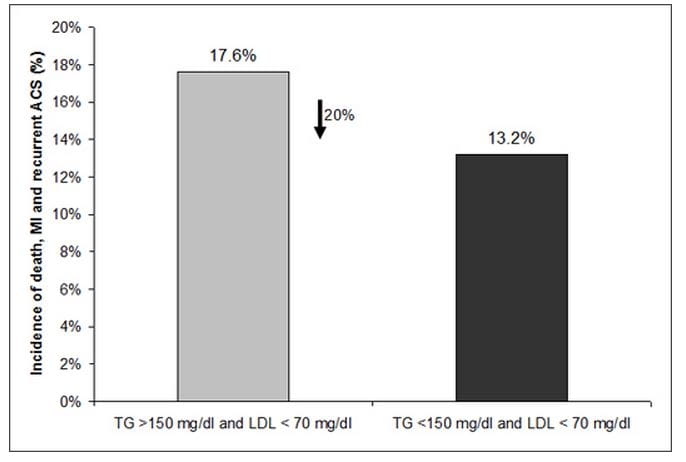
- In patients who achieved LDL <70 mg/dl, risk of the composite of death, MI and recurrent ACS was significantly lowered by 20% in those with TG <150 mg/dl vs. those with TG≥150 mg/dl (Figure 1)
Figure 1. Incidence of composite end-point
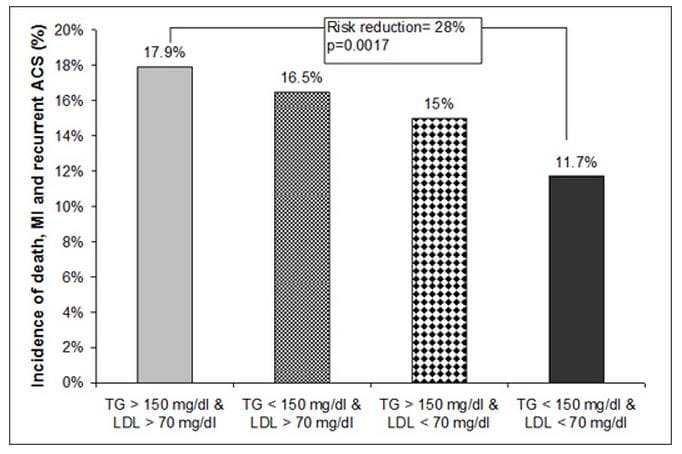
- Incidence of the composite end-point was lowest in patients with LDL <70 mg/dl and TG <150 mg/dl (Figure 2)
Figure 2. Incidence of composite end-point in relation to LDL and TG levels
- Each 10% reduction in TG during the first month of therapy significantly reduced the risk of recurrent CHD events by 2.3%
Conclusions
- On-treatment TG <150 mg/dl is associated with lower risk of recurrent CHD events even in ACS patients with LDL <70mg/dl
-
Data supports the concept that achieving both low LDL and TG may be important therapeutic parameters in ACS
J Am Coll Cardiol 2008;51:724-30

More From Area Of Interest
You may also like

12 Nov, 26

12 Oct, 26

21 Sep, 26

21 Sep, 26

21 Sep, 26

13 May, 26
Latest Items
Journal Scans
17 Nov, 26

17 Nov, 26
Journal Scans
16 Nov, 26

16 Nov, 26
Journal Scans
9 Nov, 26

9 Nov, 26


