




Intensive statin therapy reduces acute cardiac events in ACS patients with diabetes: Sub-analysis of Pravastatin or Atorvastatin Evaluation and Infection Therapy- Thrombolysis in Myocardial Infarction (PROVE IT-TIMI) 22 trial
PROVE IT-TIMI 22 - Sub-analysis in Diabetics

18 Aug, 10


PROVE IT-TIMI 22 - Sub-analysis in Diabetics
Introduction
Aim
- To determine the impact of intensive vs. standard statin therapy on outcomes in acute coronary syndrome (ACS) patients with diabetes mellitus (DM)
Study Design and Participants
- Post hoc analysis of PROVE-IT TIMI 22 study participants (978 patients with ACS and DM)
Interventions
- Pravastatin 40 mg/day (n=479) or atorvastatin 80 mg/day (n=499)
- Mean follow up period was 2 years
Outcome Measures
- The primary endpoint was a composite of death, myocardial infarction (MI), unstable angina requiring rehospitalization, revascularization with percutaneous coronary intervention (PCI) or coronary artery bypass surgery occurring at least 30 days following randomization or stroke
- Triple endpoint of acute cardiac events (death, MI, or unstable angina requiring rehospitalization)
Results
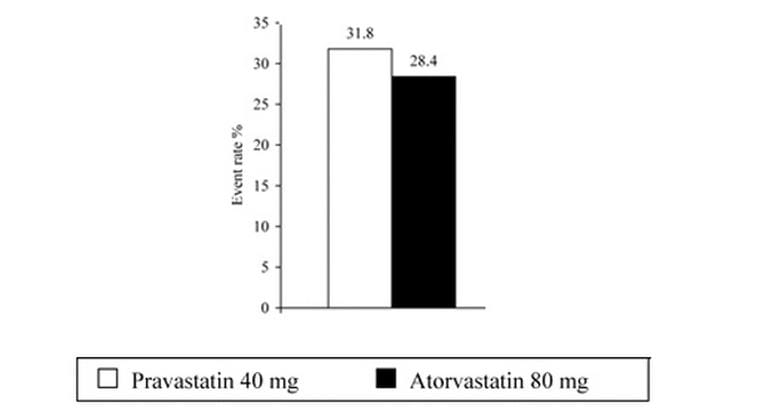
- The primary end-point was reduced to a greater extent in patients receiving intensive regimen of atorvastatin as compared to pravastatin (Figure 1)
Figure 1. Kaplan-Meier rate of the primary endpoint in diabetic patients treated with intensive vs. standard therapy
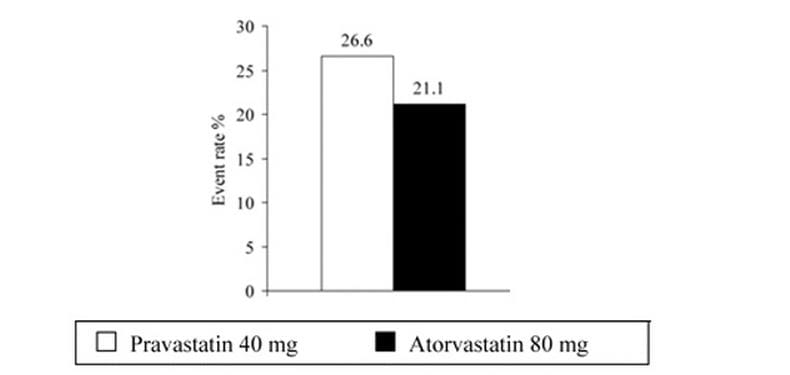
- The event rate for the triple endpoint was significantly reduced in patients receiving high dose atorvastatin as compared to standard dose of pravastatin (Figure 2)
Figure 2. Kaplan-Meier rate of the triple endpoint in diabetic patients treated with intensive vs. standard therapy
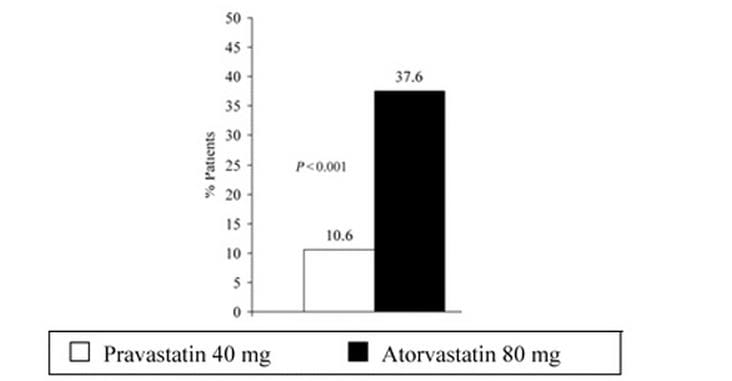
- Significantly greater number of patients achieved the dual goal of LDL <70 mg/dl and high-sensitivity C-reactive protein (hs-CRP) <2 mg/l with intensive atorvastatin therapy (Figure 3)
Figure 3. Percentage of patients achieving dual LDL and hs-CRP goals
Conclusion
-
In ACS patients with DM, intensive statin therapy reduces acute cardiac events as it does in those without DM, with 55 vs. 40 events per 1000 patients treated
Eur Heart J 2006;27:2323-9

More From Area Of Interest
You may also like
13 May, 26

17 Apr, 26
Our Research
23 Feb, 26
23 Feb, 26
11 Feb, 26
11 Feb, 26
11 Feb, 26
Latest Items
Journal Scans
26 Jun, 26

26 Jun, 26

26 Jun, 26

25 Jun, 26


