




To assess the effect of a high maintenance dose of clopidogrel on platelet inhibition in type 2 diabetes patients with coronary artery disease (CAD) exhibiting suboptimal clopidogrel-induced antiplatelet effects
OPTIMUS Study (Optimizing Antiplatelet Therapy in Diabetes Mellitus)

18 Mar, 14


OPTIMUS Study
Introduction
High maintenance dose of clopidogrel enhances platelet inhibition in patients of diabetes with CAD: Optimizing Antiplatelet Therapy in Diabetes Mellitus (OPTIMUS) Study
Aim
Patients
Diabetes and CAD with suboptimal clopidogrel responsiveness (defined as 20 mol/lt ADP- induced maximum platelet aggregation >50%) on maintenance therapy with 75 mg/day clopidogrel for at least 30 days and receiving concomitant 81 mg/day aspirin (N=40)
Study Groups
Clopidogrel 150 mg/day (n=20) vs. clopidogrel 75 mg/day (n=20). After 30 days, all patients resumed the standard 75 mg/day maintenance dose of clopidogrel
Primary End-point
Maximum aggregation (Aggmax) after stimulation with 20 mol/lt ADP 30 days after randomization
Results
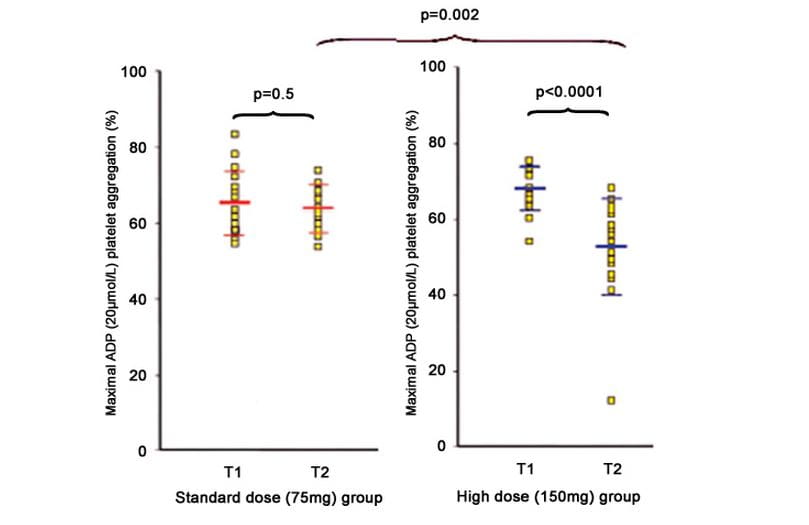
- Patients receiving 150 mg clopidogrel experienced a significantly greater reduction in Aggmax compared to patients randomized to clopidogrel 75 mg as well as baseline (Figure 1)
- Patients who received 75 mg clopidogrel did not exhibit any significant reduction in Aggmax as compared to baseline (Figure 1)
Figure 1. Comparison of Aggmax in study groups
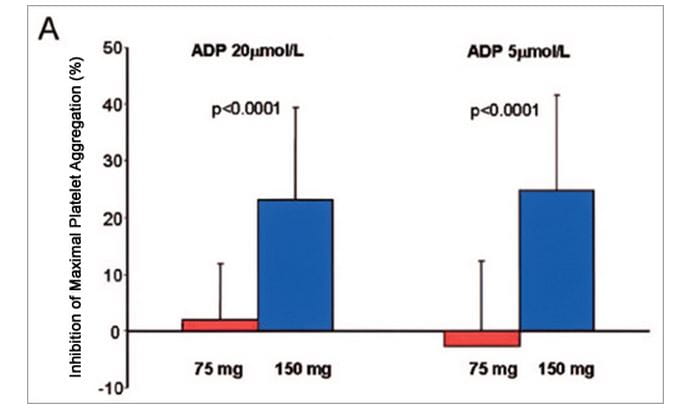
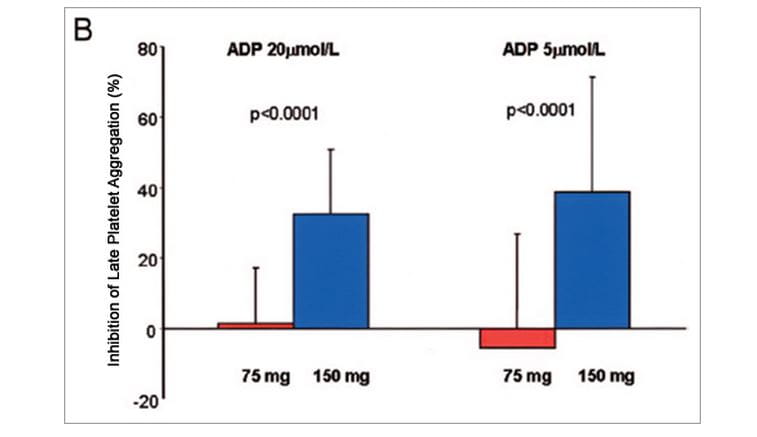
- Inhibition of maximal and late platelet aggregation was significantly greater in high maintenance dose group vs. patients receiving standard maintenance dose (Figure 2)
Figure 2. Inhibition of maximal (A) and late (B) platelet aggregation after stimulus with 20 mol/L and 5 mol/L ADP
Conclusions
- Currently recommended maintenance dose of clopidogrel is associated with a high incidence of suboptimal response among patients with type 2 diabetes and CAD
-
A 150 mg maintenance dose of clopidogrel is associated with enhanced antiplatelet effects compared with 75 mg in high-risk type 2 diabetics
Circulation. 2007 Feb 13;115(6):708-16

More From Area Of Interest
You may also like

13 May, 26

17 Apr, 26
Our Research
23 Feb, 26

23 Feb, 26

11 Feb, 26

11 Feb, 26

11 Feb, 26
Latest Items
Journal Scans
26 Jun, 26

26 Jun, 26

26 Jun, 26

25 Jun, 26


