




To compare the efficacy and safety of induction of labour by vaginal application of dinoprostone or misoprostol or transcervical insertion of a balloon (Bard) catheter.
Intravaginal Dinoprostone, Intravaginal Misoprostol and Transcervical Balloon Catheter for Labour Induction

6 Nov, 10
A Randomised Controlled Trial of Intravaginal Dinoprostone, Intravaginal Misoprostol and Transcervical Balloon Catheter for Labour Induction
Aim
Material and Methods
- Non-blinded, randomised, controlled trial.
- N- 588 women undergone full-term pregnancies, not previously been subjected to a caesarean section, and required induction of labour for common, routine indications.
- They were randomly divided for induction of labor using:
- Group 1, n= 191 Intravaginal Dinoprostone (2 mg once every 6 hours)
- Group 2, n= 199 Intravaginal Misoprostol (25 micrograms once every 4 hours)
- Group 3, n= 198 Transcervical balloon (Bard) catheter
- Primary Outcome
- The time interval for induction to delivery(General)
- The time interval for induction to delivery (Vaginal)
- The mode of delivery
- Secondary Outcome
- Incidence of instrumental delivery(including caesarean section)
- Uterine hyperstimulation with or without abnormalities in the FHR
- Staining of the amniotic fluid with meconium
- Necessity for IV antibiotics due to the presence of fever during delivery
- Requirement for augmentation with epidural analgesia
- Occurrence of postpartum bleeding
- Apgar score 5 minutes after birth
- Necessity for admission to the neonatal intensive care unit
Results
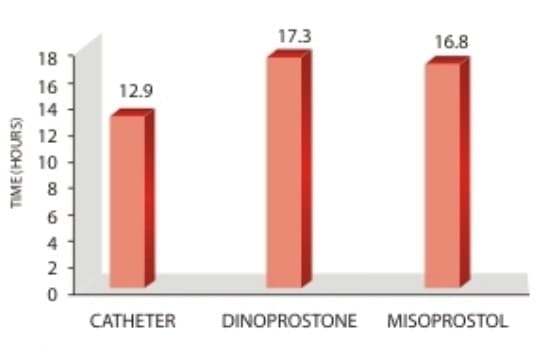
Time interval for induction to delivery (General)
Time interval for induction to delivery (Vaginal)
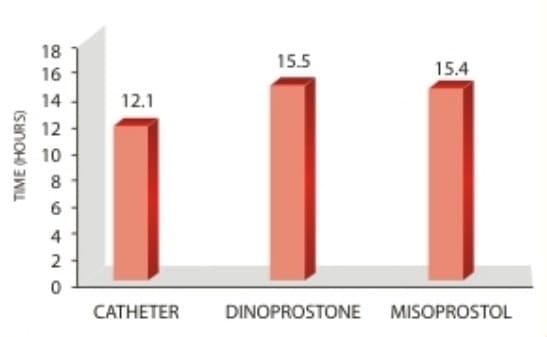
There was a significant difference in the mean time for induction-to-delivery between induction with the catheter and the other two procedures but no significant difference in mean time for induction-to-delivery between Dinoprostone and Misoprostol was observed.
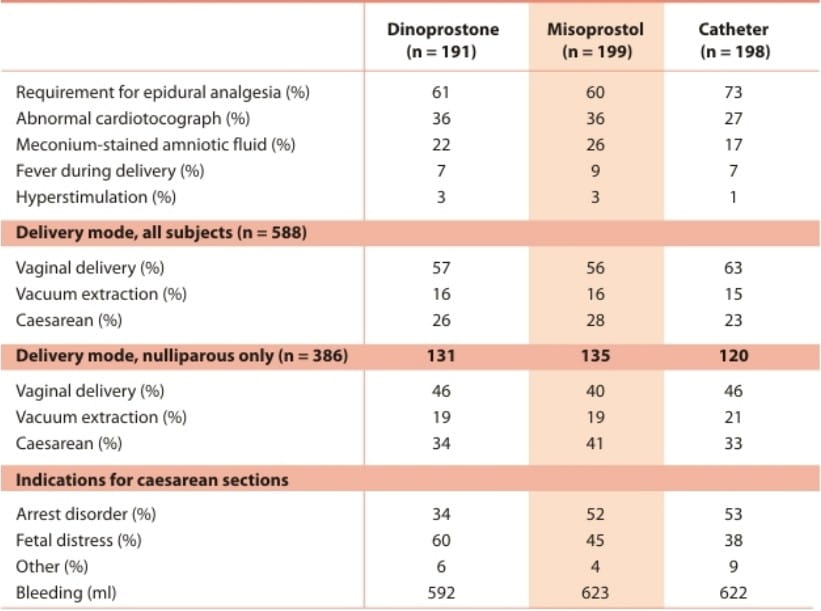
Outcomes in labour in the three study groups
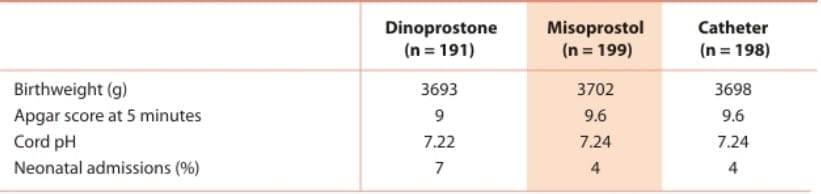
Neonatal outcomes in the three study groups
- The incidence of uterine hyperstimulation, which is commonly thought to be elevated by administration of misoprostol, was low and similar in all three groups.
- No significant differences in mode of delivery, maternal & neonatal outcomes was seen between the three groups.
Conclusion
Induction of labour with a transcervical balloon catheter is effective and safe and can be recommended as the first choice.
The two prostaglandins, dinoprostone and misoprostol, were shown to be equally effective and safe, while misoprostol costs significantly less and is easier to store.
BJOG 2008; 115:1443-1450.
Related Topics
More From Area Of Interest
You may also like

12 Oct, 26
21 Sep, 26
21 Sep, 26

21 Sep, 26

13 May, 26

17 Apr, 26
Latest Items

6 Nov, 26
Journal Scans
5 Nov, 26
5 Nov, 26

3 Nov, 26


