




To compare the effects of 2 strategies of lipid lowering on the risk of cardiovascular disease among patients with a previous myocardial infarction (MI)
IDEAL (Incremental Decrease in End Points Through Aggressive Lipid Lowering) Study

18 Mar, 14


Objective
Study Design and Participants
Prospective, randomized, open-label, blinded end-point evaluation trial which enrolled 8888 patients aged 80 years or younger with a history of acute MI with a median follow-up of 4.8 years
Interventions
Patients were randomly assigned to receive a high dose of atorvastatin (80 mg; n=4439), or usual-dose simvastatin (20 mg; n=4449)
Outcome Measures
Primary clinical outcome was time to first occurrence of a major coronary event, defined as coronary death, hospitalization for nonfatal acute MI, or cardiac arrest with resuscitation.
3 pre-specified composite secondary outcomes
- Major cardiovascular events (any primary event plus stroke)
- Any CHD event (any primary event, any coronary revascularization procedure, or hospitalization for unstable angina)
- Any cardiovascular events (any of the former plus hospitalization with a primary diagnosis of congestive heart failure and peripheral arterial disease, defined as new clinical diagnosis or hospitalization for such disease).
Results
During treatment, mean LDL-C levels were 104 mg/dl in the simvastatin group and 81 mg/dl in the atorvastatin group
Atorvastatin reduced the following events compared to simvastatin:
- 11% reduction in the development of the primary end point
- 16% risk reduction in the occurrence for both - any CHD event and any cardiovascular event
- 23% reduction in the need for coronary revascularization
- 17% reduction in the risk of non-fatal MI
- Significant 13% risk reduction in the occurrence of a major cardiovascular event including stroke
- Risk of death from any cause was similar in both study groups
Safety
- There were no significant differences in the frequency of serious clinical adverse experiences between the two groups
- Although liver enzyme elevation occurred more frequently in the atorvastatin group, it was not related to any increased incidence of clinical liver disease
- Myalgias occurred more frequently in the atorvastatin group, but myopathy rates were exceedingly low in both the groups
Table 1. Safety Outcomes
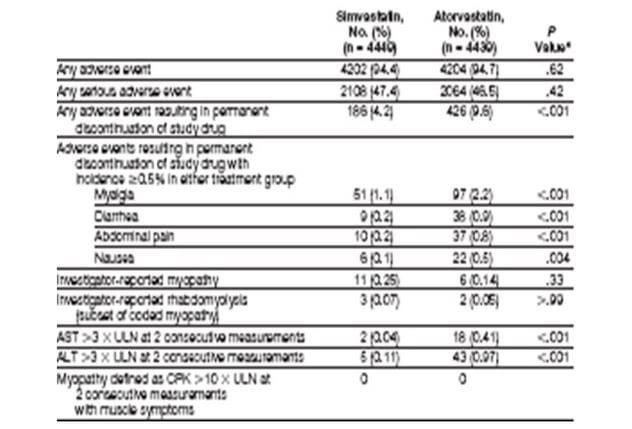
- Proportion of patients developing liver enzyme elevation with atorvastatin 80 mg was low and comparable with results of other similar trials.
Implications for Clinical Practice
More intensive lowering of LDL-C than usual in patients with previous MI might prevent 68 first cardiovascular events per 1000 patients over 5 years
Conclusions
These results indicate that patients with MI may benefit from intensive lowering of LDL-C without increase in non-cardiovascular mortality or other serious adverse reactions.
JAMA 2005; 294: 1224-32, Also presented at American Heart Association Scientific Sessions 2005 on November 15 2005.

More From Area Of Interest
You may also like

13 May, 26

17 Apr, 26
Our Research
23 Feb, 26

23 Feb, 26

11 Feb, 26

11 Feb, 26

11 Feb, 26
Latest Items
Journal Scans
26 Jun, 26

26 Jun, 26

26 Jun, 26
Journal Scans
25 Jun, 26

25 Jun, 26


