


Entecavir Lowers the Incidence of Hepatocellular Carcinoma in HBV Infected Patients

Introduction
Chronic Hepatitis B infection (CHB) is a known factor that increases the risk of hepatocellular carcinoma (HCC). The impact of antiviral treatment for CHB on the incidence of hepatocellular carcinoma has not been well characterized. The present study is aimed at calculating the incidence of HCC in CHB patients, using REACH-B (Risk Estimation for Hepatocellular Carcinoma in Chronic Hepatitis-B) model. The REACH-B model was chosen since it accounts for factors such as age, gender, family history of HCC, hepatitis B e antigen (HBeAg) status, alanine aminotransferase (ALT) levels, HBV DNA levels, and alcohol use, when predicting HCC risk. It is expected that the REACH-B model would be able to evaluate the impact of anti-viral therapy on development of HCC.
Aim
To determine whether treatment of hepatitis-B infection with entecavir reduces the risk of hepatocellular carcinoma using the REACH-B model.
Patient Profile
N = 646, 65% male, 84% Asian, median age 47 years, 36% HBeAg positive, 9.4% with cirrhosis.
Inclusion criteria
- Age >18 years
- Known baseline HBeAg status
- No antiviral therapy before entecavir
- Entecavir treatment for at least 1 year
Exclusion criteria
- Prior history of HCC
- Known co-infection with human immunodeficiency virus, hepatitis C virus or hepatitis D virus
- History of solid organ transplantation
Method
Study design
Retrospective, Multicentre cohort study.
Treatment strategy
- CHB patients received at least 12 months of Entecavir (ETV) therapy
- Starting dose of ETV was 0.5 mg/day in 89% of the patients, 1.0 mg/day in10% and <0.5 mg/day in 1% patients.
- The predicted HCC incidence was calculated using REACH-B model.
- The standardized incidence ratios (SIRs) were calculated as a ratio of observed over estimated HCC cases.
Primary Outcome
- Observed diagnosis of HCC as per the guidelines by the American Association for the Study of Liver Diseases
- The expected incidence was calculated using the REACH-B model
- SIRs calculated as a ratio
Results
- Out of 841 patients screened, 646 patients met the inclusion criteria
- 2.6% of the cases were diagnosed with HCC after a median follow-up of 4 years. See figure 1.
- The REACH-B model predicted 24.7 HCC cases developing within 8 years, however the observed number of HCC cases in those treated with entecavir was 9.
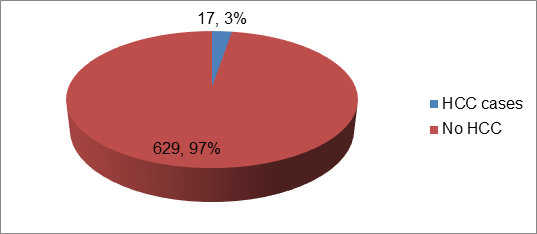
- The HCC cases included 13.1% with cirrhosis and 1.5% without cirrhosis
- The incidence of cirrhosis was high in HCC cases as compared to those without HCC (47.1% vs 8.4%)
- The patients with HCC were older as compared to those without HCC (53 years vs 47 years)
- The observed HCC incidence was significantly lower by the end of 4th year in patients without cirrhosis with SIR of 0.37
- All the patients showed a significantly lower incidence of HCC with a SIR of 0.56 after a follow up of 8.2 years
Conclusion
Long term treatment with entecavir resulted in a lower HCC incidence as compared to the predicted HCC incidence. However the risk of HCC could not be eliminated even after the antiviral treatment. Careful surveillance of the cases is required.
Am J Gastroenterol 2016; 111:1297–1304.