




Efficacy and Safety of Teriparatide in the Treatment of Nontraumatic Osteonecrosis of the Femoral Head

2 Sep, 21
Introduction
Complete collapse of the femoral head is one of the major complications of nontraumatic osteonecrosis (NOFH), resulting in dysfunction of the hip and disability in patients. It occurs in 75% of NOFH cases within three years and in 80% of patients within four years of onset of hip pain.
Aim
To examine pharmacological effects of teriparatide on collapse progression of NOFH and to compare these effects with alendronate
Patient Profile
NOFH patients diagnosed with osteoporosis
Methods
· Retrospective study
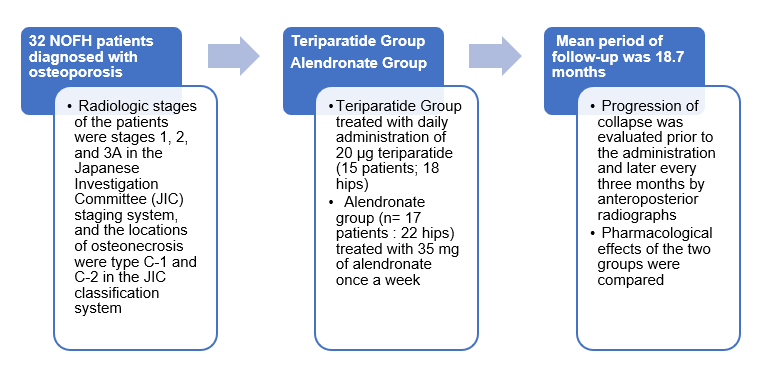
·Collapse progression with > 1 mm was defined as advanced collapse, while with < 1 mm was defined as stable radiologic disease
Results
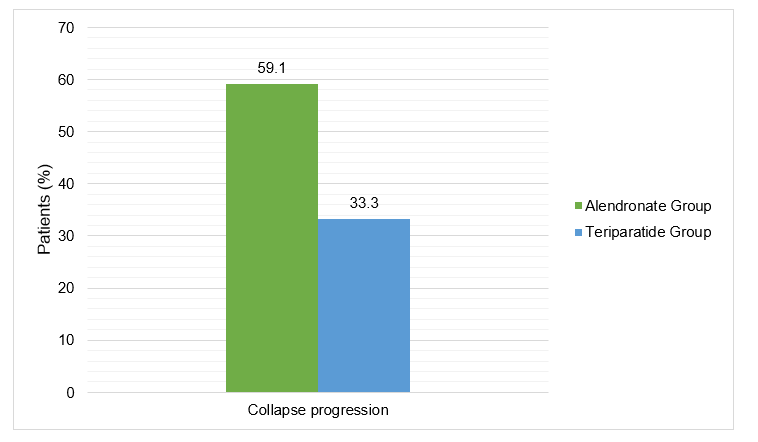
- Teriparatide had a tendency to reduce collapse progression of femoral head (p = 0.105)
Figure 1: Occurrence rate of advanced collapse in the teriparatide and alendronate groups at the end of follow-up
- Treatment with teriparatide resulted in significant reduction in collapse progression (0.67 mm) compared to that with alendronate (1.24 mm; p = 0.049)
Table 1: Final collapse progression in the teriparatide and alendronate groups
|
|
Teriparatide Group |
Alendronate Group |
P-Value |
|
Final collapse progression |
0.67mm |
1.24mm |
0.049 |
- Kaplan-Meier curves for stable radiologic disease showed that teriparatide-treated patients had better stable states than those treated with alendronate (p = 0.08, log-rank test).
- Patients treated by teriparatide showed a longer 1-year stability (83.3%) than patients treated by alendronate (53.6%, p = 0.08, log-rank test)
- No complications were observed on the patients during the period of study caused by the treatment course of teriparatide or alendronate
Conclusion
- The treatment with teriparatide resulted in lesser collapse progression of the femoral head than that by alendronate
- Teriparatide has greater pharmacological effects than alendronate for treating NOFH and preventing the collapse of femoral head
- Teriparatide is a potent conservative option for treatment of NOFH
Reference
BMC Musculoskeletal Disorders.2017;18:24
Related Topics
More From Area Of Interest
You may also like

12 Oct, 26

21 Sep, 26
21 Sep, 26

21 Sep, 26

13 May, 26

17 Apr, 26
Latest Items
12 Oct, 26

12 Oct, 26
Journal Scans
8 Oct, 26

8 Oct, 26


