




COLOR II Trial: Laparoscopic Surgery as Safe and Effective as Open Surgery in Rectal Cancer

6 Oct, 16


Introduction
Laparoscopic resection of colorectal cancer is widely used because of its favourable short-term outcomes, like less pain, reduced blood loss and improved recovery time. However, large clinical trials proving similar outcomes after laparoscopic and open surgery in rectal cancer are lacking.
Aim
Colorectal Cancer Laparoscopic or Open Resection (COLOR) II trial, compared 3-year rates of cancer recurrence in the pelvic or perineal area (locoregional recurrence) and survival after laparoscopic and open resection of rectal cancer.
Patient Profile
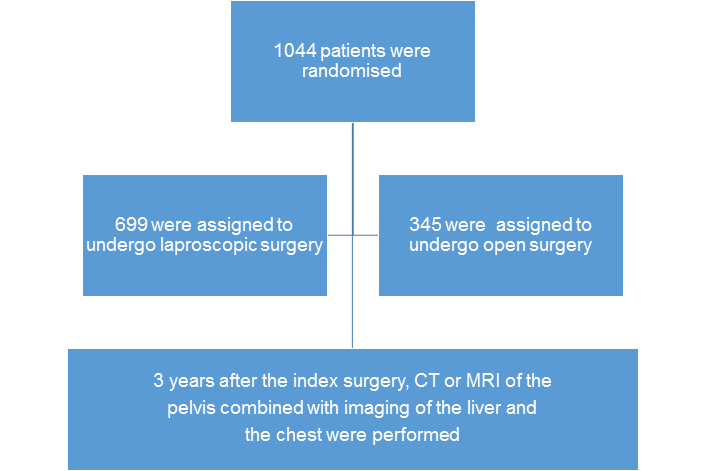
- N= 1044 patients
- Patients with a solitary adenocarcinoma of the rectum within 15 cm from the anal verge without distant metastases who were candidates for elective surgery were included
Methods
Study Design
- Non-inferiority, open label, multi-centre trial
- Conducted at 30 centres in 8 countries
Endpoints
- Primary endpoint: Locoregional recurrence 3 years after the index surgery
- Secondary end points: Disease-free and overall survival
Results
Figure 1: Locoregional recurrence, disease-free survival, and overall survival rates at 3 years
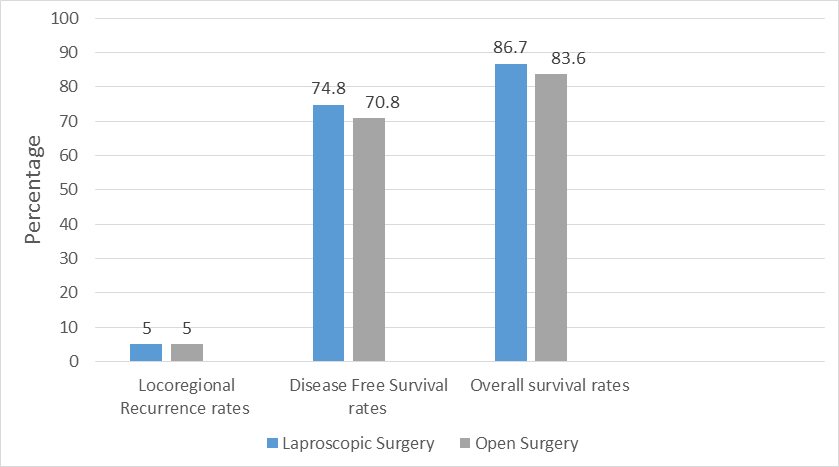
- Rates of disease-free survival were found to be similar in patients with stage I or II rectal cancer in the two groups
- In patients with stage III disease, the rate of disease-free survival was 64.9% in the laparoscopic surgery group and 52.0% in the open-surgery group
- At 3 years, distant metastases were reported in 19.1% of the patients in the laparoscopic surgery group and 22.1% of those in the open-surgery group
- one port site metastasis in the laparoscopic surgery group
- one tumor recurrence in the laparotomy wound in the open-surgery group
Conclusion
Rates of locoregional recurrence and disease-free and overall survival were similar in rectal cancer patients treated with laparoscopic and open surgery.
N Engl J Med 2015; 372:1324-32
Related Topics
More From Area Of Interest
You may also like

13 May, 26

17 Apr, 26
Our Research
23 Feb, 26

23 Feb, 26
11 Feb, 26
11 Feb, 26
11 Feb, 26
Latest Items
Journal Scans
24 Aug, 26

24 Aug, 26

21 Aug, 26
Journal Scans
18 Aug, 26
18 Aug, 26


