




To compare the bleeding pattern, cycle control, contraceptive efficacy and safety of combined oral contraceptive (COC) drospirenone 3 mg/ ethinyl estradiol 20 ?g (DEE) 24/4 regimen with a low dose 21/7 preparation contatining desogestrel 150 ?g and ethinylestradiol 20 ?g (DSGEE).
Bleeding Pattern of Drospirenone Compared with Desogestrel

6 Nov, 10
Bleeding Pattern of Combined Oral Contraceptive Drospirenone 3 mg and Ethinylestradiol 20 ?g (24/4) Compared with Desogestrel 150 ?g & Ethinylestradiol 20 ?g (21/7)
Aim
Materials and Methods
A randomized, open, parallel-group comparison study.
N=453, healthy women aged 18-35 years were recruited.
Women with irregular menstrual cycles, breakthrough bleeding or amenorrhoea were not excluded.
Treatment started on the first day of menses for COC starters or scheduled bleeding for switchers.
- Subjects were randomized for 7 cycles to receive either -
- n=230 - DEE for 24 consecutive days of active treatment followed by 4 days of hormone-free pill (24/4 regimen); or
- n=223 - DSGEE for 21 consecutive days of active treatment followed by a 7-day pill-free period (21/7 regimen).
- Clinical assessments -
- Participating women started their bleeding record with first pill intake at the onset of regular bleeding.
- Efficacy assessments -
- Cycle control analysis - time to onset, duration and intensity of scheduled bleeding and unscheduled bleeding episodes.
- Bleeding pattern analysis - mean total number bleeding/spotting days and mean length of all bleeding/spotting episodes.
- Contraceptive efficacy - determined using the Pearl Index (PI)
- Satisfaction and well-being -
- At the final visit, the women were asked to give assessments on well being while using DEE or DSGEE
Results
Cycle Control Analysis
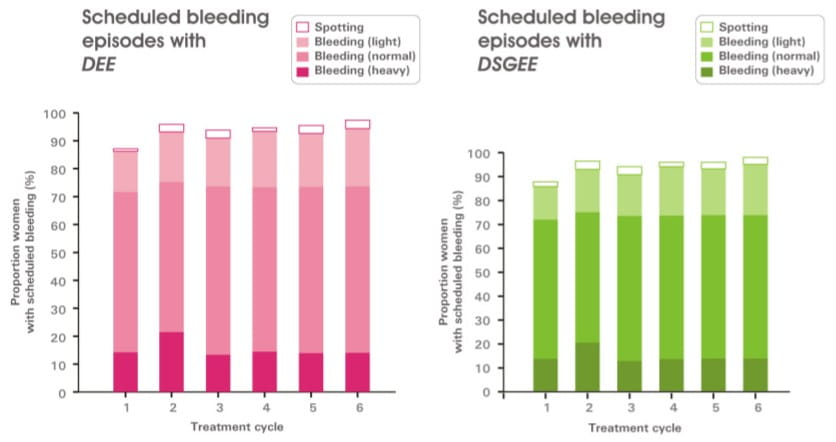
Scheduled Bleeding Episodes
- Maximum intensity of scheduled bleeding was "normal bleeding" for over 50% of subjects in Cycles 1 -6 in both treatment groups.
- Scheduled bleeding intensity tended to be lighter for DEE than the DSGEE group.
- Lower proportion of "heavy bleeding" was experienced in the DEE than in the DSGEE group in Cycles 1-6.
Unscheduled Bleeding Episodes
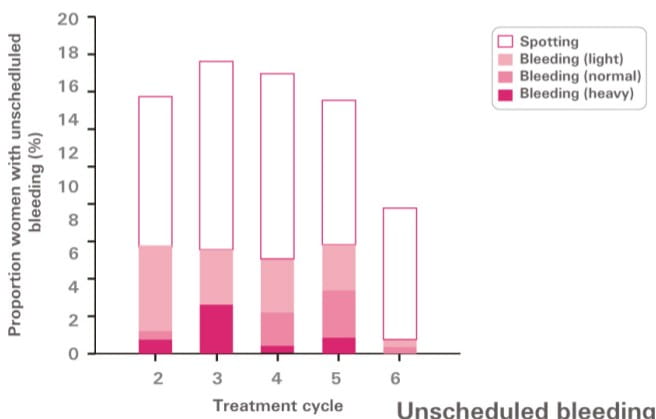
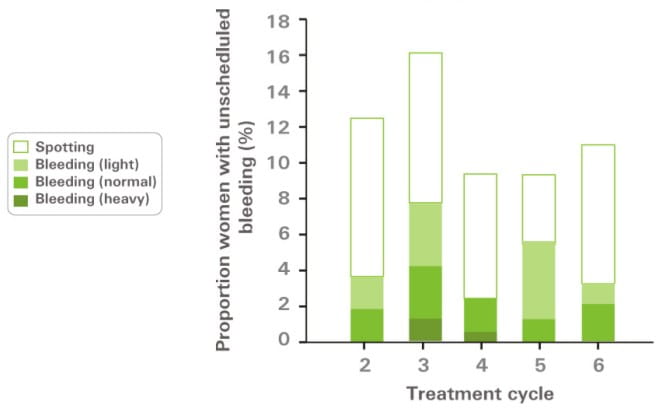
- Mean maximum length and number of unscheduled bleeding episodes in DEE and DSGEE group reduced from Cycle 1 to Cycles 2-6.
- In Cycle 1, the maximum intensity of unscheduled bleeding was "normal bleeding", however, in Cycles 2-6, the maximum intensity was "spotting".
Unscheduled bleeding episodes with DEE
Unscheduled bleeding episodes with DSGEE
- Bleeding pattern analysis
- Number and mean length of bleeding/spotting days per reference period were lower for the DEE group.
- Contraceptive efficacy
- The Pls were 0 (no pregnancies) in DEE group and 0.93 (1 pregnancy) in the DSGEE group. The adjusted PI was similar (0.93).
- Safety and tolerability
- Adverse events were similar between the treatment groups and were typical of those associated with hormonal contraceptive use.
- Subject satisfaction
- Majority of women were satisfied or very satisfied with DEE (86.9%) and DSGEE (85.4%).
- Slightly more women in the DEE group (28.8%) than in the DSGEE group (25.4%) assessed their emotional well-being during the study as "better" or "much better" compared to the time before the study.
Conclusion
- DEE was comparable to the established DSGEE in terms of cycle control, contraceptive efficacy and tolerance.
- There was a trend toward a progressive decrease in the incidence of unscheduled bleeding throughout the study period in both treatment groups.
- Contraceptive reliability of the two contraceptive preparations was comparable to each other.
- Discontinuation due to adverse events was low in both treatment groups.
-
Majority of women were satisfied or very satisfied with study treatment in both groups.
Contraception 2009; 80(5): 445-451
Related Topics
More From Area Of Interest
You may also like

12 Oct, 26
21 Sep, 26
21 Sep, 26

21 Sep, 26

13 May, 26

17 Apr, 26
Latest Items
12 Oct, 26
12 Oct, 26
Journal Scans
8 Oct, 26

8 Oct, 26


