




To compare the antihypertensive and insulin resistance improving effects of telmisartan with valsartan and candesartan in obese hypertensives.
ATHLETE: Telmisartan Improves Insulin Resistance in Obese Hypertensives

21 Jun, 12


ATHLETE Telmisartan Improves Insulin Resistance in Obese Hypertensives
Background
- The prevalence of lifestyle-related diseases, including obesity and metabolic syndrome, has been increasing.
- Hypertension is highly prevalent, and the number of patients with both hypertension and obesity has risen significantly in recent years.
- Insulin resistance may be present in the background of these conditions, and consideration of insulin resistance is necessary when selecting an antihypertensive drug to treat these patients.
Aim
Study Patients
28 elderly (mean age 68.4±5.2 years) hypertensives with obesity (BMI [body mass index] ≥ 25 kg/m2) with stable blood pressure after taking either valsartan 80 mg or candesartan 8 mg continuously for 6 months.
Study Groups
- Patients continuing on valsartan 80 mg or candesartan 8 mg (Current ARB group)= 14
- Patients switched from valsartan or candesartan therapy to telmisartan 40 mg (Telmisartan group) = 14
Assessments
- Blood Pressure
- Oral glucose tolerance test (OGTT) with a 75 g glucose load
- HOMA-IR (Homeostasis model assessment of insulin resistance)
- Serum lipids
Study Duration
6 months
Results
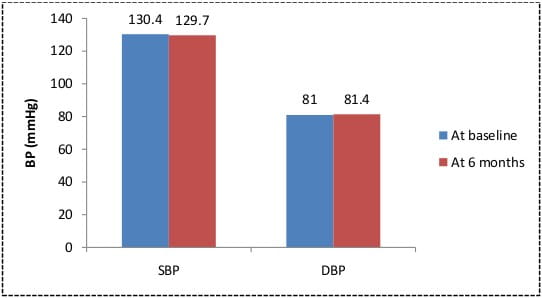
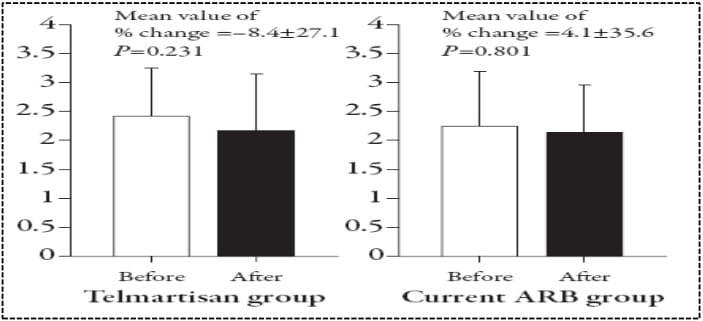
Blood pressure remained stable after switching from valsartan/candesartan to telmisartan
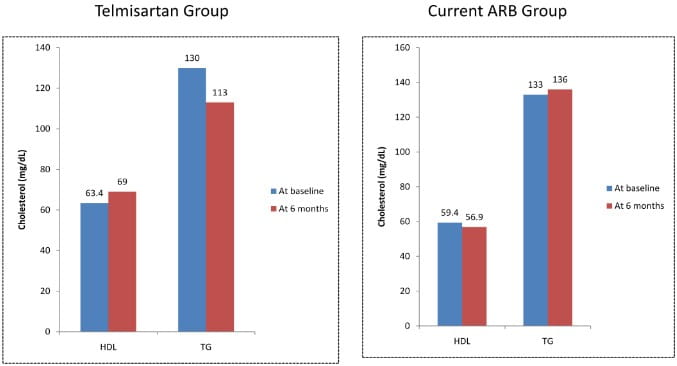
Lipid profile improved in the telmisartan group unlike current ARB group
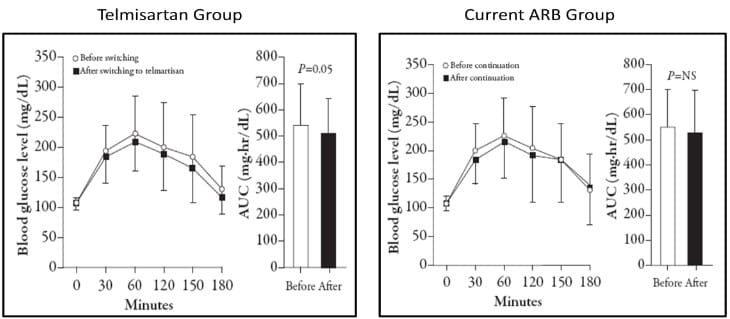
Blood glucose levels decreased significantly in telmisartan group unlike current ARB group
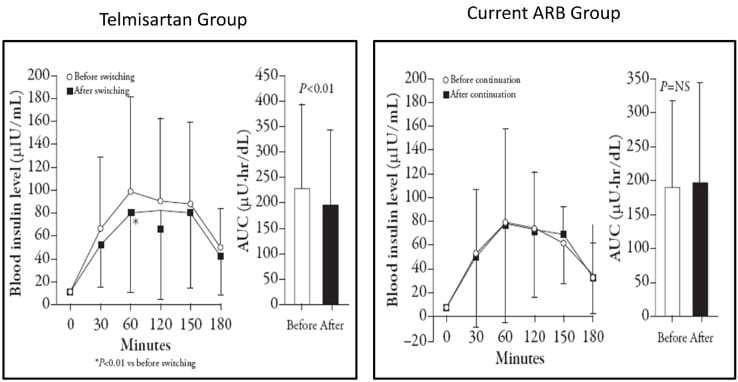
Blood insulin levels decreased significantly in telmisartan group unlike current ARB group
HOMA-IR decreased significantly in the telmisartan group unlike current ARB group
Conclusion
In patients with hypertension and obesity, treatment with telmisartan significantly improved the hyperinsulin response compared to valsartan or candesartan despite similar BP reductions. Therefore, telmisartan may be beneficial in these patients.
Adv Ther 2011;28(8):698-706

More From Area Of Interest
You may also like

13 May, 26

17 Apr, 26
Our Research
23 Feb, 26
23 Feb, 26
11 Feb, 26
11 Feb, 26
11 Feb, 26
Latest Items
Journal Scans
26 Jun, 26

26 Jun, 26

26 Jun, 26

25 Jun, 26


