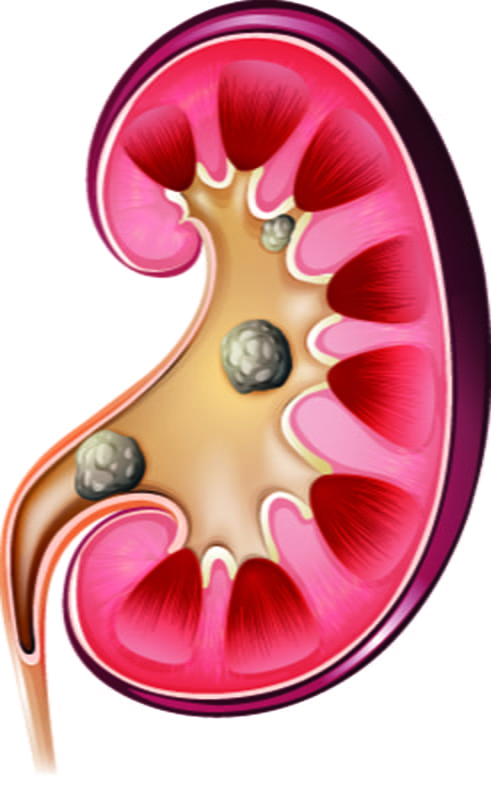
EAU 2023: Stones: Diagnosis and Conservative Management


A retrospective study determined whether urology consultation for patients with renal stones in the emergency department affected outcomes. The management of renal colic by emergency department physicians was deemed safe and efficient, and appropriate education of primary care physicians and emergency department physicians could help reduce the financial burden of early assistance.
A new predictive model was introduced for diagnosing nephrolithiasis using machine learning techniques and simple clinical parameters. The data collected from three hospitals (2012 to 2019) was tested on different groups of patients by using the newly introduced model. The findings demonstrated that the model could be a dependable and cost-effective way to diagnose renal stones instead of imaging studies.
A study uses computer tomography images to detect stones in a playing xray game called KOB. The stone detection models were built using the deep learning-based system with RetinaNet. The test dataset's accuracy, precision, and sensitivity were 90%, 89%, and 97%, respectively. This study can be used to develop detection models for lower urate stones and bladder stones.
A study proposes a non-invasive method to accurately identify the components of uric acid stones using a combination of linear mixing and machine learning. The method achieved a high accuracy rate of over 90% when tested on over 400 stones and over 93% when applied to a testing model with 150 stones. The hope is that this approach can replace surgery with an oral camera for determining stone composition.
An international multicenter study aimed to develop and validate a machine learning-based model to distinguish uric acid stones from non-uric acid stones. The model can help identify patients who may benefit from alkalization therapy. The model provided excellent accuracy of almost 100% in the development cohort and 97.1% in the external validation. In addition, the model can reliably select candidates for directed alkalization therapy with the highest predictive performance reported to date.
A simulation system was developed using the discrete element method to predict the movement of renal stones. The system was validated and showed a high level of correlation in different conditions, allowing for faster computation compared to computational fluid dynamics. For example, using a personal laptop or desktop, it can compute the trajectory of up to 10,000 stones in a minute. The goal is to reduce residual stones after surgery by instructing patients on optimal posture and motion for an asymptomatic explosion of small stones.
A multicenter prospective study evaluated the effectiveness of stone removal in patients with non-obstructing kidney stones and moderate to severe flank pain. About 86% of patients had at least a 20% reduction in their pain scores at 12 weeks, and 75% had a 20% reduction in their worst pain scores after stone removal. The study suggests that stone removal may be a viable treatment option for select patients with non-obstructing kidney stones and associated flank pain.
The study examined CT scans from a UK hospital between 2014 and 2019 to identify CT findings that could help predict spontaneous stone passage and determine which patients require enhanced care. The study found that the probability of spontaneous passage decreased with the severity of hydronephrosis and that lower ureteric stones were more likely to pass spontaneously. The study suggests that larger stones in the upper mid-ureter must be actively treated, while lower ureteric stones up to seven millimetres may pass spontaneously if there are no inflammatory effects.
The study aimed to evaluate the frequency of asymptomatic kidney stone passage and its predictive factors. The researchers analyzed data from a prospective trial and found that 43% of stone events were asymptomatic. In addition, the number of asymptomatic stone passages was influenced by the number of stones and their volume. The study concluded that kidney stone recurrence is common, but many stones pass spontaneously, and some are asymptomatic, which should be considered when discussing treatment options with patients.
The article discussed using the Monocyte Distribution Width (MDW) as a marker for diagnosing sepsis in patients with urinary stones. The study evaluated the effectiveness of MDW in identifying sepsis among patients undergoing urgent Ureteral stent placement or nephrectomy. The results showed that an MDW value > 23 was strongly associated with sepsis. The study also found that MDW's kinetics can indicate the response to therapies. Therefore, MDW is a potential cost-effective marker for diagnosing sepsis in patients with urinary stones.
The study examined reports of FDA-approved medical devices (2012 -2020). The study found 2,548 cases of adverse events associated with using these devices, and the most frequent problem was fractures. Additionally, the study found that various manufacturers had different issues, such as some having problems with materials, while others had difficulties inserting or removing the device or a higher risk of calcification. The study emphasized the importance of databases like Mode in preventing adverse incidents associated with medical devices.
European Association of Urology (EAU) Annual Congress 2023, 10th March - 13th March 2023, Milan, Italy