

ERS 2022: Take a Deep Breath: The Evolving Role of Biologics in Pediatric Severe Asthma


In this session, experts discussed the evolving role of biologics in severe pediatric asthma.
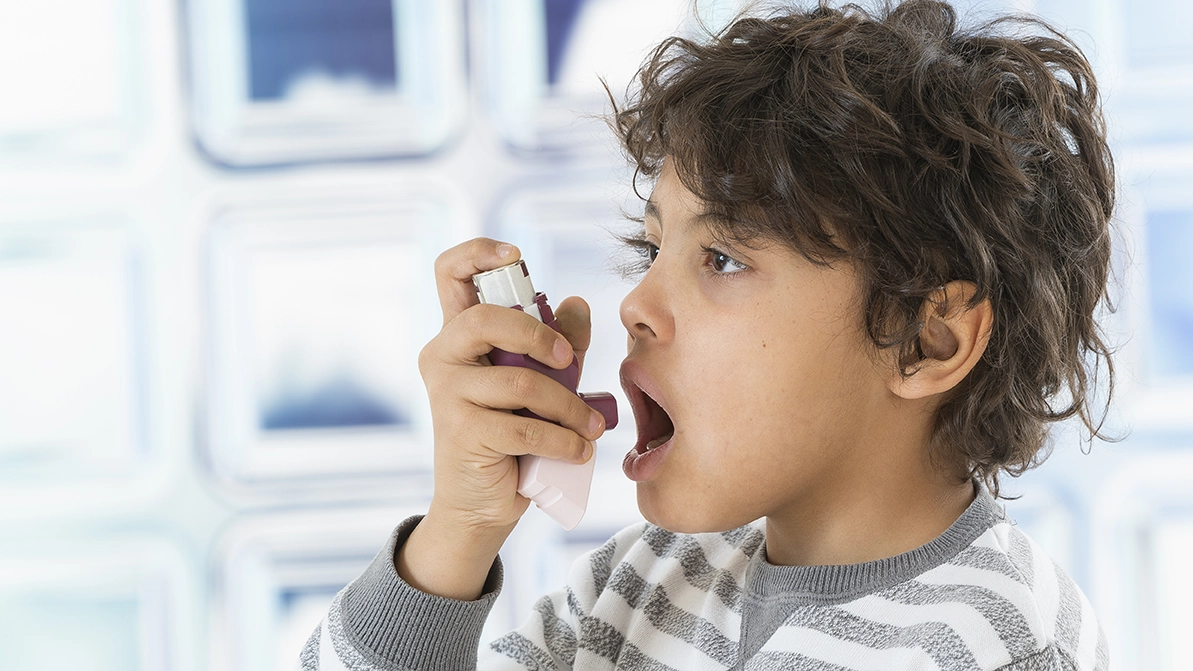
This talk discussed the actual burden of severe pediatric asthma and the role of type 2 inflammation in the pathophysiology of pediatric asthma. Pediatric asthma is a chronic inflammatory disease of the airways. It has typical pathophysiologic features like goblet cell hyperplasia, mucus overproduction, airway remodelling, and airway hyperresponsiveness. Children with severe asthma experience a multifaced burden. They experience daytime and nighttime symptoms, increased sleep disturbances, missed school days, limitations in activities, etc. Decreased patient quality of life also correlates with increased exacerbation severity and frequency.
Asthma is a common cause of hospital admissions in children. A history of exacerbations increases the risk of future exacerbations. Studies suggest that a reduced lung function is associated with an increased risk of exacerbation. 75% of persistent pediatric asthma cases will lead to abnormal growth patterns and a decline in lung function.
Type 2 inflammation is found in 70-89% of pediatric severe asthma patients. In asthma patients aged 6-12 years with a type 2 inflammatory phenotype:
- 83-94% have evidence of an atopic medical condition
- Approximately 58% have FeNO >20 ppb
- 78-94.6% have blood eosinophil > 150 cells/µL
IL-4, IL-13, and IL-5 are critical drivers of type 2 inflammation, which underpins the pathophysiology of pediatric asthma. FeNO and eosinophil production is driven by the activity of IL-4,1L-13, and IL-5. In addition, IL-4 and IL-13 induced B-cell class switching and IgE production. IgE leads to the activation of mast cells and basophils associated with asthma allergic reactions. Type 2 inflammation drives a cycle of exacerbations, poor lung function, and reduced quality of life.
In the next talk in the session, the effect of the various available and new biologics in pediatric asthma was discussed. GINA recommends a control-based asthma management strategy. Asthma management involves a continuous cycle to assess, adjust treatment, and review response, with the long-term goal of reducing risk and controlling symptoms. GINA 2022 recommends add-on biologic therapy as a preferred controller option at step 5. Biologics, namely, omalizumab, Mepolizumab, and dupilumab have been internationally approved in children >6 to <12 years of age, while benralizumab and tezepelumab are undergoing assessment.
Clinical trials on biologics in pediatric asthma patients have reported the following:
- PROSE study- Omalizumab reduced exacerbation compared to placebo. In addition, the rate of fall exacerbation was significantly lower in the omalizumab group compared to the placebo group (11.3% vs 21.0%; odds ratio [OR]: 0.48; 95% CI: 0.25-0.92).
- In a study by Gupta et al., Mepolizumab improved asthma control and reduced exacerbations. Before receiving Mepolizumab, the mean Asthma Control Questionnaire, 7-item (ACQ-7) and 5-item (ACQ-5), and Childhood Asthma Control Test (C-ACT) scores were 1.79, 1.87, and 17.6, respectively. Improvements in asthma control were most significant at week 36 (overall study week 56), with mean scores of 0.79, 0.79, and 22.0, respectively. At week 52, 4 weeks post the last dose of Mepolizumab, mean scores were 1.14, 1.08, and 20.5, respectively.
- Bacharier LB et al. showed that dupilumab reduced exacerbations and improved lung function and asthma control. The study demonstrated that the Asthma Control Questionnaire 7 Interviewer-Administered [ACQ-7-IA] score improved by 1.33 ± 0.05 in the dupilumab group and 1.00 ± 0.07 in the placebo group among patients with type 2 inflammation at week 24. In patients with the type 2 inflammatory phenotype, the annualized rate of severe asthma exacerbations with dupilumab and placebo was 0.31 and 0.75, respectively. Dupilumab also resulted in significantly better asthma control as compared to placebo.
- Phipatanakul W et al. demonstrated that dupilumab reduced exacerbations regardless of allergen sensation.
It is essential to consider the full spectrum of type 2 inflammation in assessing and managing severe pediatric asthma.
European Respiratory Society (ERS) International Congress 2022, 3rd-6th Sept. 2022, Barcelona