EASD 2022: SGLT-2 Inhibitors and GLP-1 Receptor Agonists are Associated with Lower Mortality in Younger People with Type 2 Diabetes and a First Myocardial Infarction between 2016 and 2020


The sodium-glucose cotransporter-2 (SGLT-2) inhibitors and glucagon-like peptide-1 receptor agonists (GLP1-RA) have demonstrated a reduction in cardiovascular mortality and non-fatal cardiovascular complications in type 2 diabetes patients. Despite this data being published in 2015, the prescription of these drugs in people with high-cardiovascular risk is not much. The abstract presented evaluates the effect of prescription of SGLT-2 inhibitors and /orGLP1-RA on all-cause mortality in people younger than 70 years with type 2 diabetes having their first myocardial infarction.
In this observational, population-based cohort study of individuals with type 2 diabetes, 9117 individuals aged between 40 and 69 years, and the first diagnosis of myocardial infarction between January 2016 and December 2020 were selected. Prescription of anti-diabetic and antihypertensive drugs and date of the collection were registered. Data on comorbidities and cardiovascular events were collected from National Patient Registry. Information on the time of death was retrieved from the Swedish Cause of Death Register and the patients were categorized as per the use of SGLT-2 inhibitors, GLP1-RA, or no prescription of any of these drugs. All-cause mortality as seen on Kaplan-Meier curves was the primary endpoint.
The findings of this analysis showed that 50.3% had been prescribed neither an SGLT-2 inhibitor nor a GLP1-RA, while 26.8% were prescribed an SGLT-2 inhibitor, 9.4% a GLP-1 RA and 13.6% drugs from both these classes. In the median follow-up period of 3 years, 1001 events (11.0%) occurred. The results of 5-year mortality is represented in the graph:
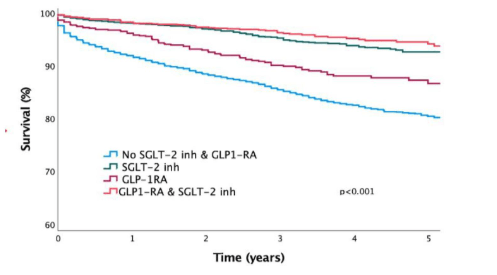
Prescription of an SGLT2i and GLP1-RA was associated with lower five year mortality. However, the number of patients, even those at high CV risk and receiving these drugs seem to be very low.
Oral Presentation # 251; Session OP 45 European Association for the Study of Diabetes (EASD) International Congress 2022, 19th – 23rd Sept. 2022, Stockholm