Extending clopidogrel therapy to two years instead of traditional one year prevents very late thrombosis in DES recipients: TYCOON
The American College of Cardiology/American Heart Association/Society for Cardiac Angiography and Interventions guidelines recommend at least nine to 12 months of dual antiplatelet drug therapy following intervention with a drug eluting stent (DES) to prevent thrombosis, unless the patient is at high-risk for bleeding complications. These recommendations are not supported by adequate data. However, recently results of a four-year follow-up from the Two-Year Clopidogrel Need (TYCOON) registry published online on September 28, 2009 in the American Journal of Cardiology showed that patients who stopped taking clopidogrel a year after coronary intervention with a DES are still at risk for a stent thrombosis for at least another year.
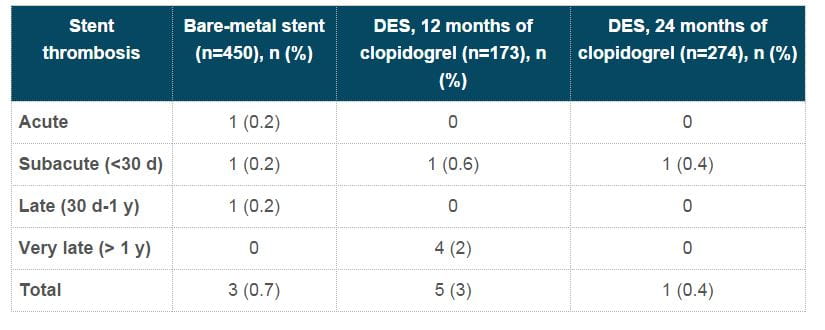
The registry enrolled 897 patients implanted with a coronary stent in 2003 and 2004. Around half of the patients had DES while the other half were with bare-metal stents. All patients received aspirin indefinitely. Patients with bare-metal stent were given clopidogrel for a month. On the other hand, patients treated with a DES in 2003 stayed on clopidogrel for 12 months, and patients given a DES in 2004 stayed on the drug for 24 months. Both groups had similar baseline characteristics. The overall rates of cardiac death, target vessel revascularization, and myocardial infarction were similar for both the groups. However, of the 173 DES patients who stopped clopidogrel after a year, four had a very late thrombosis; while none of the patients who stayed on clopidogrel after one year experienced very late thrombosis (Table 1).