




A multicenter, randomized and controlled study was carried out to assess the efficacy and tolerability of two different intermittent isotretinoin courses and compare them with conventional isotretinoin treatment.
Treatment of Acne with Intermittent and Conventional Isotretinoin: A Randomized, Controlled Multicenter Study

28 Oct, 10


Objective
Methods
66 patients with moderate to severe cases were randomized to receive either isotretionin for the first 10 days of each month for 6 months (group 1), or each day in the first month, afterwards the first 10 days of each month for 5 months (group 2) or daily for 6 months (group 3). The dosage of isotretinoin was 0.5 mg/kg/day in all groups. Patients were followed-up for a period of 12 months.
Results
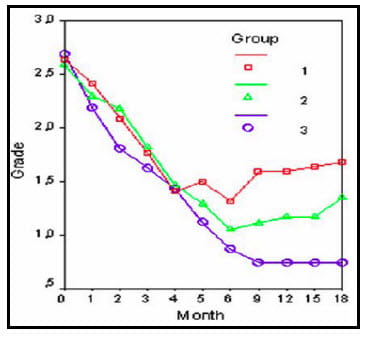
Acne scores in each group were significantly lower at the end of treatment and follow-up periods (P < 0.001) but there were no statistically significant differences among the treatment protocols. However, there was a significant difference between groups 1 and 3 to the response of the treatments in severe acne patients at the end of follow-up period (P = 0.013). (fig. 1)
Fig. 1 The global grades of two different intermittent isotretinoin and classical dosage
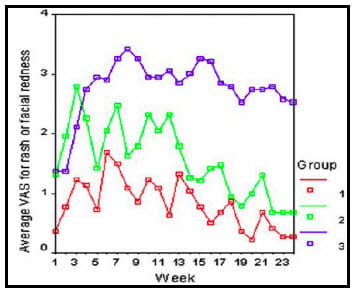
The frequency and severity of isotretionin-related side effects were found to be lower in groups 1 and 2 compared with group 3. (Fig 2 and 3)
Fig 2 Repeated measures of average severity scores>
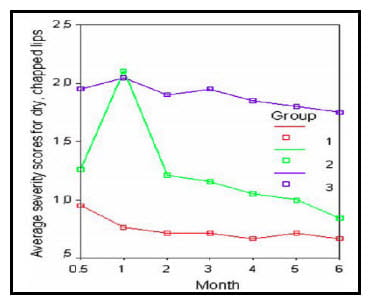
Fig 3 repeated measures of VAS for rash and facial redness
Conclusion
Intermittent isotretinoin may represent an effective alternative treatment, especially in moderate acne with a low incidence and severity of side effects. The intermittent isotretinoin can be recommended in those patients not tolerating the classical dosage.
Reference
Adapted from Arch Dermatol Res. 2007 Dec; 299(10):467-73
Related Topics
More From Area Of Interest
You may also like

17 Apr, 26
Our Research
23 Feb, 26
23 Feb, 26
11 Feb, 26
11 Feb, 26
11 Feb, 26
11 Feb, 26
Latest Items
Journal Scans
6 May, 26

6 May, 26

5 May, 26
Journal Scans
5 May, 26

5 May, 26


