




Intensive atorvastatin therapy significantly reduces major cardiovascular events in CHD patients with diabetes Sub-analysis of Treating to New Targets (TNT)
TNT: Sub-analysis in CHD Patients with Diabetes

28 Oct, 10


TNT: Sub-analysis in CHD Patients with Diabetes
Introduction
Objective
- To evaluate whether intensive lipid-lowering with high-dose atorvastatin provides significant clinical benefit as compared to standard atorvastatin therapy in patients with CHD and diabetes
Study Design and Participants
- Post-hoc analysis of TNT study participants (1501 patients with diabetes and CHD and having LDL <130 mg/dl)
Interventions
- Atorvastatin 10 mg/day (n= 753) or atorvastatin 80 mg/day (n=748)
- Mean follow-up period was 4.9 years
Outcome Measures
- Primary efficacy outcome was the time to first occurrence of a major cardiovascular event [CHD death, nonfatal non-procedure-related myocardial infarction (MI), resuscitated cardiac arrest, and fatal or nonfatal stroke]
- Secondary efficacy outcome included any cardiovascular event, major coronary event (CHD death, nonfatal non-procedure-related MI, or resuscitated cardiac arrest), any coronary event, cerebrovascular event, peripheral arterial disease, documented angina, hospitalization for congestive heart failure, and all-cause mortality
Results
- Significant 25% reduction in the risk of major cardiovascular events in patients with atorvastatin 80 mg in comparison with 10 mg (Figure 1)
Figure 1. Kaplan-Meier estimates of the incidence of major cardiovascular events in patients with diabetes
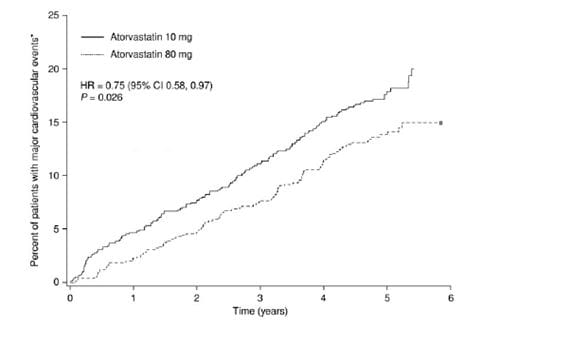
- This decreased incidence of primary event rates was observed across all quintiles of patient age and duration of diabetes and in patients with HbA1c <7% and HbA1c >7% Significant 31% risk reduction in the time to cerebrovascular event and 15% risk reduction in the time to cardiovascular event in 80 mg vs. 10 mg atorvastatin
- Mean LDL levels were 77 mg/dl in atorvastatin 80 mg group vs. 98.6 mg/dl in atorvastatin 10 mg group
- No significant differences between the treatment groups in the rate of treatment-related adverse events, including myalgia, or persistent elevations in liver enzymes
- No incidence of rhabdomyolysis was reported in either treatment group
Conclusion
Use of high-dose statin to achieve an LDL cholesterol level considerably <100 mg/dl may be appropriate for patients with diabetes and CHD, irrespective of their initial LDL cholesterol level, age, duration of diabetes, or glycemic control.
Diabetes Care 2006; 29:1220-6

More From Area Of Interest
You may also like

13 May, 26

17 Apr, 26
Our Research
23 Feb, 26

23 Feb, 26
11 Feb, 26
11 Feb, 26
11 Feb, 26
Latest Items
Journal Scans
26 Jun, 26

26 Jun, 26

26 Jun, 26

25 Jun, 26


