




High dose atorvastatin significantly reduces hospitalizations for heart failure in patients with stable CHD: Subanalysis of Treating to New Targets (TNT) study
TNT: Sub-analysis Evaluating Hospitalizations for Heart Failure

28 Oct, 10


TNT: Sub-analysis Evaluating Hospitalizations for Heart Failure
Introduction
Background
Although statins reduce the rate of major cardiovascular events in high-risk patients, their potential benefit as treatment for heart failure (HF) is less clear
Aim
To evaluate the effect of high dose atorvastatin on hospitalizations for HF in patients with stable coronary heart disease (CHD)
Methods
Subanalysis of TNT study
Patients
Stable CHD (with and without history of HF) [N=10001]
Study Groups
Atorvastatin 10 mg (N=5006) vs. atorvastatin 80 mg (N=4995)
Mean Follow-up Period
4.9 years
Outcome Measures
Hospitalization for HF
Results
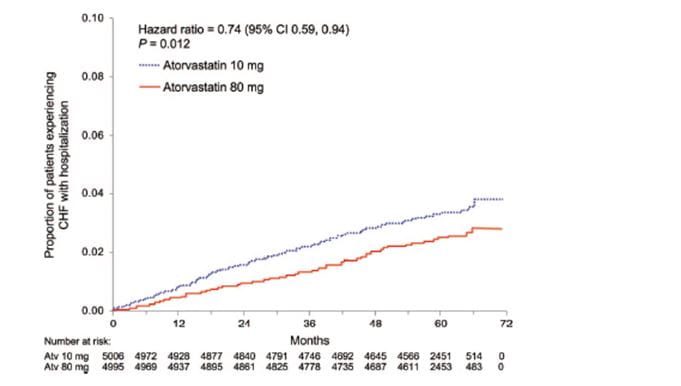
- Intensive treatment with 80 mg atorvastatin significantly reduced the risk of hospitalization for HF by 26% as compared to patients receiving 10 mg atorvastatin (Figure 1)
Figure 1. Proportion of patients hospitalized for HF
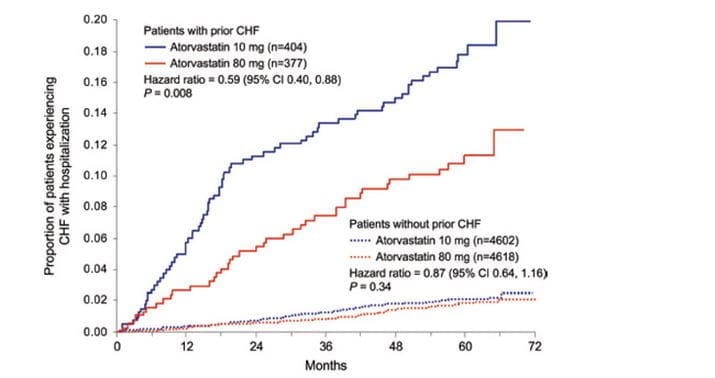
- In patients with a history of HF, 80 mg atorvastatin significantly reduced the rate of hospitalization for HF by 41% vs. 10 mg atorvastatin whereas this reduction was not significantly different in patients without a history of HF (Figure 2). However, the protective effect of high-dose atorvastatin on preventing HF hospitalizations remained independent of the baseline history of HF.
Figure 2. Proportion of patients with and without a history of HF in 10 and 80 mg arms experiencing hospitalization for HF during follow-up
- For each 1 mg/dl reduction in LDL, the risk of hospitalization for HF significantly decreased by 0.6%
Conclusions
Intensive treatment with atorvastatin in patients with stable coronary disease significantly reduces subsequent hospitalizations for HF compared with low-dose therapy; this benefit was most pronounced in patients with a history of HF.
Circulation 2007; 115: 576-83

More From Area Of Interest
You may also like
13 May, 26

17 Apr, 26
Our Research
23 Feb, 26
23 Feb, 26
11 Feb, 26
11 Feb, 26
11 Feb, 26
Latest Items
Journal Scans
26 Jun, 26

26 Jun, 26

26 Jun, 26

25 Jun, 26


