




Reduction of restenosis, death & CV events in patients undergoing PCI: PCI-CURE (Percutaneous Coronary Intervention's Clopidogrel in Unstable Angina to Prevent Recurrent Events)
PCI-CURE (Percutaneous Coronary Intervention's Clopidogrel in Unstable Angina to Prevent Recurrent Events)

18 Mar, 14


PCI-CURE
PCI-CURE (Percutaneous Coronary Intervention's Clopidogrel in Unstable Angina to Prevent Recurrent Events)
Aim
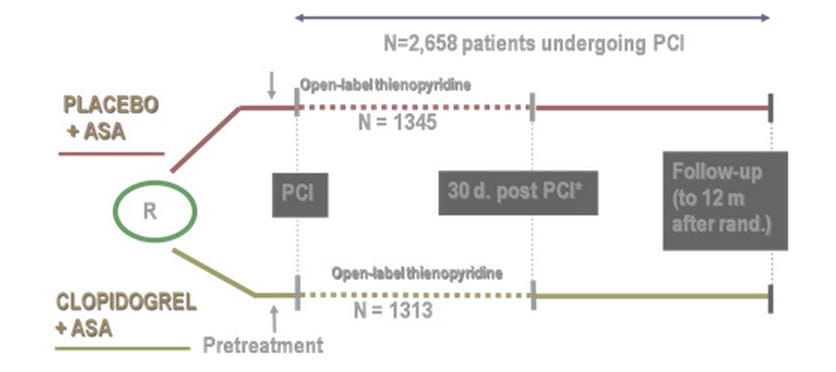
To find out whether, in addition to aspirin, pretreatment with clopidogrel followed by long-term therapy after percutaneous coronary intervention (PCI) is superior to a strategy of no pretreatment and short-term therapy for only 4 weeks after PCI
Study Patients
ACS patients undergoing PCI (N = 2658)
Study Drugs
Clopidogrel (300 mg followed by 75 mg) + Aspirin (75-325 mg) vs Placebo + Aspirin
Study Design
Study Duration
3-12 months (mean 9 months)
Results
- Before PCI, significantly fewer patients on clopidogrel than on placebo had myocardial infarction (MI). Besides, risk of MI or refractory ischemia was lesser in patients on clopidogrel.
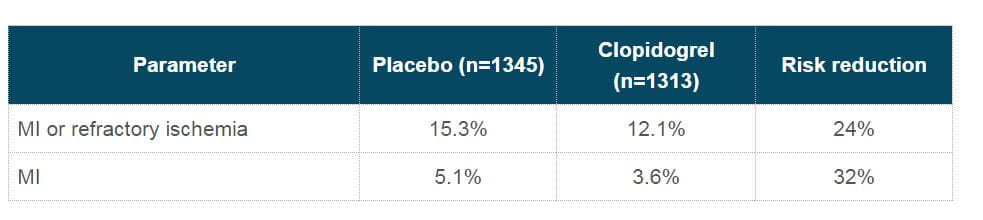
- Risk of cardiovascular death, MI or urgent revascularisation by 30 days after PCI was reduced by 30%.
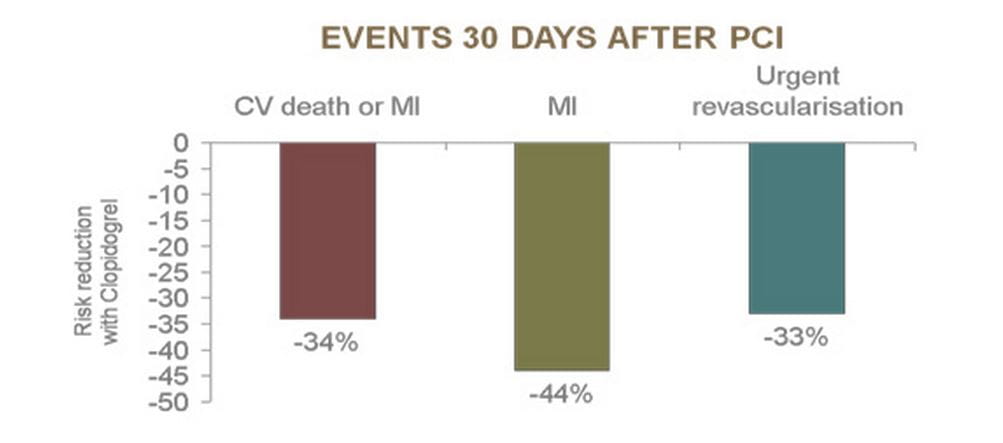
- At end of 30 days, risk of cardiovascular death or MI was reduced by 34%, while risk of MI alone was reduced by 44% while the risk of urgent revascularisation was reduced by 33%.
- The lower rate of cardiovascular death, MI or urgent revascularisation in the clopidogrel group was seen as early as 2 days after PCI, with continuing benefit until 30 days.
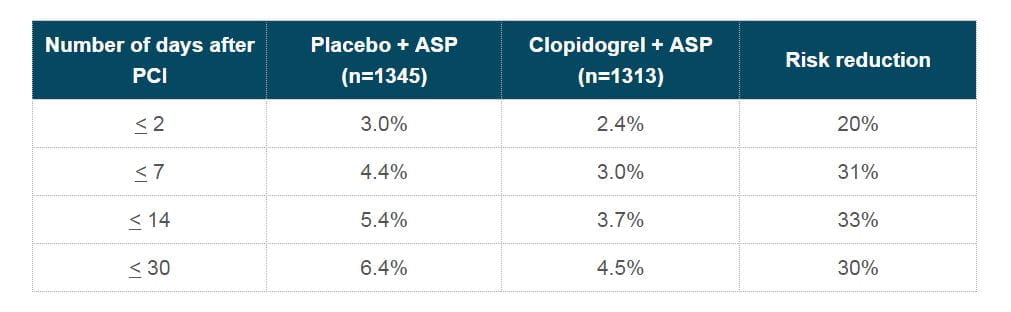
- Clopidogrel also reduced risk of ischemic events when the time period from PCI to end of follow-up was considered.
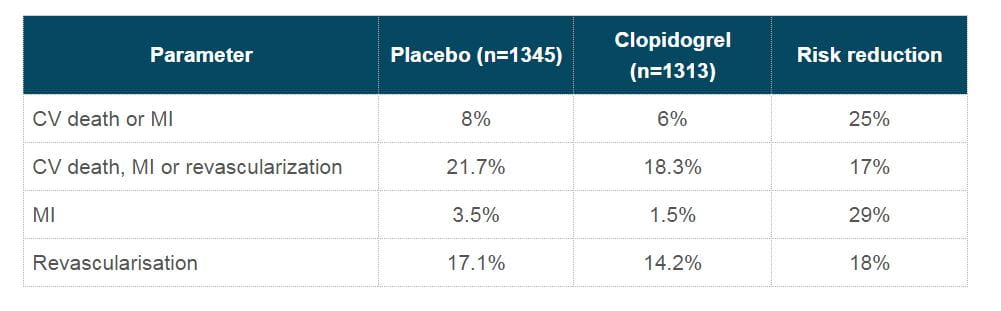
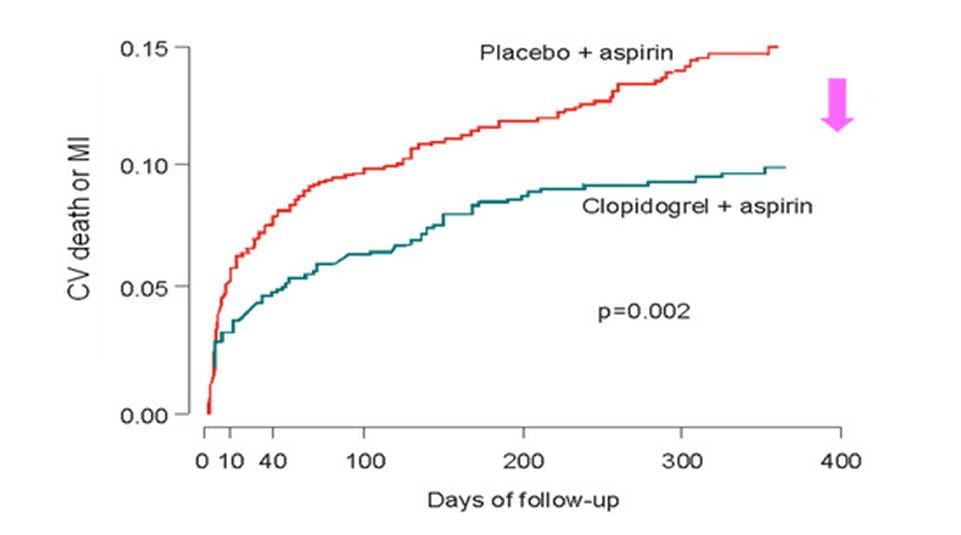
- Overall, the risk of cardiovascular death or MI was reduced by 31%.
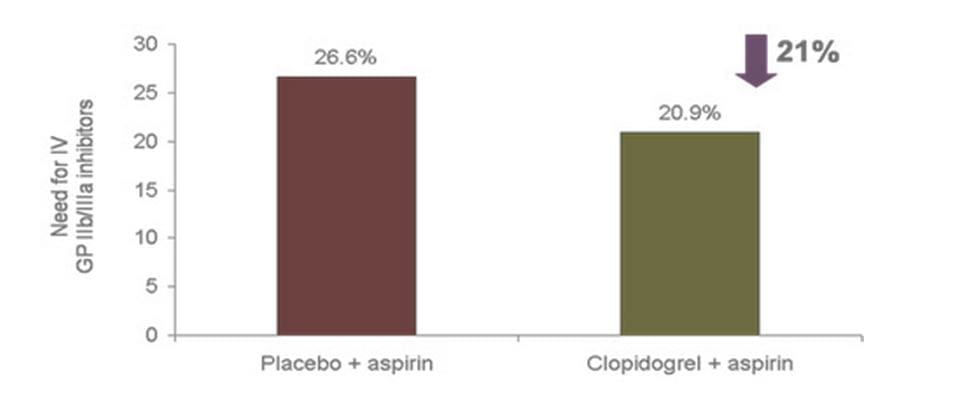
- Significantly fewer patients in the clopidogrel group required intravenous glycoprotein IIb/IIIa inhibitors
Study Implications
- In patients with ACS without ST elevation undergoing PCI, clopidogrel reduces risk of CV death or MI by one-third.
- This benefit is seen in the period before PCI, in the 4 weeks after PCI and even when the drug is continued long-term
- Consistent benefit regardless of whether PCI was performed during the initial hospital admission (including very early PCI <72 hrs) or more electively after discharge
- Clopidogrel would therefore be useful not only in centers with invasive facilities but also in those that do not have ready access to cardiac catheterisation facilities, because it allows time to stabilise the patient medically, before the procedure is done or before transfer for invasive therapy
Study Conclusion
In patients with ACS receiving aspirin, a strategy of clopidogrel pretreatment followed by long-term therapy is beneficial in reducing major CV events, vs placebo.
Lancet 2001; 358: 527-533

More From Area Of Interest
You may also like

13 May, 26

17 Apr, 26
Our Research
23 Feb, 26
23 Feb, 26
11 Feb, 26
11 Feb, 26
11 Feb, 26
Latest Items
Journal Scans
26 Jun, 26

26 Jun, 26

26 Jun, 26

25 Jun, 26


