




To determine if clopidogrel pretreatment before PCI in patients with recent ST-segment elevation myocardial infarction (STEMI) is superior to clopidogrel treatment initiated at the time of PCI in preventing major adverse cardiovascular events.
PCI-CLARITY (Percutaneous Coronary Intervention-Clopidogrel as Adjunctive Reperfusion Therapy)

18 Mar, 14


Objective
Study Design and Participants
Prospectively planned analysis of the 1863 patients undergoing PCI after mandated angiography in CLARITY-Thrombolysis in Myocardial Infarction (TIMI) 28, a randomized, double-blind, placebo-controlled trial of clopidogrel in patients receiving fibrinolytics for STEMI
Interventions
Patients received aspirin and were randomized to receive either clopidogrel (300 mg loading dose, then 75 mg once daily) or placebo initiated with fibrinolysis and given until coronary angiography, which was performed 2 to 8 days after initiation of the study drug
For all patients undergoing coronary stenting, an open label clopidogrel therapy (300 mg loading dose followed with 75 mg once daily) was administered after the diagnostic angiogram
Outcome Measures
Primary outcome was the incidence of the composite of cardiovascular death, recurrent MI, or stroke from PCI to 30 days after randomization
Secondary outcomes included recurrent MI or stroke before PCI and the composite of cardiovascular death, recurrent MI, or stroke from randomization to 30 days
Primary Safety Outcome
Primary safety outcome was the rate of TIMI major or minor bleeding from PCI to 30 days after randomization.
Results
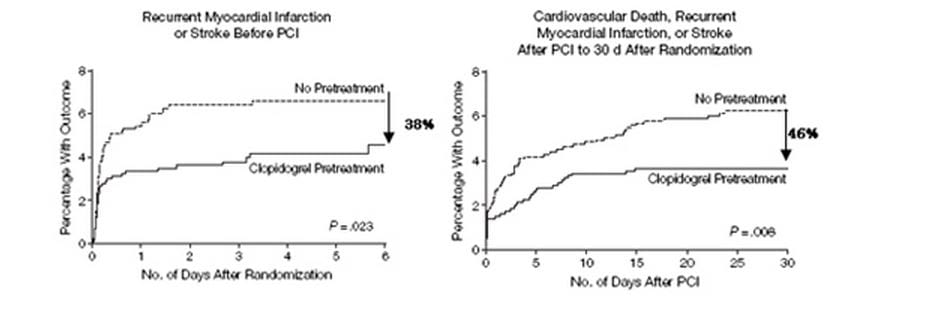
- Pretreatment with clopidogrel reduced the rate of recurrent MI or stroke before PCI by 38%
- Pretreatment with clopidogrel before PCI significantly reduced by 46% the odds of cardiovascular death, recurrent MI, or stroke within 30 days following PCI
Figure 1. Incidence of Cardiovascular End Points Before and After PCI
- Benefits of pretreatment were independent of patient age and sex, presence of diabetes mellitus, infarct location, urgent or elective PCI, timing of PCI relative to randomization, predominant type of heparin used and whether GP IIb-IIIa inhibitor or open label clopidogrel was given at the time of PCI
Safety
There was no significant excess in the rates of TIMI major bleeding, TIMI minor bleeding, or the combination following PCI
Table 1. Safety Outcomes
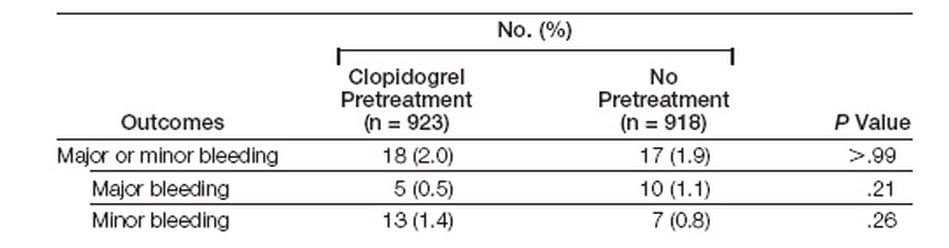
Among patients who received a GP IIb-IIIa inhibitor during PCI, the rate of TIMI major or minor bleeding was not higher in clopidogrel pretreatment group (2.1%) than in those who did not receive pretreatment (2.9%) (P=.36)
Implications for Clinical Practice
Only 23 patients would need to be pretreated with clopidogrel to prevent 1 cardiovascular death, MI, or stroke.
In 100 patients, 4 major cardiovascular events can be avoided simply by the use of 1 to 3 doses of clopidogrel before PCI.
Conclusions
In high-risk STEMI patients treated with fibrinolytic therapy, clopidogrel pretreatment significantly reduces the incidence of cardiovascular death and ischemic complications both before and after PCI without a significant increase in major or minor bleeding
These data add further support to the early use of clopidogrel in STEMI and the broader strategy of clopidogrel pretreatment in patients undergoing PCI.
JAMA 2005;294:1224-32

More From Area Of Interest
You may also like

13 May, 26

17 Apr, 26
Our Research
23 Feb, 26

23 Feb, 26
11 Feb, 26
11 Feb, 26
11 Feb, 26
Latest Items
Journal Scans
26 Jun, 26

26 Jun, 26

26 Jun, 26

25 Jun, 26


