




Efficacy of Omalizumab Similar in Severe Allergic Asthmatics Irrespective of the Eosinophilic Counts

19 Sep, 19


Introduction
Large scale and real-life studies have demonstrated the benefits of omalizumab, a humanized anti-IgE monoclonal antibody in uncontrolled persistent severe allergic asthma (SAA). Novel therapies are emerging for the treatment of severe eosinophilic asthma (SEA) in patients with a blood eosinophil count >300 cells/µl. a significant proportion of patients with SAA also have a blood eosinophil count >300 cells/µl.
Aim
The STELLAIR (next Step Towards personalized care: EvaLuating responders to XoLAIR treatment in patients with SAA) study evaluates the utility of pre-treatment eosinophil counts in predicting response to omalizumab.
Methods
Study design
- Multicenter, non-interventional, retrospective observational study
- Patients >6 years of age who had been treated with omalizumab for poorly controlled SAA
- Blood eosinophil count and number of exacerbations recorded 12 months prior to omalizumab therapy
- Patients had a documented physician evaluation of response 4-6 months after therapy and number of exacerbations were recorded
Endpoints
- Physician evaluation of response to omalizumab therapy according to the Global Evaluation of Treatment Effectiveness (GETE) scale was assessed at 4-6 months (T4-6)
- Reduction of >40% in annual exacerbation rate
- Combination of GETE evaluation and >40% reduction in annual exacerbation rate
Results
- 872 patients comprising of 723 adults (>18 years) and 149 minors (6-17 years) were evaluated by 78 physicians
- Omalizumab was continued in 656 adults and 148 minors at T4-6 and in 577 adults and 129 minors at 12 months post therapy initiation (T12) respectively
- 52.1% of adults and 73.8% of minors had blood eosinophil count >300 cells/µl
- As per the physician evaluation, 67.2% and 77.2% of the adults and minors respectively were responders at T4-6
- Reduction of >40% in annual exacerbation rate was reported by 71.1% adults and 78.5% minors
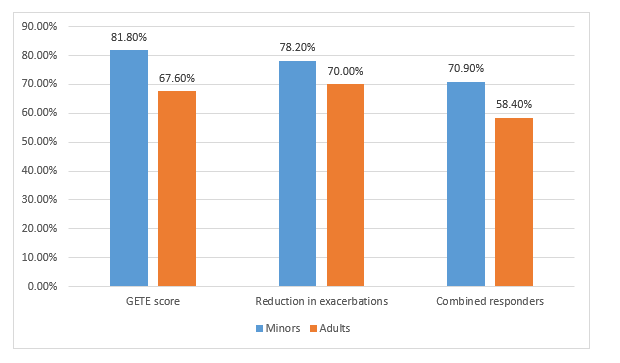
- A combined response rate was observed in 67.8% and 58.2% of minors and adults respectively
- The response rate for combined criteria was 58.4% and 58.1% in adults with blood eosinophils >300 cells/µl and <300 cells/µl respectively
- The rate of response at first assessment stratified based on blood eosinophil counts is shown in figure 1 and 2.
Figure 1. Response rates at T4-6 in subjects with blood eosinophils <300 cells/µl
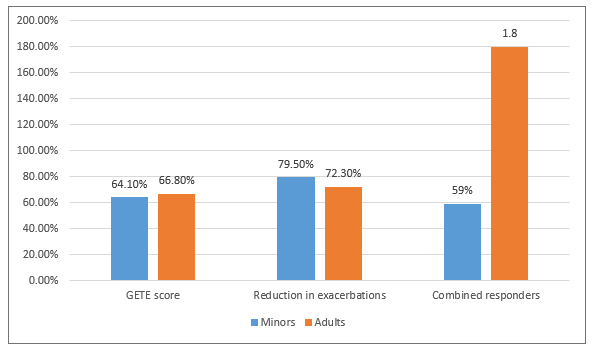
Figure 2. Response rates at T4-6 in subjects with blood eosinophils >300 cells/µl
Conclusion
- Significant percentage of patients with severe allergic asthma (SAA) have blood eosinophil counts >300 cells/µl
- The efficacy of omalizumab therapy is similar in high and low eosinophil subgroups.
Eur Respir J. 2018; 51:1702523.

More From Area Of Interest
You may also like
13 May, 26

17 Apr, 26
Our Research
23 Feb, 26
23 Feb, 26
11 Feb, 26
11 Feb, 26
11 Feb, 26
Latest Items
Journal Scans
26 Jun, 26

26 Jun, 26

26 Jun, 26

25 Jun, 26


