Efficacy of Early Azithromycin Administration in Prevention of Severe LRTI in Children


Introduction
Lower respiratory tract illness (LRTI) severe episodes are often associated with substantial morbidity, resulting in unscheduled visits to physician offices, urgent care, and emergency departments. Identification of novel treatment approaches that attenuate the severity of these recurrent episodes would provide substantial benefit to preschool children with recurrent severe LRTI
Aim
To evaluate if early administration of azithromycin, started prior to the onset of severe LRTI symptoms, in preschool children with recurrent severe LRTIs can prevent the progression of these episodes
Patient Profile
- Children aged 12 through 71 months with histories of recurrent, severe LRTIs and minimal day-to-day impairment
Methods
- Randomized, double-blind, placebo-controlled, parallel-group trial
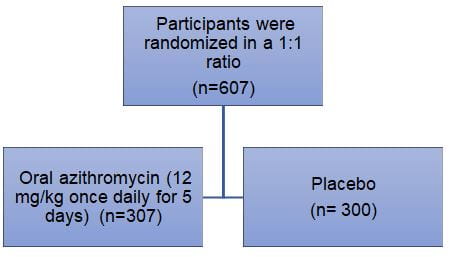
Outcomes Measure
- The primary outcome measure was the number of treated RTIs not progressing to severe LRTI among participants experiencing at least 1 treated RTI
- Secondary prespecified outcome measures included numbers of urgent care visits, emergency department visits, and hospitalizations
Results
- Azithromycin group experienced significantly lower risk of progressing to severe LRTI than the placebo group
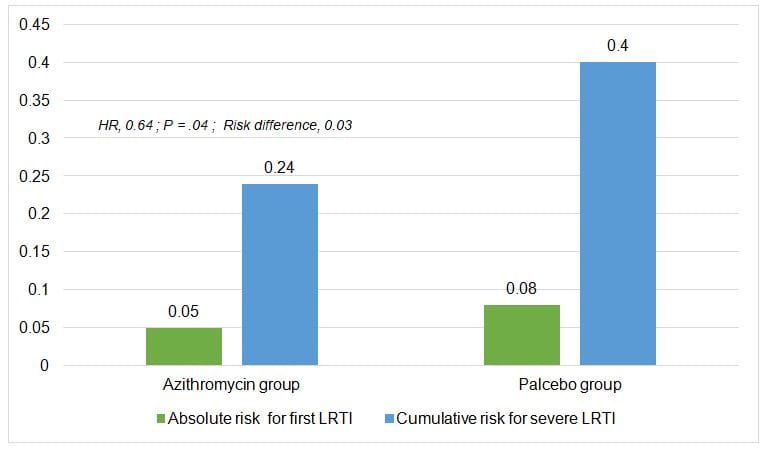
- Viral pathogens were detected during 83% of RTIs in the azithromycin group and 80% in the placebo group
- Rhinovirus was the most commonly detected virus at randomization, during RTIs, and during severe LRTIs
Secondary Outcomes
- Azithromycin therapy decreased the overall severity of symptoms during severe LRTIs compared with placebo
- Urgent care and emergency department visits were infrequent were reported
- Azithromycin group = 3.6%
- Placebo group = 5.4%
- Development of azithromycin-resistant organisms were reported in
- Participants treated with azithromycin= 16.7%
- Participants not treated with azithromycin =10.8%
- S aureus was the most common azithromycin-resistant organism isolated
- No statistically significant difference in the time from the first treated RTI to the start of a second treated RTI between treatment groups suggesting azithromycin treatment did not prevent subsequent RTIs
- Adverse events included gastrointestinal symptoms during treated RTIs were reported by 4 participants (azithromycin group, 3; placebo group, 1), were mild and did not lead to study discontinuation.
Conclusion
The study demonstrated that the use of azithromycin early during an apparent RTI compared with placebo reduced the likelihood of severe LRTI in young children with histories of recurrent severe LRTIs
Reference
JAMA. 2015; 314(19): 2034–2044