




Adding eptifibatide to bivalirudin therapy in elective stenting significantly reduces platelet reactivity, thrombin-induced fibrin clot and periprocedural MI: CLEAR PLATELETS 2 study.
CLEAR-PLATELETS 2

14 Dec, 10


Clear-Platelets 2
CLEAR-PLATELETS 2
Aim
To compare the effect of addition of eptifibatide to bivalirudin on platelet reactivity and thrombin-induced fibrin clot in patients undergoing elective PCI with stenting.
Patients
Elective PCI with stenting (N=200)
Study Groups
- Patients on chronic clopidogrel therapy
- Clopidogrel 600 mg + Bivalirudin (600 mg C+B)
- Clopidogrel 600 mg + Bivalirudin + Eptifibatide (600 mg C+B+E)
- Clopidogrel naive patients
- Clopidogrel 75 mg + Bivalirudin (75 mg C + B)
- Clopidogrel 75 mg + Bivalirudin + Eptifibatide (75 mg C + B+E)
All patients received aspirin
Primary Outcome Measure
Platelet aggregation with ADP, thrombin receptor activated peptide (TRAP) and collagen thrombin-induced platelet fibrin clot
Results
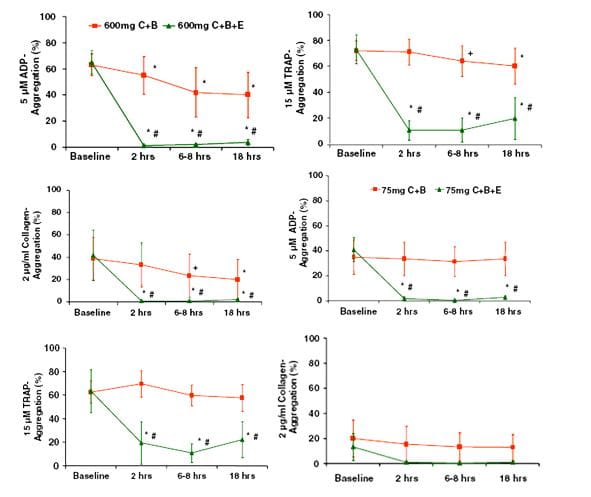
- There was significantly lower platelet aggregation with ADP, TRAP and collagen in patients treated with eptifibatide vs. those not treated with eptifibatide; this effect was immediate and persistent at times (Figure 1)
Figure 1. Comparison of platelet aggregation
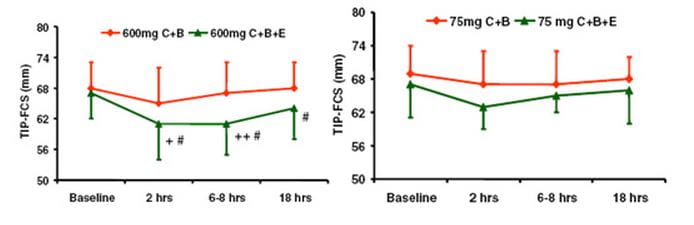
- Thrombin-induced platelet fibrin clot was significantly lower in eptifibatide recipients, indicating a lower risk of post-PCI ischemic events (Figure 2)
Figure 2. Effect on thrombin-induced platelet fibrin clot formation
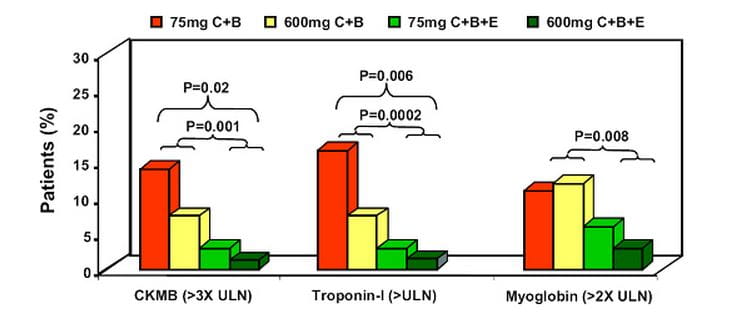
- Addition of eptifibatide significantly reduced periprocedural myocardial infarction, which was assessed by release of myocardial necrosis markers (Figure 3)
Figure 3. Effect on periprocedural infarction
Conclusion
In elective coronary stenting, addition of eptifibatide to bivalirudin therapy in clopidogrel naive and patients on maintenance therapy of clopidogrel produces an immediate and marked reduction in periprocedural platelet aggregation and reduces thrombin-induced platelet fibrin clot.
J Am Coll Cardiol 2009;53:648-57

More From Area Of Interest
You may also like

13 May, 26

17 Apr, 26
Our Research
23 Feb, 26

23 Feb, 26

11 Feb, 26

11 Feb, 26

11 Feb, 26
Latest Items
Journal Scans
26 Jun, 26

26 Jun, 26

26 Jun, 26

25 Jun, 26


