




Atorvastatin Reduces the Risk of Major Cardiovascular Events in Patients with Diabetes and Impaired Renal Function: Subanalysis of Collaborative Atorvastatin Diabetes Study (CARDS)
CARDS: Sub-study in Diabetics with Renal Impairment

18 Aug, 10


CARDS: Sub-study in Diabetics with Renal Impairment
Background
Aim
To evaluate the efficacy of atorvastatin in type 2 diabetic patients with renal impairment and no prior cardiovascular disease
Patients
Type 2 diabetics with estimated glomerular filtration rate (eGFR) <60 ml/min/1.73 m2 at baseline (N=967)
Study Groups
Atorvastatin 10 mg vs. placebo
Median Follow-up Period
4 years
End-point
Major cardiovascular event (MCVE)
Results
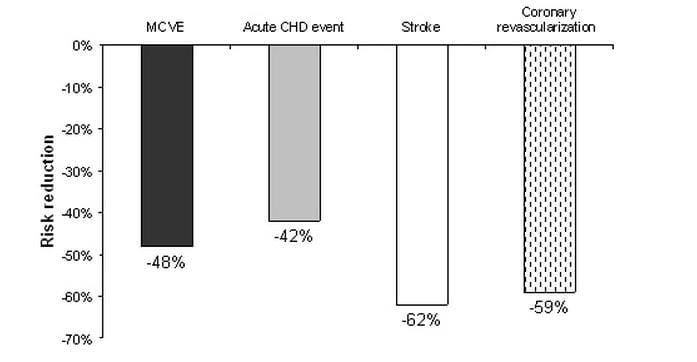
- Atorvastatin 10 mg significantly reduced the risk of MCVE by 48%, including a 42% reduction in acute coronary heart disease event, a 62% reduction in stroke and a 59% reduction in coronary revascularisation (Figure); effects similar to those observed in patients with normal renal function
Figure. Effect of atorvastatin on cardiovascular outcomes
Conclusion
Atorvastatin 10 mg daily is equally efficacious in reducing coronary heart disease and stroke in diabetic patients with impaired renal function as in those with normal or near normal renal function.
Presented at 67th Scientific Sessions of ADA, June 22-26, 2007. Presentation Title "Atorvastatin Reduces the Risk of Major Cardiovascular Events in Patients With Diabetes and Impaired Renal Function in the Collaborative Atorvastatin Diabetes Study (CARDS)". Abstract number 0524-P

More From Area Of Interest
You may also like

13 May, 26

17 Apr, 26
Our Research
23 Feb, 26

23 Feb, 26

11 Feb, 26

11 Feb, 26

11 Feb, 26
Latest Items
Journal Scans
26 Jun, 26

26 Jun, 26

26 Jun, 26

25 Jun, 26


